At all," Vatiswa Zoya said two days before voters in South Africa cast their ballots for new municipal government leaders. We will still sleep hungry." These very same frustrations are what will lead 22-year-old Lindokuhle Mbandazayo to the polls, although she has yet to decide where to place her cross. "When we vote for councilors, we ask them to fix the area," Mbandazayo told DW.
"The electricity goes off regularly here. There is also sewage in the streets, and we have to jump over this. There are a lot of things that need to be fixed here." Both women live in Tembisa, a township in Ekurhuleni, a municipality on the outskirts of Johannesburg, South Africa's largest city.
Both express an "embedded frustration" over their living conditions. Sanusha Naidu, an analyst at the Institute for Global Dialogue, said it was this "embedded frustration" that prompts people to vote. "Your vote actually puts some of these political parties' feet to the fire, but I think that frustration is also inherently coming from the fact that it's not going to happen overnight," Naidu said.
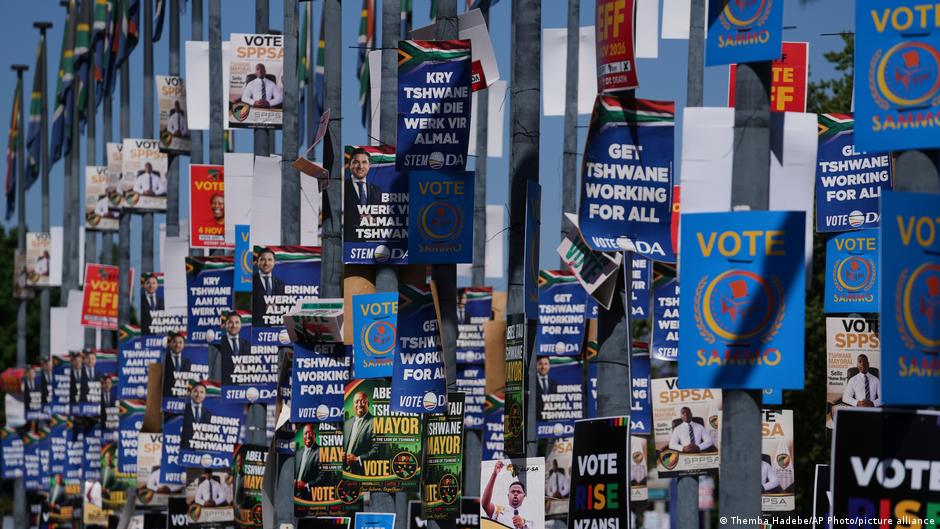
On Wednesday, South Africans will vote in municipal elections that will determine control of the country's largest cities and test whether the African National Congress (ANC), the leading party in the national government coalition, continues its electoral decline. Here are five things to know about Wednesday's election. Many voters will be motivated by whether they can shower or not on election day, as many parts of South Africa experience water supply issues.
In Johannesburg, several neighborhoods have faced water cuts and rationing for weeks as old infrastructure struggles to keep up with supply. "Every province has an issue. So if we take for example drinking water quality, half of the drinking water systems in South Africa are not fit for drinking," Ferrial Adam, executive director of water rights NGO WaterCAN, told DW at a protest over water cuts in Johannesburg.
"Almost 70% of our wastewater treatment works are in a critical state and spewing sewage into rivers and streams across the country," Adam said. "It is a definite water crisis across South Africa," she added. In Tshwane, a metropolitan area that includes South Africa's administrative capital, Pretoria, a recent water treatment failure left more than 400 residents sick.
Extract — continue reading at the source.