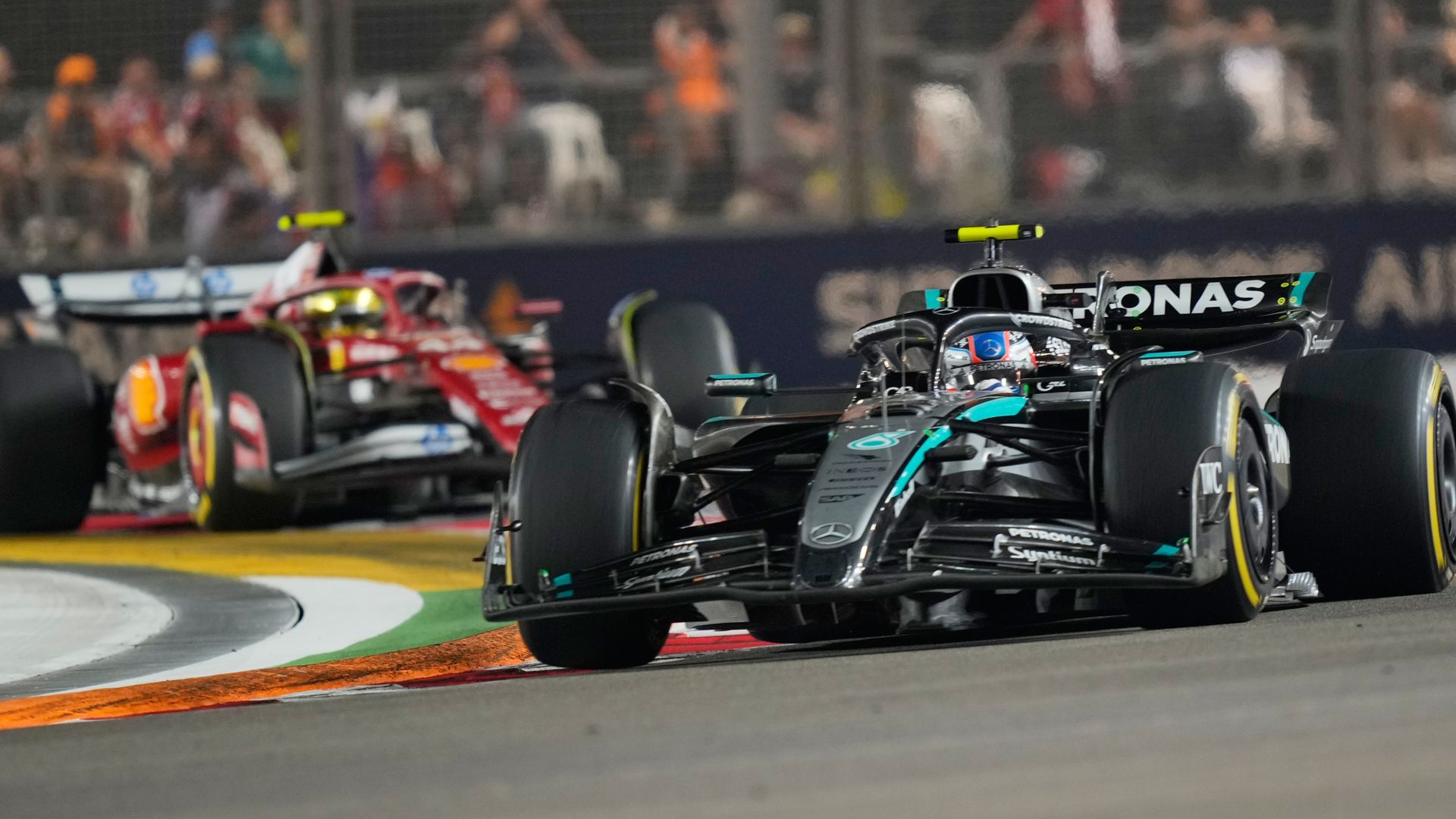
Formula 1 stages its sixth and final Sprint event of the year this weekend to conclude the first flyaway triple header of the sport's busy 2026 season run in. And, for the first time, the Sprint format is being used at the Singapore Grand Prix and its Marina Bay street track, home of the sport's original night race. But on a track not known for its overtaking, what kind of weekend can we expect with two qualifying sessions and two races?
When the Sprint format was first introduced at three races for the 2021 season, the tracks selected - Silverstone, Monza and Interlagos - were ones deemed to be particularly good for racing so to justify the addition of a 100km race on the Saturday as an appetiser to the main Sunday Grand Prix. That has generally continued to be the case in the selection of Sprint venues up to this year, with perhaps the inclusion of Imola in 2022 the surprise exception. Street tracks, which by their nature traditionally aren't as overtaking-friendly as conventional permanent tracks, have generally not featured on that yearly list.
Azerbaijan did host a Sprint in 2023, but Baku's wall-lined street track features the longest straight on the calendar and so allows passing. Singapore certainly falls more into the category of conventional street track - there are no long straights of note and overtaking opportunities are severely limited around the confined, twisty layout. The floodlit race is instead most known for its physicality owing to the hot and humid conditions of the Asian country and the fact the 62-lap race pushes towards the two-hour limit around a 19-corner lap that features plenty of 90-degree turns.
So, holding a second race this weekend appears counterintuitive in one sense to the original purpose of the Sprint format. However, there are flip sides to the decision. The first relates to qualifying.
Given the lack of passing opportunities in the race, qualifying is always considered absolutely essential at Marina Bay and, like all street tracks where the walls are so close, the Saturday spectacle is often spectacular. The circuit was the scene of one of the most famous qualifying laps in the sport's recent history when Lewis Hamilton surged to pole position for Mercedes in 2018, while numerous drivers have come a cropper against the barriers over the years when pushing for a decisive, grid-defining lap. This year there will be two such sessions - Sprint Qualifying on Friday followed by Grand Prix Qualifying on Saturday - which means double the qualifying challenge and, therefore, double the jeopardy for drivers.
Please use Chrome browser for a more accessible video player The Sprint format also means drivers and teams will have two-thirds less time to hone their cars' set-ups and settings for the competitive sessions given there is only a single one-hour session of practice running instead of the usual three. Building up rhythm and confidence is crucial on a street track so drivers know they will have to shortcut that process this time in Singapore. However, that is clearly easier said than done, increasing the likelihood of mistakes in sessions that count and teams going down set-up cul-de-sacs.
Extract — continue reading at the source.