When baby needs watching and mom and dad get busy, the blue light of a glowing rectangle often beckons. Instead of playing another round of peek-a-boo while dinner burns, they may turn to a phone, iPad, or television to serve as a babysitter. Most babies now get screen time daily, according to recent data from the United Kingdom, with the average hovering around 41 minutes a day for 9-month-olds.
What does this screen time do to their tender, developing brains? Infants are thought to learn best by doing, particularly when it comes to language and social skills. They rely heavily on face-to-face interaction, shared attention, and live conversational feedback with an adult caregiver, decades of evidence suggests.
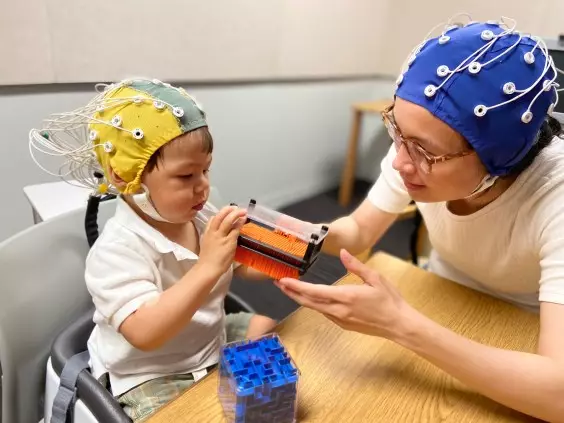
Differences in social engagement abilities are also a major feature of autism spectrum disorder, and deficits in this arena have been associated with slowed language development. Read more: “For Kids, Learning Is Moving” To probe this question of how social interaction and screen time affect a baby’s brain, a trio of researchers from Northwestern University recently invited 49 pairs of parents and infants, aged 22 to 44 months, into the lab to play as they would at home, with a book or a puzzle or other toys. They then used electroencephalogram (EEG) headgear to compare the babies’ brain activity during natural play versus staring at a screen.
What the scientists found was that certain brain waves associated with attention, social engagement, and learning were more active when the baby was playing with a parent compared to when they were watching television, even together. The scientists found the same patterns in an independent sample of children diagnosed with autism. They published their results this week in Brain and Language.
I spoke with study author Elizabeth Norton, professor of communication science and disorders, about what social engagement looks like in a baby, what it’s like to get an EEG cap on a baby, and whether the results suggest that screen time inhibits language development. The American Academy of Pediatrics recommends zero screen time for infants. Research takes so long to do, and what we know about screen time has evolved so quickly.
For very young kids, there’s still not a lot of great information about how being in front of a screen affects their brain development. And even for older kids, the American Academy of Pediatrics says some screen time is okay. It’s ideal when parents and caregivers can use that time together, almost in the way that they would when they’re reading a book, to use it as a jumping off point for conversations and back and forth interactions.
Extract — continue reading at the source.
/https://tf-cmsv2-smithsonianmag-media.s3.amazonaws.com/filer_public/f6/88/f6886882-f686-48da-bc69-05564283b2ec/damaris_castillo_at_a_bodega.jpg)