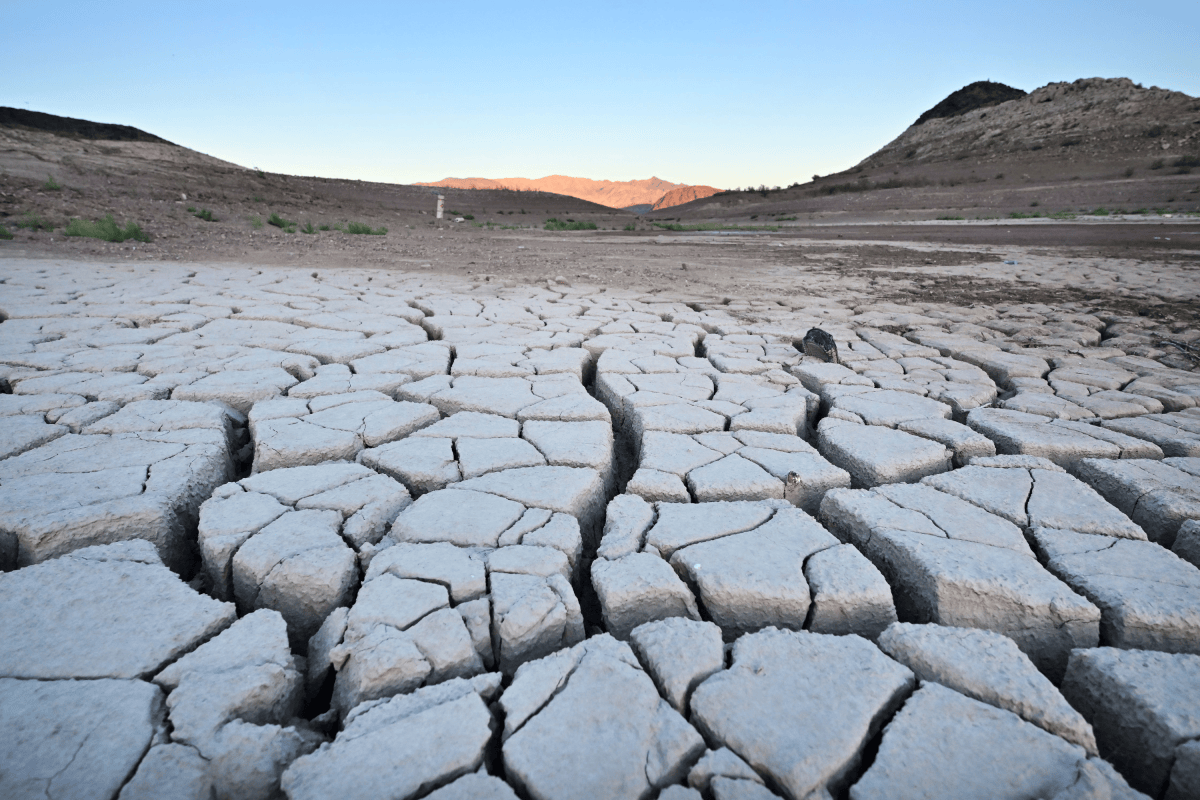
Heavy rainfall from Tropical Storm Rachel triggered flash and urban flooding across parts of the Southwest, but the deluge has done little to change the dire outlook at Lake Mead. Rachel and its remnants dumped significant amounts of rain across Southern California and parts of the Southwest after pushing inland over the weekend. The National Hurricane Center (NHC) said the storm and its rainfall were expected to produce widespread totals of 1 to 3 inches, with isolated amounts of up to 5 inches from Southern California into the Great Basin and Southwest, creating a risk of significant flash flooding.
Those impacts were evident around San Diego. The National Weather Service (NWS) reported rainfall totals ranging from 0.48 to 0.95 inches in coastal areas, 0.55 to 2.37 inches in the valleys, and 0.32 to 2.15 inches in the mountains early Sunday, also leading to flash flooding. But dramatic flooding on the streets doesn’t necessarily translate into a major increase at Lake Mead.
Bureau of Reclamation illustrates the difference. On October 8, before Rachel's remnants reached the Southwest, Lake Mead's water-surface elevation stood at 1,037.6 feet. It remained at 1,037.6 feet on October 9, then ticked up to 1,037.7 feet on October 10 and stayed there on October 11, as Rachel's remnants moved through the region.
That means the lake's recorded elevation increased by only around 0.1 foot (which is around 1.2 inches) between October 8 and October 11, despite the severe flooding experienced elsewhere in the region. The disconnect is largely explained by geography and scale. Heavy rainfall over Southern California can cause serious local flooding without flowing anywhere near Lake Mead because Lake Mead is fed by the Colorado River system, meaning rainfall needs to fall, specifically into the areas that drain into the river and ultimately then into the reservoir, to significantly boost its water levels.
Most of Lake Mead's water supply comes from Lake Powell, which receives runoff from parts of Colorado, Wyoming, Utah and New Mexico. However, Lake Mead's water level can increase without using Lake Powell. George, Utah, northwestern Arizona, and southern Nevada can reach Mead without ever reaching Powell via the Virgin River.
However, those inflows are relatively small compared to the water supplied by the Colorado River itself. The reservoir is also confronting a much larger, long-term water deficit that a single storm cannot resolve. The Bureau of Reclamation says the Colorado River Basin has experienced an “unprecedented drought” for the past 26 years.
Extract — continue reading at the source.