Unless for the express purpose of visiting a loved one’s grave, most people avoid spending time in cemeteries. They seem like gloomy, spooky, haunted places, the kind of place where, if you’ve learned anything from cinema, you’re most likely to encounter an unfriendly ghost, demon, or bogeyman. You may have only glimpsed graveyards as you’ve driven past them, perhaps holding your breath as you did, lest the spirit of one of their inhabitants slip inside your body.
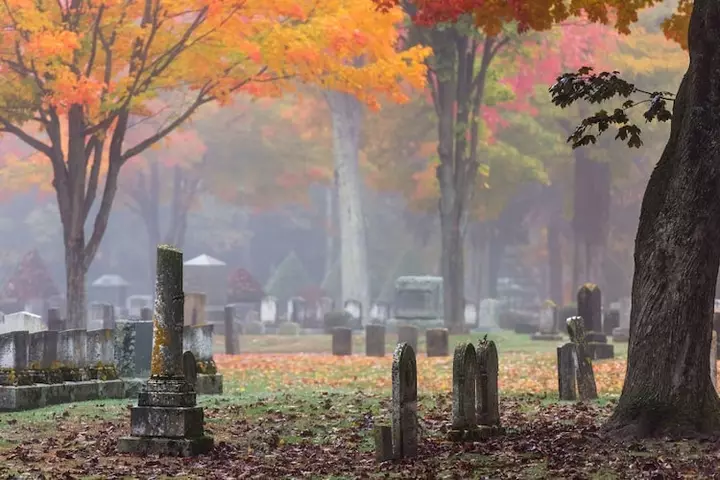
But it’s worth pulling over now and again and wandering through a cemetery. This is something we often do as a family when we’re visiting Vermont, and it always turns out to be a memorable highlight of the trip. Graveyards are surprisingly interesting places.
For one thing, they can simply be beautiful, park-like spaces (which is how Victorians used them), and the sculptures of some grave markers can be real works of art. They also viscerally connect you with history. Surveying artifacts behind a panel of glass in a museum is one thing; realizing the bones of someone who fought in the Revolutionary War lie beneath your feet is another.
While the literal ghosts of the dead don’t always make an appearance in graveyards, the ghosts of the past inevitably do. Cemeteries feel like portals to another time, one that feels both very distant and strangely close, and you pick up insights on the past and present you wouldn’t otherwise think about. For example, wander a cemetery and note the age at death on the headstones.
You’ll see some 70s and 80s, but also many for those much younger. As you pass markers that read 2, 8, 17, you rediscover just how strikingly common it was for people to die young prior to the 20th century; old cemeteries are full of the graves of infants and children. It really puts things in perspective, and makes you feel like the modern age, despite all its problems, is actually a great time to be alive.
And cemeteries make you realize it’s simply great to be alive, period. They’re naturally the perfect places to contemplate memento mori. Especially when you encounter an inscription that once commonly adorned headstones: Remember me as you pass by, As you are now, so once was I, As I am now, so you must be, Prepare for death and follow me In a graveyard, you recognize the inevitability of your fate, that one day, you, too, will be food for worms, and you’ll find no greater kick in the pants to carpe diem than walking around the final resting place of hundreds of corpses.
Extract — continue reading at the source.