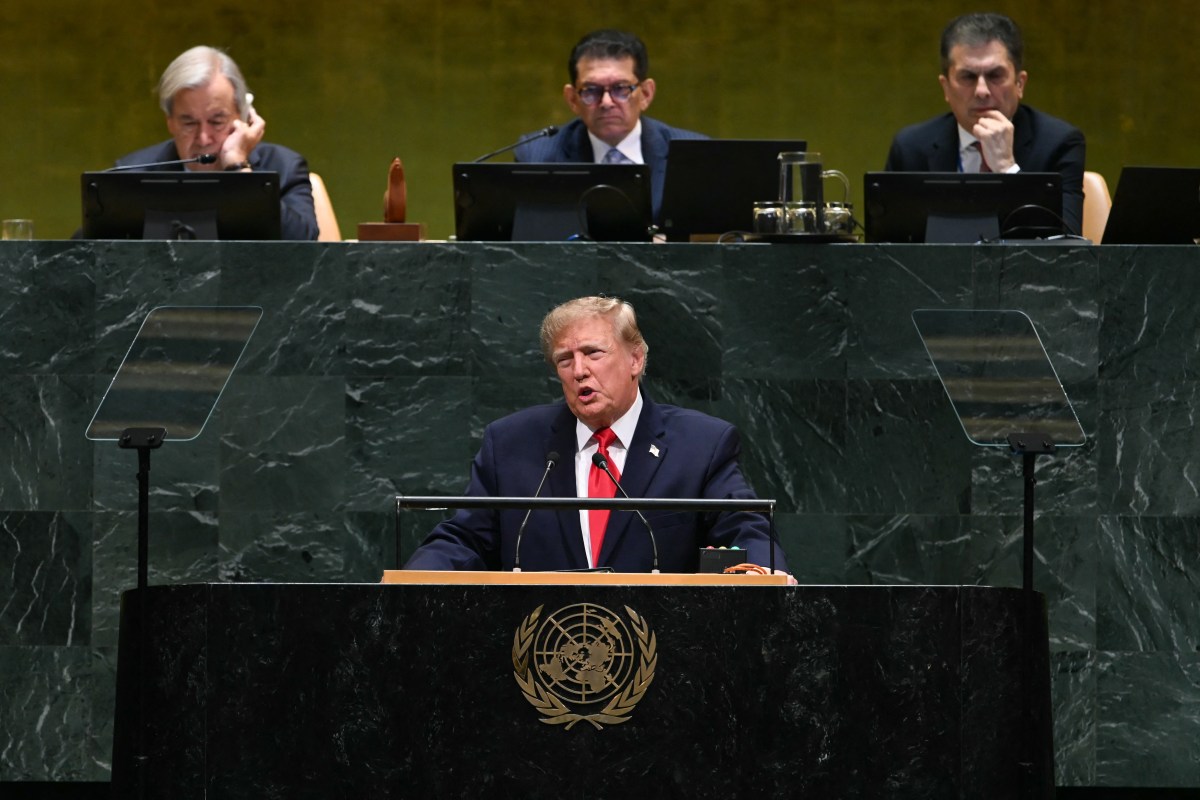
In his speech Tuesday to the United Nations General Assembly, U.S. Trump reframed his choice on Iran in stark terms: Tehran reaches out for a deal that allows it to rebuild and eventually become a great nation or face overwhelming destruction. Critics will say this is yet another act of bluster as well as a promise to destroy not just the regime, but the people.
In fact, considering Iran’s almost 50-year record of attacks on American people and interests, it’s a long overdue clarification of the pathways ahead for the radicals who seized power there in 1979. There’s a truism in politics that, when someone tells you who they are, believe them. So, when leaders of the regime as well as the people are busy chanting “Death to America,” consider at least the possibility they may mean it.
We live in a world where despots expect not only to be able to insult America and the American way of life at will, but that we will pay them to do so. The ultimate goal of the Iranian leadership, even beyond the destruction of Israel and the elimination of American influence in the region, is to become its dominant power. Not just a regional power, but a global one.
That all the nations of the Arab and Muslim world will speak with one voice, emerging from Tehran. They’ve dug in for a long struggle. Which is why Trump’s U.N. speech urged other nations to assist in isolating Iran economically.
They too would be under constant threat if Iran obtained a nuclear weapon, but they’ve chosen for the moment to sit this one out. Not just because they believe Trump started it, but because, for their own domestic political reasons, they cannot join him on causes as basic as restoring freedom of navigation to the Strait of Hormuz. For now, America is on its own.
Strip away the rhetoric and the strategic question is clear: Can the United States make Iranian aggression costlier than restraint? For nearly half a century, Iran has practiced aggression below the threshold of conventional war. It has armed militias, threatened American personnel, menaced commercial shipping, developed increasingly sophisticated missiles and drones, pursued nuclear capabilities and used proxies to destabilize the Middle East.
Extract — continue reading at the source.