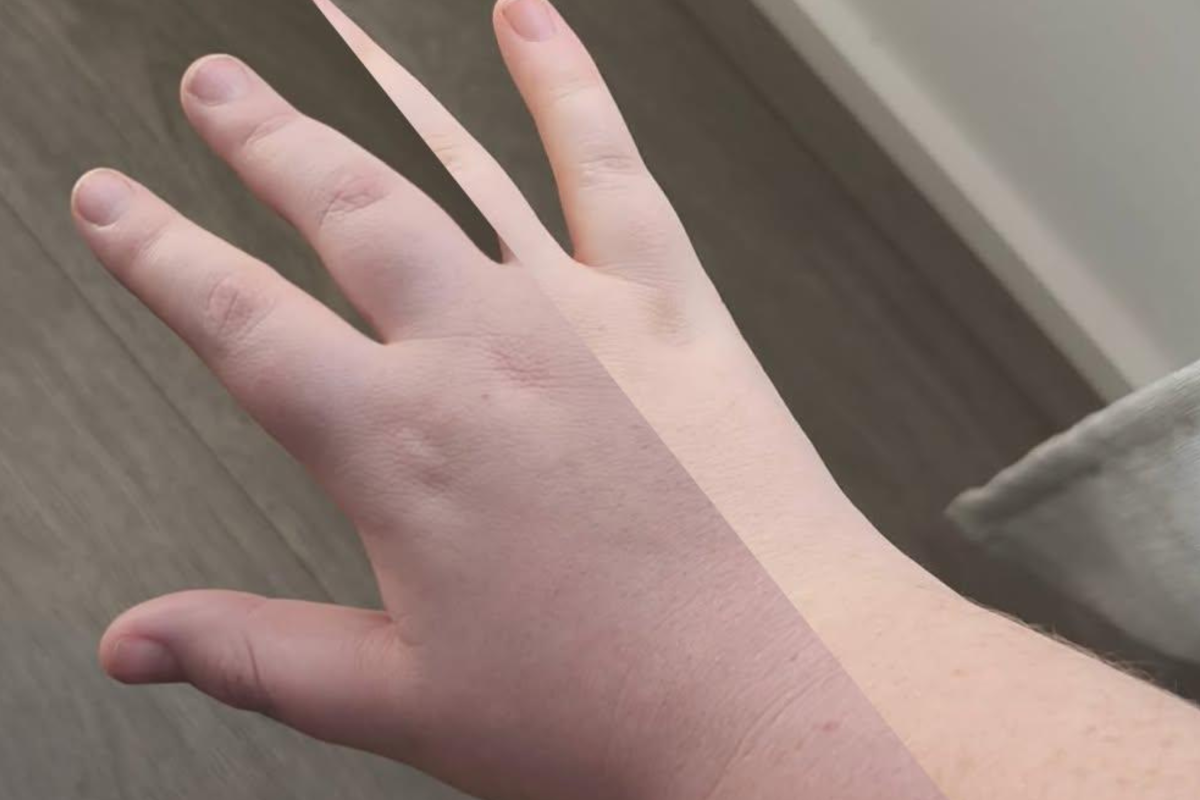
A woman who made a career working with her hands has called for more awareness after a rare diagnosis has affected her entire life. Elizabeth Lynch, who asked to go by her middle name, is 28 years old and lives in Melbourne, Australia. A creative, Lynch is an artist, photographer and graphic designer—and lives with a debilitating condition that makes her work and hobbies incredibly painful.
And, as she put it to Newsweek, "unfortunately, a lot of what I do relies heavily on my hands and arms. Holding a camera, drawing, editing photos, using a mouse and keyboard, and sitting at a computer for long periods." Lynch lives with Ehlers-Danlos syndrome (EDS), a genetic connective tissue disorder, and as such has "lived with pain and joint problems for most of my life." She was still able to carve out careers doing what she loves—but in the past few years, things "progressively became much worse," and she soon began to suspect something else was at play. What began as pain in her neck, shoulder and arm became "numbness and tingling, heaviness, weakness, swelling," and she began dropping things she was holding.
"It reached the point where I couldn’t comfortably hold a pen or repeatedly click a mouse, which was pretty frightening considering art and photography are such a huge part of both my work and my life," she said. Eventually, Lynch was diagnosed with vascular and neurogenic Thoracic Outlet Syndrome (TOS), describing it as the arteries and major nerves between her neck and arm being "physically crushed shut when I moved my arm," essentially blocking the blood flow through her artery and aggravating nearby nerves. According to a 2018 study published in the Journal of Brachial Plexus and Peripheral Nerve Injury, neurogenic TOS is usually caused by physical trauma, chronic repetitive motion, or bone and muscle anomalies.
Initial treatment is usually rehabilitation physiotherapy, but in some cases, surgical decompression may be advised, which can cause a "significant relief" of symptoms. TOS is rare, but the Mayo Clinic reports this may be because it can be difficult to diagnose. Symptoms include numbness, tingling, aches and pain, muscle changes, and skin changes, which may become worse if a patient lifts their arms or puts pressure on the area.
In Lynch's case, she says she was encouraged to "strengthen and exercise through the pain," and for years she tried "physiotherapy, strength training, water therapy, massage, dry needling and many other treatments." However, the symptoms got worse, with "significantly more pain, heaviness, weakness, tingling and loss of function afterwards. "Despite this I was continuously encouraged to continue physical therapy when in reality it was to my detriment." Lynch says her diagnosis has completely affected her life, and at her worst was struggling to drive, cook, wash her hair, draw or work—but had to push through. "Photography became extremely difficult because even holding a camera up and supporting its weight could flare my arm.
I went from being extremely independent and active with snowboarding, hiking, figure skating, painting, [and] running, to needing help with very basic things at the age of 27," she said. In December 2025, she underwent major surgery which included the "removal of my first rib, scalene muscles and extensive decompression/neurolysis of the brachial plexus," and surgeons found "significant physical abnormalities" that were leading to her intense symptoms. Things "improved considerably," but because of the rare and complex diagnosis, Lynch continues to live with "significant nerve pain, weakness and other compression points further down the arm," and is facing multiple further surgeries in the future.
Extract — continue reading at the source.