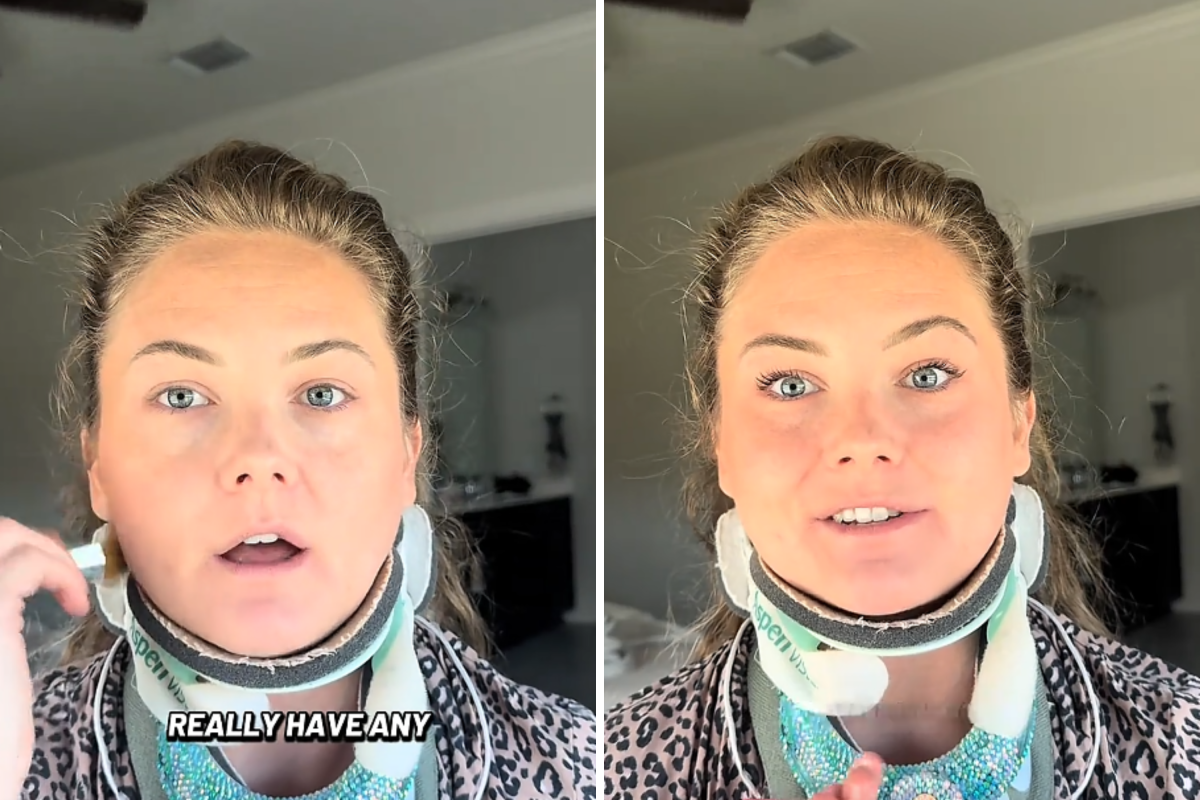
A Texas mom who spent years wondering why both of her pregnancies were marked by premature labor scares has finally found an explanation that helped make sense of what she experienced. Tangi Ford, 29, explained that both pregnancies were dominated by concerns that her babies could arrive far too early, leaving her feeling confused and searching for answers. During her first pregnancy, Ford learned at her 20-week appointment that she had already begun dilating.
Concerned about the risk of preterm birth, she put herself on bed rest. Her daughter was eventually born at 36 weeks. Several years later, history repeated itself.
At a routine 20-week scan during her second pregnancy, doctors found she was already three centimeters dilated and referred her to a maternal-fetal medicine specialist. Because of how far along she was, she was unable to receive a cervical cerclage, a surgical stitch sometimes used to help keep the cervix closed during pregnancy. She spent much of the remainder of the pregnancy on medically ordered bed rest before delivering her second child at 34 weeks.
For years, Ford, who shares her two daughters with husband 30-year-old Sam, never fully understood why these complications had happened. The mom of two was eventually diagnosed with Ehlers-Danlos syndrome (EDS), a group of inherited connective tissue disorders. While she stressed that no doctor has definitively told her EDS caused her pregnancy complications, learning that connective tissue disorders can be associated with cervical insufficiency transformed how she viewed her experiences.
Ehlers-Danlos syndrome affects the body's connective tissues, including collagen, which helps provide strength and structure throughout the body. Some studies have suggested that abnormalities in connective tissue may contribute to cervical insufficiency, a condition in which the cervix begins to open too early during pregnancy, increasing the risk of premature birth. She also reflected on years spent doubting herself as she experienced symptoms that never seemed to fit neatly into a single diagnosis.
The pregnancies themselves carried significant emotional challenges. Tangi described months of uncertainty, focusing on reaching one milestone after another while trying to keep her babies safely in the womb. Her eldest daughter spent just under a week in the neonatal intensive care unit after birth.
Extract — continue reading at the source.