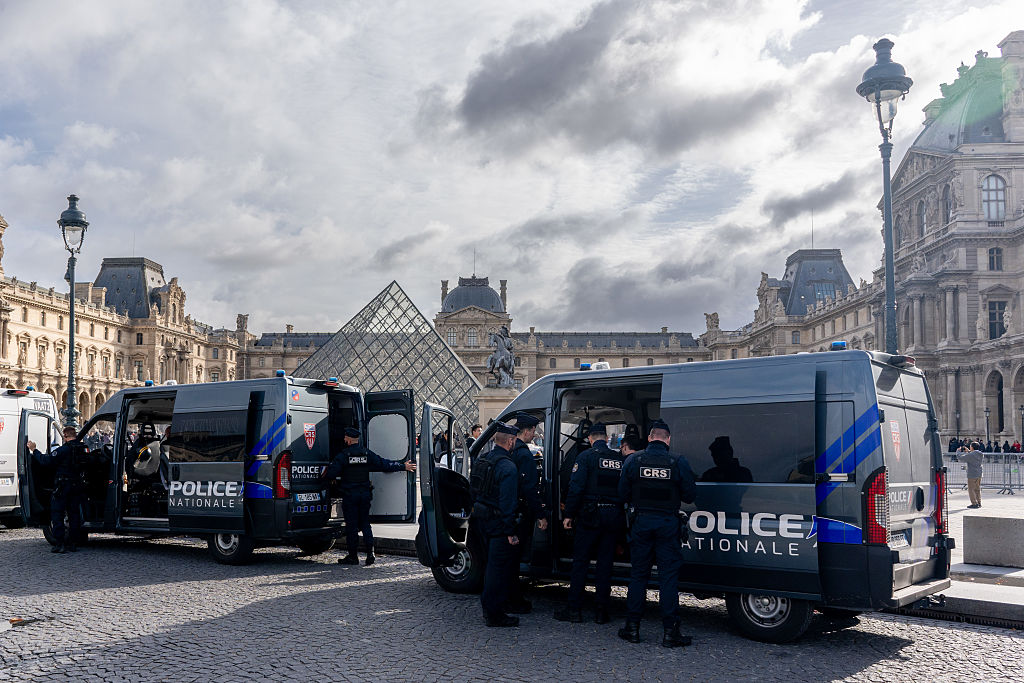
Nearly a year after precious jewels were stolen from the Louvre in broad daylight, France’s museums suffered another loss of major art when thieves stole four valuable paintings from the Renoir Museum on the French Riviera on Tuesday. These events, while seemingly isolated, point toward a broader trend in art heists across Europe. According to art theft investigator Anthony Amore, the crime has persisted throughout history.
It always will happen,” he tells TIME. At the same time, it’s “hard to deny” that there has been an uptick in major thefts of art from museums across Europe, he says. That recent concentration was particularly striking in France.
The country’s specialist art-crime office has recorded roughly 20 museum thefts annually over the past 15 years. But seven museums were targeted in September and October 2025 alone, the office’s chief told French lawmakers, describing an accumulation of unusually serious crimes. Read More: 25 Works of Art That Define America Now The latest heist targeted the former home and studio of Pierre-Auguste Renoir, an Impressionist artist born in the mid-19th century.
The residence in Cagnes-sur-Mer was converted into a museum in 1960. French investigators have launched a national search for the perpetrators, who broke in before 6 a.m. and executed the heist in less than three minutes. Cagnes-sur-Mer Mayor Bryan Masson told press that the thieves were “well-equipped” and “well-informed,” slicing through the garden fence with what is believed to be either an electric knife or saw, entering the museum on the ground floor, and cutting the cords holding the artworks.
Circumstances of their escape caused them to abandon two of the four pilfered artworks, but they fled with “Portrait of Madame Colonna Romano” and “Young Woman at the Well.” The incident bears similarities to the high-profile theft of the roughly $100 million worth of historic French crown jewels from the Louvre on Oct. 19, 2025. The haul has yet to be recovered or returned to the museum, even though authorities believe they have captured the entire four-man team responsible. Many of the heists in the year since have duplicated that team’s successful approach: Do it quickly and with force.
Amore says that these “quick heists” often utilize brute force entry, like breaking a window. That's what we saw here,” he continues. After the Louvre, thieves now see museums as accessible targets, he says—as long as they act fast.
Extract — continue reading at the source.