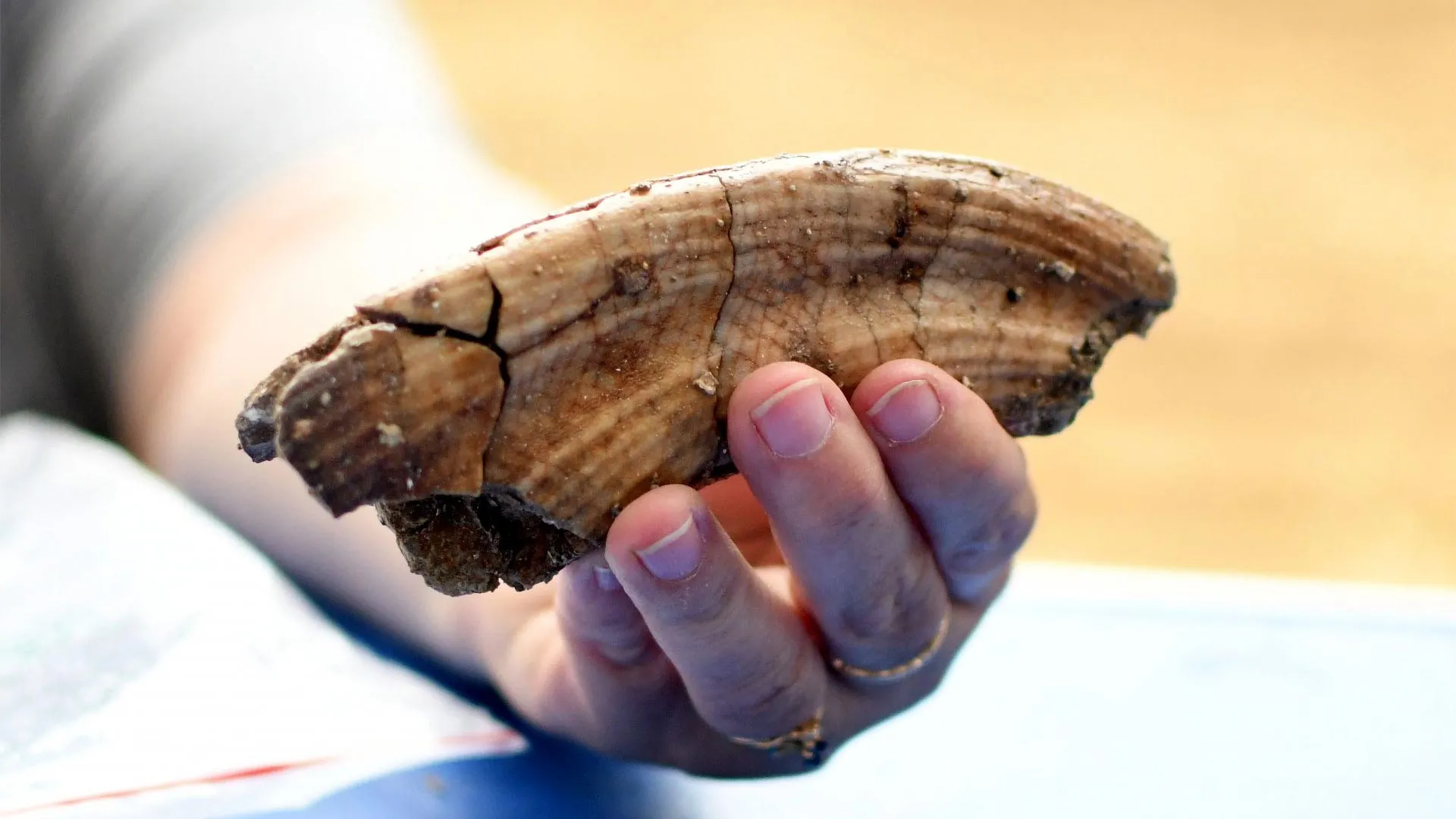
An archaeological site in the Jordan Valley is rewriting the timeline of early human migration. New research shows that 'Ubeidiya is at least 1.9 million years old, placing humans in the region hundreds of thousands of years earlier than previously believed. The revised dating makes 'Ubeidiya, alongside Dmanisi in Georgia, one of the oldest known sites of early human activity outside Africa.
The findings suggest that ancient human populations, using different types of stone tools, had already spread into the Levant during a crucial early period of human expansion beyond Africa. The research was led by Prof. Ari Matmon of the Hebrew University of Jerusalem, Prof.
Omry Barzilai of the University of Haifa, and Prof. Miriam Belmaker of the University of Tulsa. By combining three advanced dating methods, the team established a more reliable timeline for 'Ubeidiya, a site that has played an important role in research on human evolution.
Their findings indicate that the site is at least 1.9 million years old, making it one of the earliest known locations where ancient humans lived outside their African homeland. Ancient Stone Tools Reveal Early Human Activity The 'Ubeidiya Formation has attracted scientific attention for decades because of its early evidence of the Acheulean stone tool tradition. This technology is known for large tools shaped on both sides, including hand axes.
The site also contains a rich collection of animal fossils, representing species originally associated with Africa and Asia, including several that are now extinct. Despite its importance, researchers have struggled to establish exactly when early humans occupied the area. Previous estimates generally placed 'Ubeidiya between 1.2 million and 1.6 million years old, but those dates relied on comparisons with other archaeological and geological evidence rather than direct measurements.
To resolve the uncertainty, the researchers collected new samples from the site and analyzed them using three complementary dating techniques. Each provided an independent source of evidence about the age of the ancient deposits. The first technique, called cosmogenic isotope burial dating, uses rare isotopes that form when cosmic rays interact with rocks exposed at Earth's surface.
Extract — continue reading at the source.