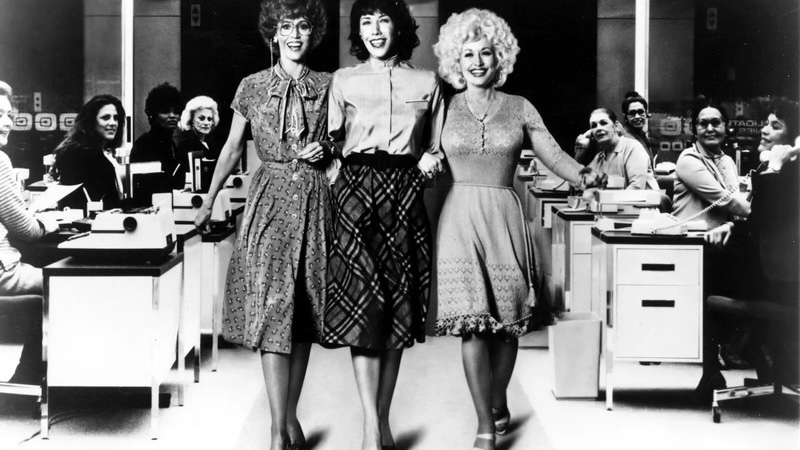
When Dolly Parton died recently, radio stations and music streamers filled our ears with her irresistible anthem, “9 to 5.” The song topped the music charts and was nominated for an Oscar. It transformed Parton, making her movie debut, into a global crossover star. The movie, a pointed comedy about three women—played by Jane Fonda, Lily Tomlin, and Parton—fighting against sexism and inequality in the workforce, was the second most popular movie of 1980, behind only “The Empire Strikes Back.” The real-life story that inspired the film is just as remarkable: How a small group of young women in Boston launched a movement to organize secretaries that transformed how women are treated in the workplace.
From Parton’s powerhouse song to the #MeToo movement to the rise of women CEOs and union leaders, Parton caught the spirit of change that rings out today as loudly as it did almost five decades ago. Karen Nussbaum sat in the back of a darkened movie theater on a winter day 1980, watching as women in the audience whooped cheered at the movie up on the screen—her movie. She swayed the beat as pictures flashed by of women in skirts and carrying coffee cups and newspapers, looking harried and determined, speeding along city streets to the infectious beat of Dolly Parton’s song…no, Dolly Parton’s anthem: Workin’ nine to five, what a way to make a livin’ Barely gettin’ by, it’s all takin’ and no givin’ Over the next ninety minutes, the comedy unfolded.
Tired of being summoned to fetch coffee or choose a gift for the boss’s wife, three office workers—played by Jane Fonda, Lily Tomlin, and Dolly Parton—humiliated and harassed by their sexist pig of a boss (played by Dabney Coleman), share a joint of marijuana, kidnap him, and live out their fantasies of revenge, giving their clueless male chauvinist boss a taste of his own medicine. It was a revenge tale for women victimized by workplace harassment. When the boss returns to the office vowing to send them all to jail, he is stunned to see the women have introduced job-sharing, flexible hours, and on-site child care.
The head of the company ships a humiliated Coleman to a “special project” in Brazil and makes Tomlin the new head of the office. These secretaries wanted better pay and benefits. They wanted opportunities to advance….They wanted to be treated with dignity.
The women in the theater cheered as if it were story. When Fonda struggled with a copy machine, a woman up and shouted, “Push the start button!” For many of the indignities up on the screen were true to life. For the previous six years Nussbaum had led one of the most successful grassroots organizations in the country—9to5—fighting for wages for secretaries, better promotions, and dignity in the Fonda, whom Nussbaum knew from their days in the anti-war movement, was so impressed when she heard what 9to5 doing she decided to make a movie, enlisting Tomlin and Parton.
As the credits rolled and the movie theater lights came up, in the audience fell silent. It was as if, Nussbaum thought, the men thought something dangerous might be going on here. The movie 9 to 5 became the second- highest-grossing film of the year, behind Star Wars: The Empire Strikes Back.
Extract — continue reading at the source.
/https://tf-cmsv2-smithsonianmag-media.s3.amazonaws.com/filer_public/dc/cc/dccc6636-887e-4221-8326-4dd6c36ba473/lvr-abr-roemischer-muenzschatz-wesseling-domitian.jpg)


/https://tf-cmsv2-smithsonianmag-media.s3.amazonaws.com/filer_public/d5/41/d54193b7-aca9-4f18-9695-1cf52589cd9c/view-of-lancaster.jpg)