These are, perhaps, not the very best times for humanities majors. Seldom do we even hear the once-standard defense that, by pursuing a course of study in subjects of that kind, students “learn how to think.” Such a justification still points to real value, at least in the most demanding settings. Take Harvard’s course Humanities 10, whose digital device-free environment and syllabus covering everything from The Odyssey and Ulysses to Plato and James Baldwin — at a pace of one substantial book per week — recently drew the attention of the Wall Street Journal.
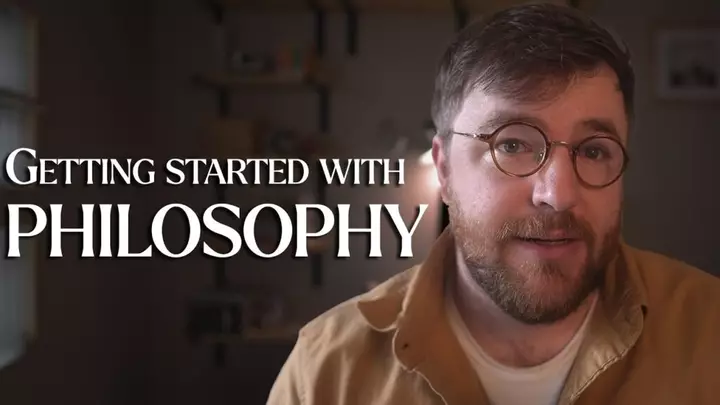
Yet it’s always been true that you don’t have to major in anything to learn how to think, or in any case, to make a start of doing so. Take the philosophy-and-literature YouTuber Jared Henderson, who in the video at the top of the post tells us how he began his self-directed study in high school. That sequence reflects the reasonable assumption that, before we can evaluate arguments about how society ought to be arranged, we must learn to evaluate statements about how things are.
We must, in other words, learn how to think — but also learn about the nature of reality itself, and how or whether we can know anything about it in the first place, questions relevant to both metaphysics and epistemology. That may seem like a daunting task, but Henderson frames all its stages in relation to one another, naming some of the most famous philosophers who have written in the relevant fields along the way. No single reading could give you mastery of their work, or even a full understanding of it, however clear the bigger picture might seem.
But the attempt teaches the true first lesson of philosophy: in one area of knowledge or another, you’ll always be a beginner. Seven Philosophy Books for Beginners: Where to Start The Radical Ideas of Plato’s Republic: An In-Depth Introduction A History of Philosophy in 81 Video Lectures: A Free Course That Explores Philosophy from Ancient Greece to Modern Times Based in Seoul, Colin Marshall writes and broadcasts on cities, language, and culture. He’s the author of the newsletter Books on Cities as well as the books 한국 요약 금지 (No Summarizing Korea) and Korean Newtro.
Follow him on the social network formerly known as Twitter at @colinmarshall. by Colin Marshall | Permalink | Comments (0) | We’re hoping to rely on our loyal readers rather than erratic ads. To support Open Culture’s educational mission, please consider making a donation. We accept PayPal, Venmo (@openculture), Patreon and Crypto!
Please find all options here. Open Culture scours the web for the best educational media. We find the free courses and audio books you need, the language lessons & educational videos you want, and plenty of enlightenment in between.
Extract — continue reading at the source.