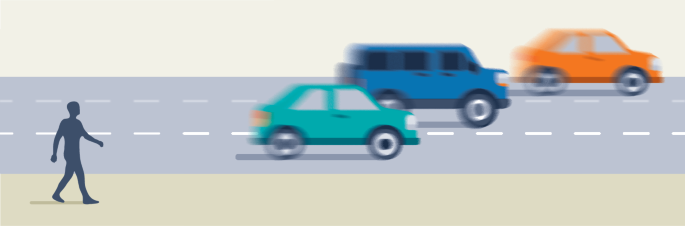
The movement for ‘slow science’ argues that the relentless pressure to publish quickly undermines scientific rigour, inflates false positives, and rewards hype over substance. The proposed solution is simple: more time1,2 — longer project horizons, fewer ‘rushed’ outputs, and extended review cycles. This proposal is intuitively reasonable: when people work faster, they tend to make more mistakes (|r| ≈ 0.17)3, which can undermine scientific quality.
However, the correlation between work pace and mistakes is smaller than typical effect sizes found in social psychology (|r| ≈ 0.24)4. When considered alongside other familiar correlations — such as the correlation between height and weight (0.22 < r < 0.75)5 — it becomes clear that inferring scientific rigour from research pace is even less sensible than estimating someone’s height with a bathroom scale. Instead, we must promote quality research directly; scientific quality can only be assessed by the substance and contribution of the work, irrespective of whether it was completed in five hours or five years.
In fact, there are three reasons why faster science may yield better outcomes than slow science. This is a preview of subscription content, access via your institution Access Nature and 54 other Nature Portfolio journals Get Nature+, our best-value online-access subscription Receive 12 digital issues and online access to articles Prices may be subject to local taxes which are calculated during checkout Frith, U. Meet. 52, 1513–1516 (2008).
Lovakov, A. & Agadullina, E. Psychol. 51, 485–504 (2021). Biol. 47, 199–207 (2020).
Article PubMed PubMed Central Google Scholar Pischel, L., Yildirim, I. & Omer, S. Article CAS PubMed PubMed Central Google Scholar Saag, M. Rev. 102, 1569–1577 (2022).
Department of Psychology, The University of Amsterdam, Amsterdam, Netherlands Department of Psychological and Brain Sciences, Texas A&M University, College Station, TX, USA The author declares no competing interests. A case for fast science amid calls for slow science. Nat Hum Behav (2026). https://doi.org/10.1038/s41562-026-02589-z DOI: https://doi.org/10.1038/s41562-026-02589-z
Extract — continue reading at the source.


