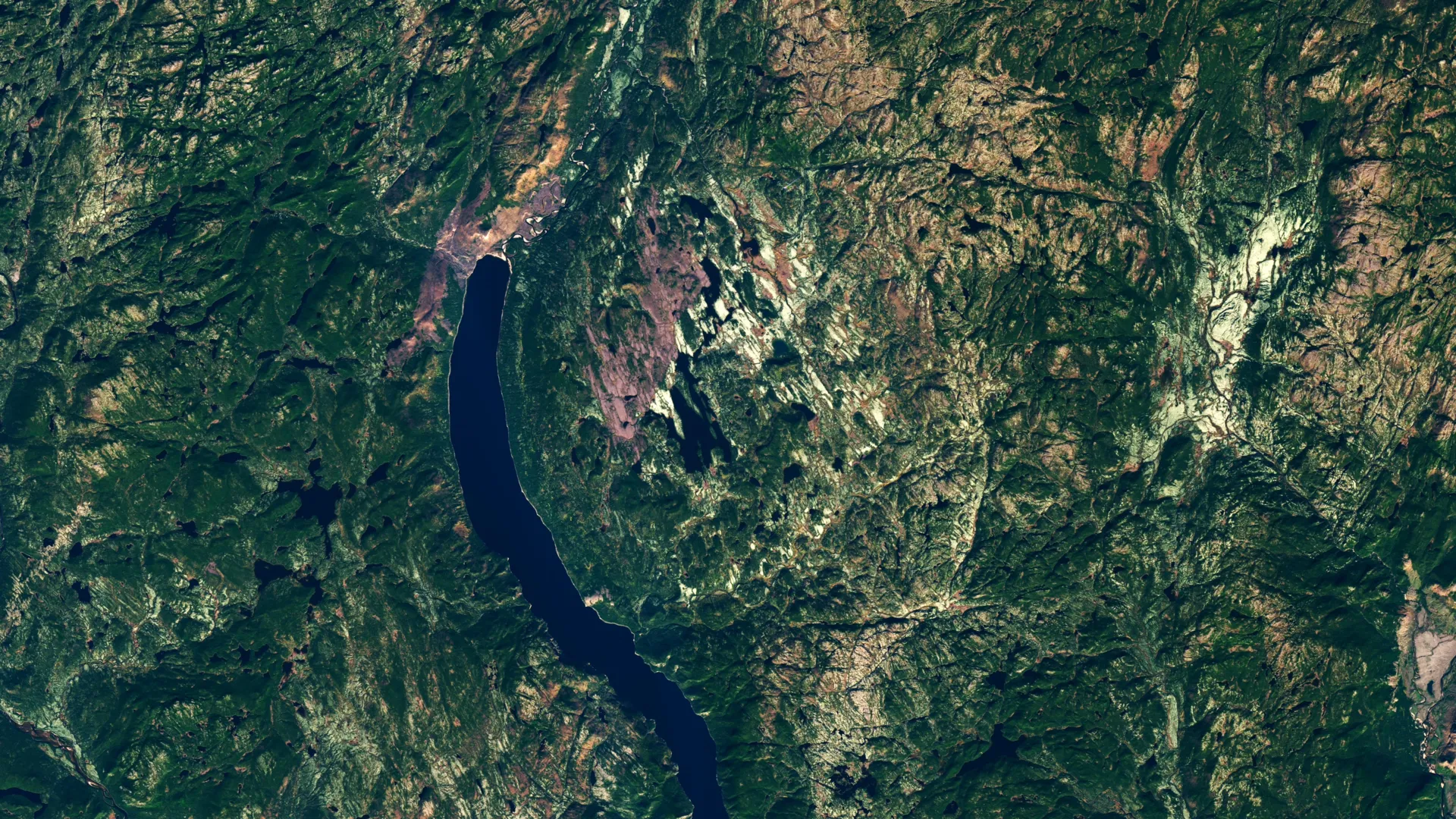
An amateur astronomer searching satellite maps for possible camping locations in Quebec ended up spotting something far more unusual: evidence of a previously unrecognized impact crater. Earth has only about 200 confirmed impact structures, although geologists believe hundreds more have yet to be identified. One of those hidden structures now appears to have been found, and it is a substantial one.
The newly confirmed site was first noticed by an amateur astronomer who was planning a camping trip in Quebec. In 2024, Joël Lapointe was preparing for a trip to the remote Côte-Nord region when a circular feature near Lake Marsal caught his attention on online satellite imagery. He wondered whether the depression could have been formed by an impact and reached out to specialists in Europe and North America.
Lapointe's inquiry helped prompt a group of French researchers to identify the lake area as the center of a potential 11th known impact structure in Quebec at a 2024 meeting of the Meteoritical Society. The possibility eventually drew the attention of Gordon Osinski, a planetary geologist at Western University who also directs the Impact Earth database. Osinski was skeptical at first, but the possibility was intriguing enough that he organized an expedition to the isolated location in October 2025.
A Difficult Journey Into the Quebec Wilderness Reaching the site proved challenging almost immediately. Osinski and his colleagues flew in by floatplane, but the aircraft could not make it all the way to shore. Carrying their equipment, the team had to wade through 50 meters (165 feet) of water before reaching land.
Conditions did not improve once they arrived. The landscape was rugged and swampy, filled with insects and dense vegetation that Osinski described as "deep, twisty, gnarly vegetation." Despite years of fieldwork across six continents, he said the area ranked among the most difficult environments he had ever worked in. Earlier geological surveys had interpreted the local breccia rocks as evidence of a funnel-shaped volcanic structure called a diatreme, which forms when explosive magma eruptions create a pipe filled with shattered rock.
By the expedition's second day, however, the team began finding something far more decisive. Researchers discovered shatter cones in numerous rock outcrops. These distinctive structures form under the intense pressures produced during an impact and provided compelling evidence that the feature was not volcanic after all.
Extract — continue reading at the source.


