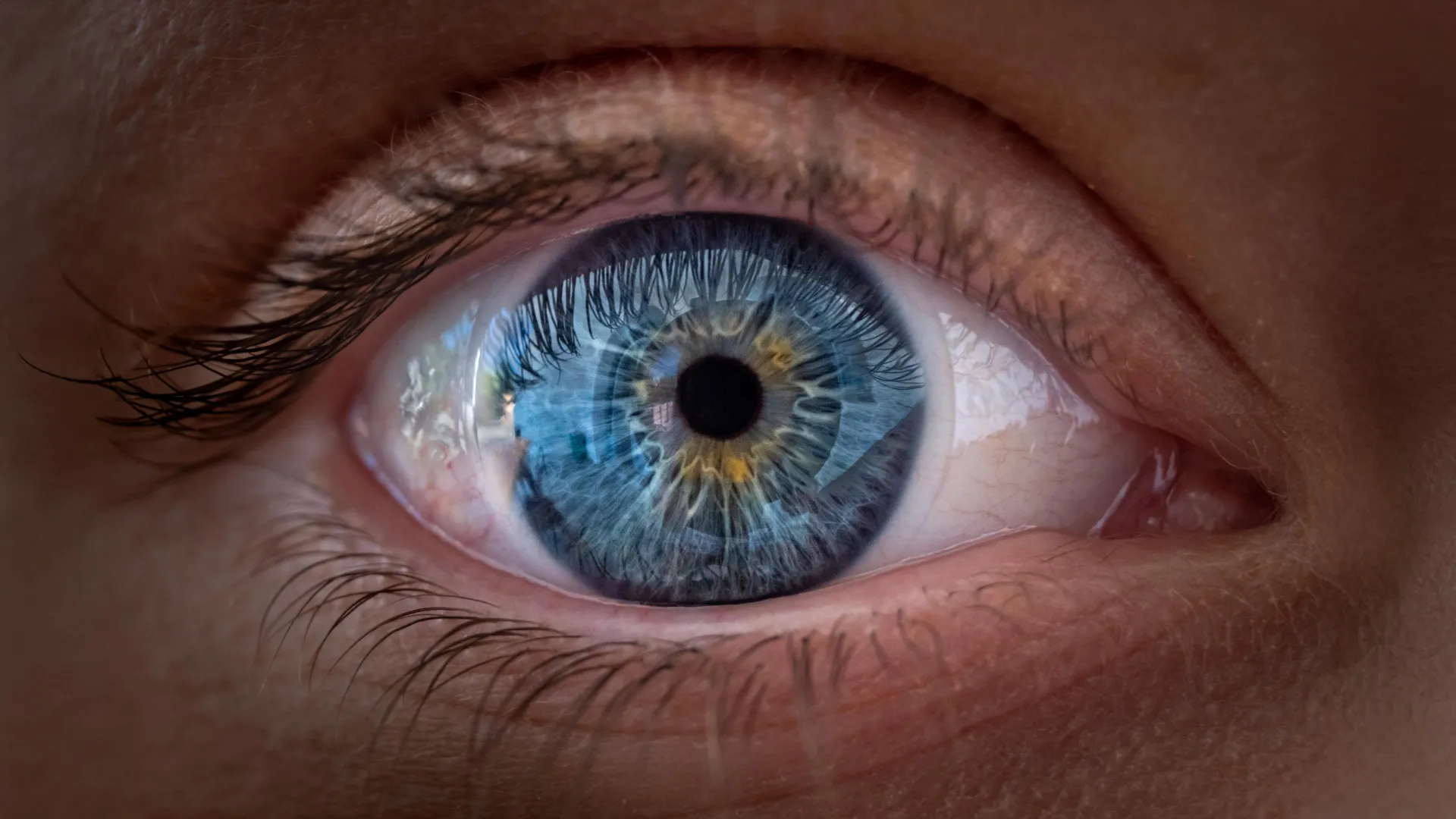
Scientists at Johns Hopkins University have uncovered a surprising role for a vitamin A derivative in the development of human vision. Their research reveals how this molecule works alongside thyroid hormones to help form the part of the eye responsible for our sharpest sight, challenging a scientific explanation that has stood for roughly 30 years. The discovery centers on an unexpected transformation that occurs in the developing retina before birth.
Certain cells that initially detect blue light appear to change into cells sensitive to red and green light, helping create the specialized arrangement needed for clear central vision. Published in Proceedings of the National Academy of Sciences, the findings could reshape scientists' understanding of how human eyes develop. They may also help advance research into future treatments for macular degeneration, glaucoma, and other conditions that cause vision loss.
"This is a key step toward understanding the inner workings of the center of the retina, a critical part of the eye and the first to fail in people with macular degeneration," said Robert J. Johnston Jr., an associate professor of biology at Johns Hopkins University who led the study. "By better understanding this region and developing organoids that mimic its function, we hope to one day grow and transplant these tissues to restore vision." How Scientists Recreated the Developing Human Retina To investigate how human vision forms, Johnston and his colleagues turned to an innovative laboratory technique they have helped develop over the past several years.
Instead of relying entirely on animal experiments, they grew miniature versions of human retinal tissue called organoids. These small clusters of cells, grown from fetal cells, reproduce important features of developing human tissue. By observing the retinal organoids over several months, the scientists could follow changes that would otherwise be extremely difficult to study during pregnancy.
Their attention focused on the foveola, a tiny region at the very center of the retina. The retina is the light-sensitive layer at the back of the eye that converts incoming light into signals the brain can interpret. Within it, the foveola plays an especially important role in detailed central vision, which allows people to read, recognize faces, and distinguish fine details.
Although the foveola occupies only a small fraction of the retina, it is involved in approximately 50% of human visual perception, according to the researchers. The Surprising Secret Behind Sharp Human Vision One of the keys to understanding the foveola is a group of specialized light-detecting cells called cones. Unlike rod cells, which are particularly important for seeing in dim light, cones support daytime vision and allow us to perceive color.
Extract — continue reading at the source.