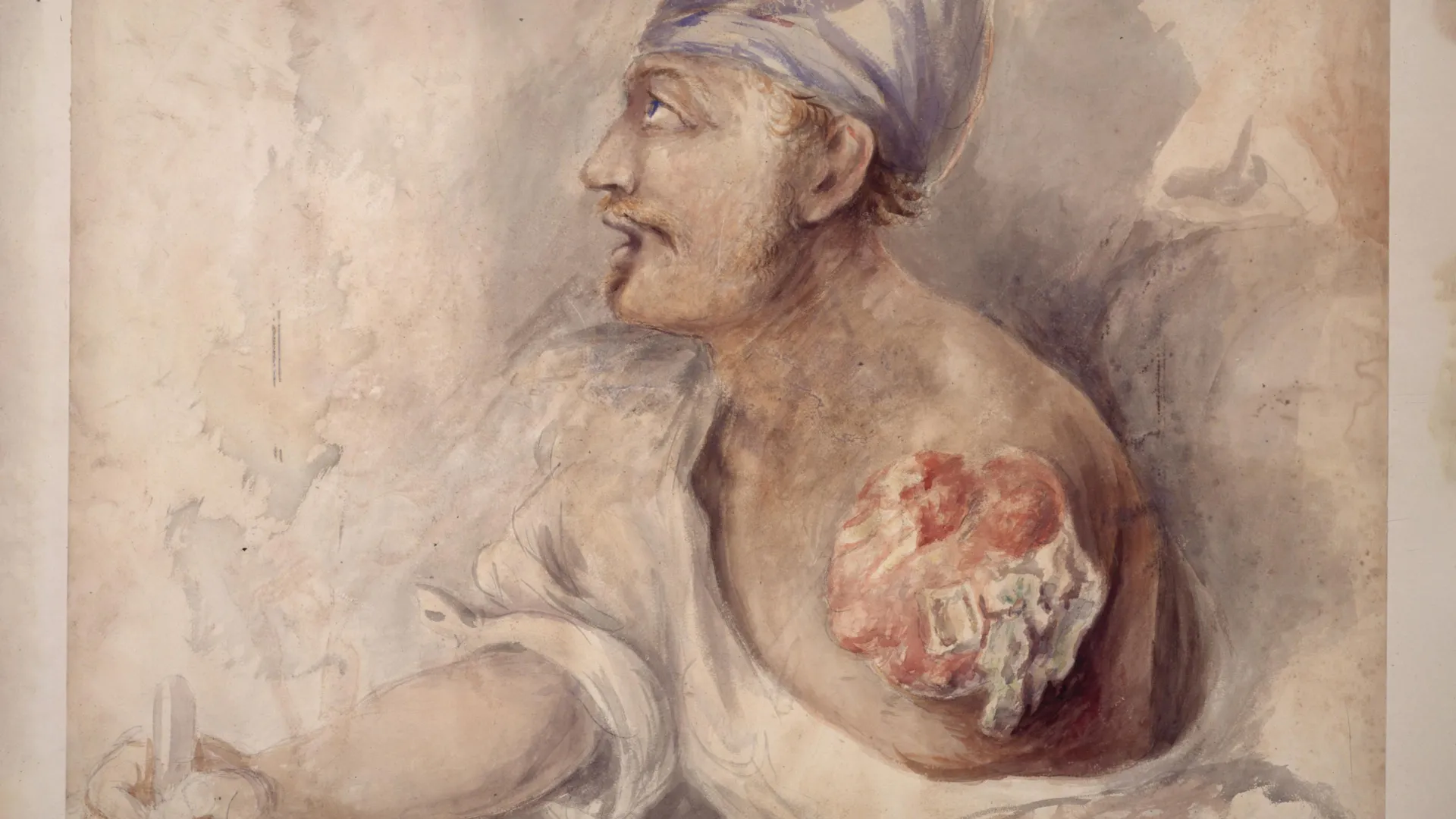
Archival discoveries, including a long-forgotten 19th-century autobiography, are changing how historians understand Shadrack Byfield, an English veteran of the War of 1812 who buried his own amputated arm and later created a custom prosthesis. Byfield has appeared repeatedly in television documentaries, books, and museum exhibits in the USA and Canada, where he has often been portrayed as a stoic British soldier who endured hardship without complaint. Newly uncovered evidence presents a much more complicated picture.
It shows a determined veteran who spent years demanding better benefits while struggling with chronic pain, poverty, employers, and the police. 'They came and pushed me about, and spat in my face, hoping that I should strike them, in order if possible, to take away my pension … They reported that I intended to shoot two of the deacons.' Those words come from Byfield himself, describing an encounter at his local chapel in Gloucestershire during the 1850s, when he was 63 and living with the effects of his wartime injuries. By then, he had become caught up in a fierce dispute among village Baptists. He would later be accused of cutting an opponent across the face with the iron crook attached to his wooden arm.
Elsewhere in his rediscovered autobiography, Byfield described how injuries from the war continued to affect him decades after the fighting ended: 'It now pleased the Lord to afflict me with a violent rheumatic pain in my right shoulder, from which the [musket] ball was cut out. I was in this condition for nearly three years: -- oftentimes I was not able to lift my hand to my head, nor a tea-cup to my mouth'. He was equally outspoken when he believed his disability was being used as a reason to pay him less.
After an employer refused to give him full wages for working as a one-handed gardener, Byfield declared: 'I never saw the man that would compete with me with one arm'. While a Cambridge University historian, Dr. Eamonn O'Keeffe discovered what he believes is the only surviving copy of Byfield's History and Conversion of a British Soldier.
Published in London, England, in 1851, the autobiography resurfaced roughly 3,700 miles away in the library of the Western Reserve Historical Society in Cleveland, Ohio. O'Keeffe published his findings in the Journal of British Studies (Cambridge University Press). "Byfield's account of his wartime experiences is quite well known but the man behind the memoir has remained elusive.
Uncovering these new details about his life provides remarkable insight into the suffering and resilience of Britain's homecoming soldiers," says Dr. The War of 1812 was fought in North America between the United States and the United Kingdom as the Napoleonic Wars were drawing toward an end in Europe. The conflict became an important episode in the formation of national identity in both the US and Canada.
Extract — continue reading at the source.


