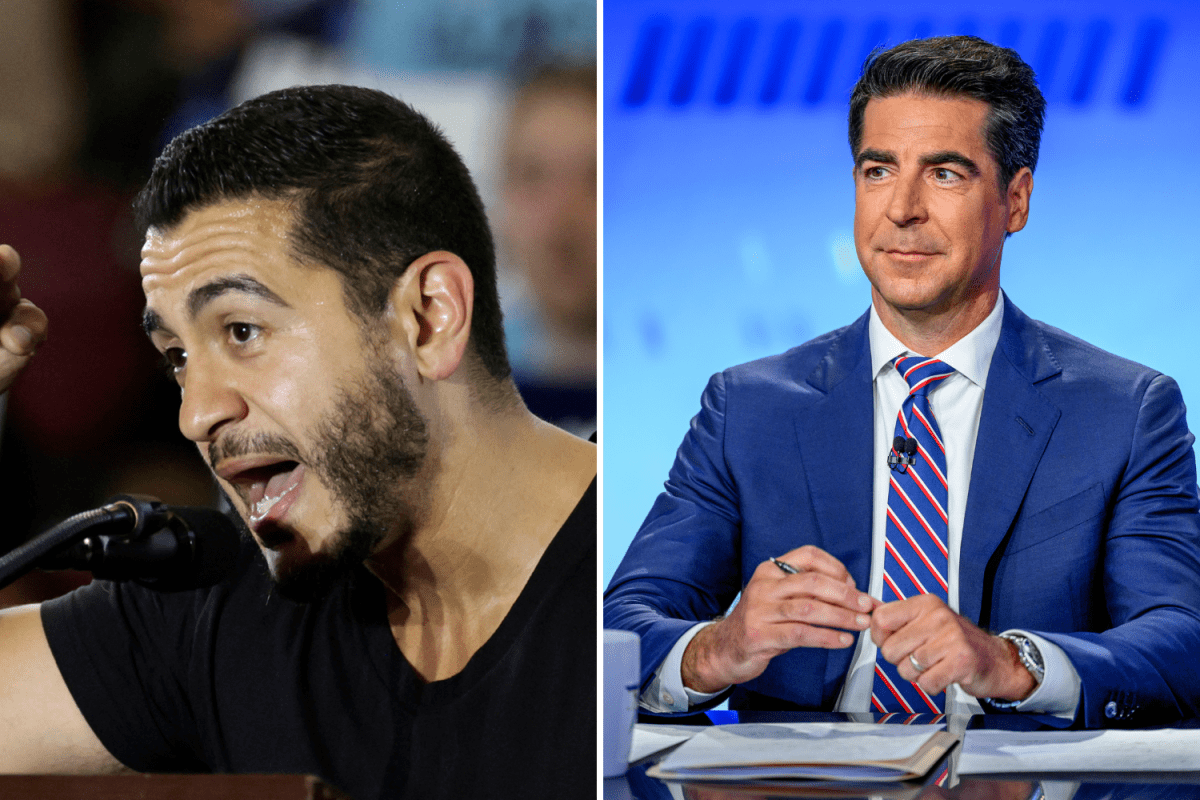
Senate seat in Michigan, repeatedly clashed with Fox News host Jesse Watters in an interview that touched on transgender athletes, immigration, health care and the economy. The combative exchange highlighted a broader debate over whether Democrats should focus on cost-of-living concerns or weigh in on the culture-war issues Republicans have weaponized in recent elections. El-Sayed has become one of the most closely watched candidates of the 2026 midterms following his surprise primary victory earlier this month.
With polls showing a tightly contested race against Republican Mike Rogers in a battleground state that could help decide Senate control, his interview on Jesse Watters Primetime offers a glimpse into the arguments that could define the campaign's final months. The sharpest exchanges came when El-Sayed argued that Watters was focused on culture-war topics rather than day-to-day economic concerns. "You have not asked me one time about the issues that people actually care about in Michigan," El-Sayed said, pointing to health care costs, gas prices and groceries as larger voter concerns.
Throughout the interview, he repeatedly attempted to redirect the discussion toward economic issues and health care policy. Watters pressed El-Sayed several times on whether transgender women should compete in women's sports. Rather than answering yes or no, El-Sayed said sports participation decisions should be made by athletic governing bodies rather than politicians.
Senate, Jesse," he said, adding, "I'm out here trying to take on the health care crisis and Big Pharma, and you're asking me about who gets to play what sports." At several points, El-Sayed suggested Watters was revisiting familiar conservative talking points rather than discussing policy proposals. "You're doing the greatest hits, Jesse," he said, adding that he was "not here to fight a culture war." The moment encapsulated a broader argument the Senate nominee has made on the campaign trail: that Democrats should focus on economic issues rather than engaging in debates that dominate cable news coverage. One of the interview's most widely shared exchanges came when Watters questioned El-Sayed about gender-related medical issues involving minors.
El-Sayed, a physician, responded by drawing a comparison to circumcision, arguing that medical decisions involving children are routinely made by families and doctors without political involvement. "It's a problem that you think that you get to decide what happens between a parent, a doctor and a patient," he told Watters. "And I'm just saying that, yes, circumcision is surgery on a kid's ding-a-ling, so if you really want to bring that up, you can.
I just think you guys are really selective about how you want to talk about these things." The Democrat said such decisions should remain between parents, doctors and patients, rather than politicians, a position consistent with his broader argument that elected officials should focus on issues such as health care costs and the economy rather than personal medical choices. Another notable moment in the wide-ranging, 25-minute interview came when Watters pressed El-Sayed on efforts in some states to ban courts from considering Sharia law. El-Sayed, who is Muslim, pushed back on the premise of the question, arguing that the U.S.
Extract — continue reading at the source.