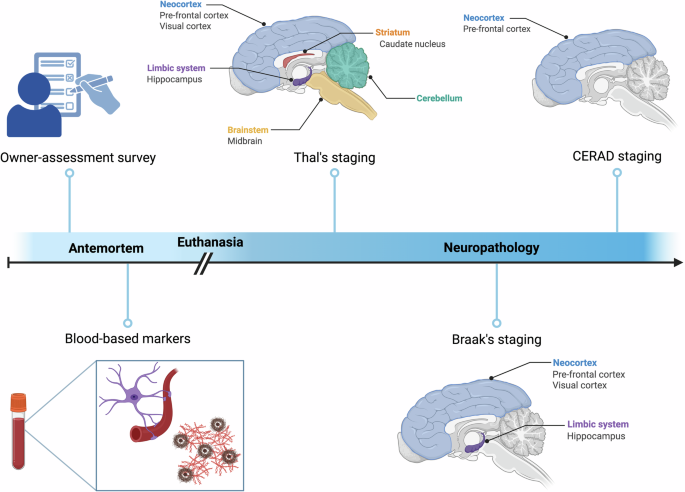
Alzheimer’s disease (AD) is a progressive neurodegenerative disorder affecting more than 55 million people worldwide and is characterized by cognitive decline, amyloid-beta (Aβ) plaques, and neurofibrillary tangles. Although transgenic rodent models have advanced understanding of AD, they do not fully replicate the spontaneous, age-related nature of human disease. Companion dogs naturally develop age-associated cognitive decline and AD-like neuropathology, making them a valuable translational model.
This study characterized Aβ deposition, phosphorylated tau (pTau181) pathology, and neuritic plaque pathology in aged canine brains using neuropathologic assessment methods adapted from human AD frameworks (Thal, Braak, and CERAD), and examined associations with cognitive status and plasma biomarkers. Postmortem brain tissues from 24 client-owned senior dogs were evaluated and integrated with antemortem Canine Cognitive Dysfunction Rating (CCDR) scores and plasma biomarker measurements. Senior dogs exhibited Aβ deposition consistent with early Thal-like regional involvement, variable regionally restricted pTau181 pathology, and an absence of neuritic plaques.
Quantitative analyses showed greater Aβ burden in cognitively impaired dogs, while age was the strongest predictor of regional Aβ accumulation. Plasma glial fibrillary acidic protein (GFAP) concentrations were positively correlated with Aβ plaque burden, whereas other biomarkers were not. These findings indicate that aged dogs develop early-stage AD-like pathology and support their utility as a naturally aging model for studying preclinical AD mechanisms and translational biomarkers.
Alzheimer’s disease (AD), a progressive neurodegenerative biological construct characterized by progressive cognitive decline and its defining neuropathologic features, collectively termed Alzheimer’s disease neuropathologic change (ADNC), which includes amyloid-β (Aβ) plaques and tau neurofibrillary tangles (NFTs). Although anti-amyloid immunotherapies are now approved for early-stage AD, their clinical use remains limited to selected patients and they do not stop or reverse disease progression, underscoring the urgent need for innovative research approaches1. Progress in the field has been hindered by limitations in transgenic rodent models, which, despite providing mechanistic insights, often rely on genetic modifications and fail to fully recapitulate the spontaneous, age-related, and multifactorial nature of human AD pathology2.
These limitations highlight the need for alternative animal models that better capture the complex interplay of genetic, environmental, and aging factors in AD. The companion dog represents a distinctive and naturally occurring model of AD, exhibiting age-dependent cognitive decline and neuropathological features that overlap with key elements of human ADNC, including age-associated brain atrophy and the accumulation of Aβ plaques and phosphorylated tau deposits that partially recapitulate early tau changes in human AD3,4,5,6. In contrast to traditional rodent models, dogs share human environments, lifestyles, and daily exposures, providing a natural and translationally relevant context for studying the development and progression of AD-like pathology, but on an accelerated timescale.
On average, a domestic dog lives approximately 10–12 years compared to an average human lifespan of 77 years in some populations7,8. Importantly, dogs experience age-associated cognitive decline, termed canine cognitive dysfunction (CCD) syndrome, which typically affects dogs over eight years old and is associated with signs of dementia that are similar to those that occur in AD, including disorientation, altered social interactions, and functional decline9. Recent studies from the Dog Aging Project (dogagingproject.org) have advanced our understanding of CCD epidemiology by assessing signs of dementia in over 15,000 dogs, revealing strong associations between CCD and factors such as age10 and physical activity11.
Extract — continue reading at the source.


