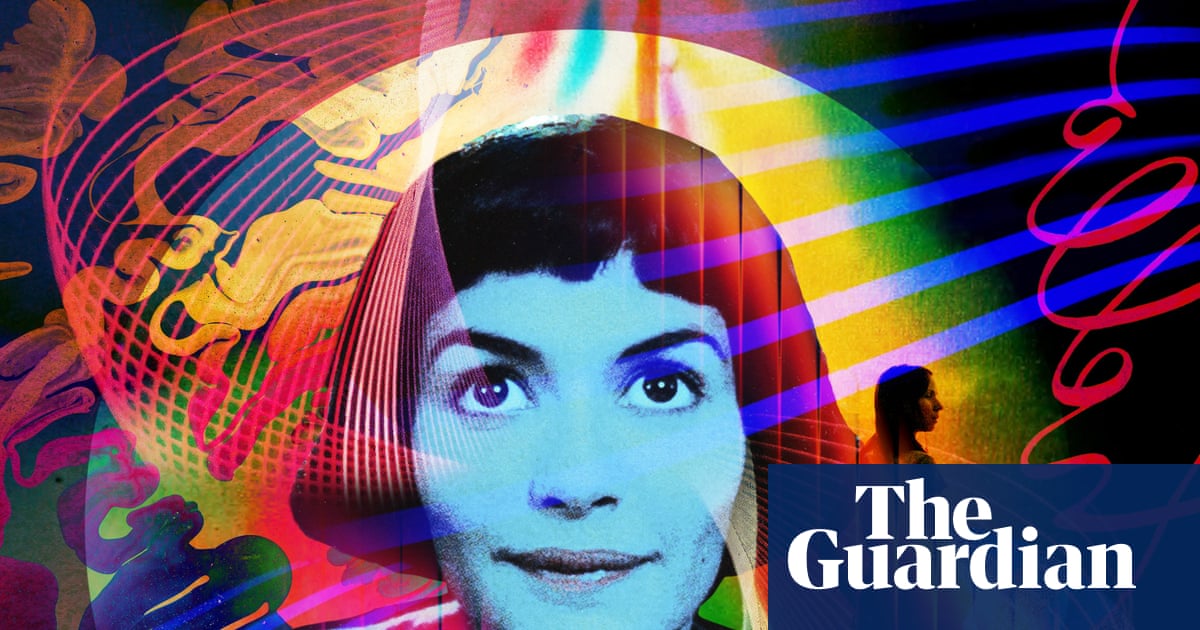
Amélie likes the sound of cracking creme brulee with a teaspoon, plunging her hand into a sack of grain, and turning around in the cinema to watch people’s faces in the dark. I like the smell of books and I love cinema, but I hate the sound of people eating popcorn. Amélie was not the first neurodivergent-coded woman I’d seen depicted in film.
There had been Margot Tenenbaum in The Royal Tenenbaums and Suzy Bishop in Moonrise Kingdom – two Wes Anderson characters in whom I’d recognised myself. But Amélie was the first who was at the centre of the story; she’s the titular character and we see things through her eyes. It was the first time I’d seen a woman on screen move through the world as I did: overstimulated, a bit lonely and afraid of the unknown, comfortable in her own company, with firm likes and dislikes and a powerful sense of social justice.
My parents suspected I was autistic as a child: I didn’t have any friends, preferring my own company or that of my parents, and I couldn’t understand why other children behaved the way they did. I had hyperfixations and obsessive special interests. Doctors were trained to look out for the stereotypical signs of autism in boys, and autism can show up differently in girls, who tend to mask (assimilate the behaviours of neurotypical people) a lot more.
My sense of humour, empathy and interest in history and culture rather than maths or science meant I wasn’t formally diagnosed until my early 20s. But a diagnosis has never felt important to me. That’s what I love about Amélie: she’s never labelled as autistic in the film, yet it was clear to me, as a neurodivergent person, that she was, too.
In the opening credits, young Amélie flaps her hands over her ears, spins a coin and runs a finger round the rim of a glass – behaviours I now recognise as “stimming” (repetitive movements, sounds or words that help process sensory input or manage emotions). Adult Amélie’s overwhelm is communicated not only through Audrey Tautou’s performance, but through the cinematography. When she takes the Paris Métro, the wide lens and intensified sound evoke the experience of sensory overload.
When Amélie is happy, everything glows. When she is sad, she literally becomes a puddle on the floor. Ten years ago, I was in my second year at the University of Cambridge when I first watched Amélie, on a DVD player alone in my room.
Extract — continue reading at the source.