As the United States watches some of its most contentious criminal cases unfold, trying to decipher what happened and why, something curious keeps happening outside the courtroom: much of the country has already made up its mind about who the defendant really is. It has become almost a feature of America's justice system: an accused person is transformed into a symbol before the legal system has finished determining what actually happened. At Lindsay Clancy's murder trial in Massachusetts, jurors are considering whether severe postpartum mental illness left her legally insane when she killed her three children.
Outside the courthouse earlier this week, hundreds of women dressed in pink have rallied in her support, some wearing shirts declaring "She Needed Help" and "Peace For Lindsay." Whatever conclusion the jury eventually reaches, a community has already formed around a different verdict: Clancy as a mother failed by the institutions that should have saved her and her children. Let’s call it preemptive martyrdom: the moment when a defendant comes to represent a cause larger than the case itself, and supporters become invested in that symbolic story before inconvenient evidence has had a chance to complicate it. The particulars change—the martyr could be a mentally ill mother denied the care that might have prevented a catastrophe or a Black teenager as a victim of a racist justice system—but the archetype fairly often materializes before the evidence is even on the table.
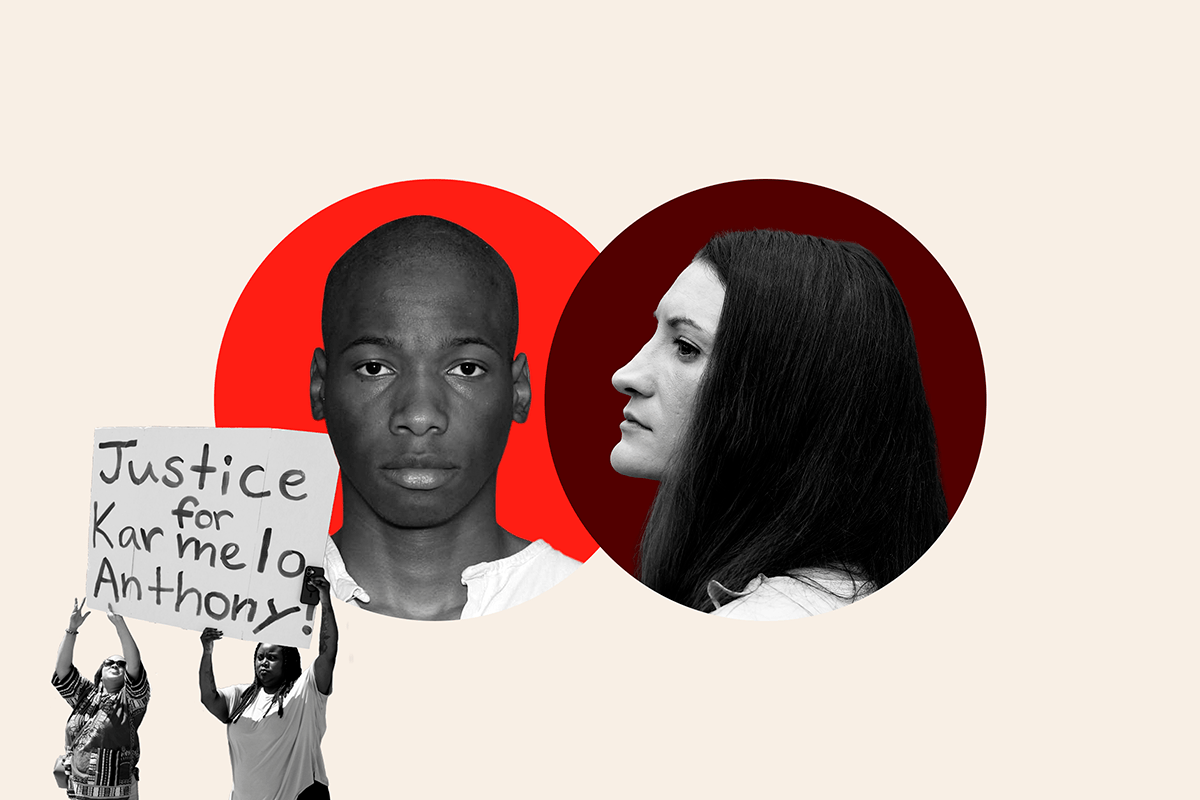
Take Karmelo Anthony, the Texas teen who fatally stabbed 17-year-old Austin Metcalf during a high school track meet in April 2025, claimed self-defense and was ultimately convicted of murder. Before the jury returned a verdict, Anthony had already been cast in the general public eye as a young Black man who was turned into a villain because of the racial nature of the case. That narrative fueled a vast online defense campaign and hundreds of thousands of dollars in donations, but as more evidence has emerged, the picture has become harder to keep so tidy.
Messages and disciplinary material aired in post-trial proceedings have added details about Anthony's prior talk of knives, guns and fighting, while evidence about Metcalf has complicated the equally simplistic image of him as an entirely blameless bystander. Anthony's lawyers, meanwhile, have raised serious questions about how his trial was handled. The point is not that Anthony's supporters were necessarily wrong, but that many had settled on what he represented before they knew enough.
Other defendants have proved similar vessels for pre-emptive martyrdom: Luigi Mangione for anger at the health-insurance industry, Daniel Penny for fears about crime and disorder and Kyle Rittenhouse for competing narratives about self-defense, vigilantism and political violence. In each case, the public argument quickly expanded beyond what the defendant had done to what supporters believed the defendant represented. Folks cast Mangione as a kind of avenger for Americans believed to have been mistreated by insurers, Penny represented the ordinary citizen forced to act because authorities failed to keep public spaces safe, and Rittenhouse was the armed citizen exercising his right to defend himself amid the disorder surrounding the 2020 protests in Kenosha.
The politics vary, but the psychological bargain is almost identical, which leads to the question: why are Americans so eager to turn defendants into martyrs before they know how the story ends? In 2026, criminal cases unfold on two different timelines: the legal system and social media. The former moves slowly by design as evidence is challenged and witnesses are cross-examined.
Extract — continue reading at the source.