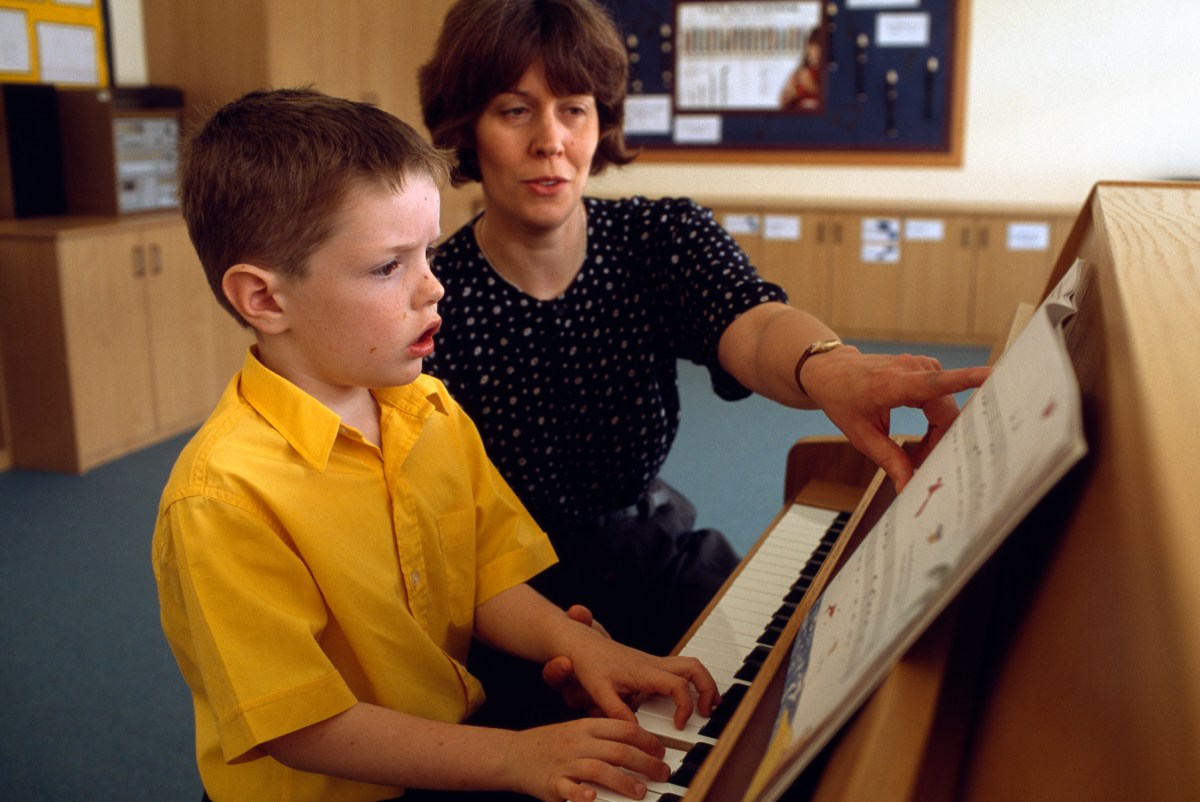
Across the United States, reading performance has weakened significantly in recent years. According to the National Center for Education Statistics (NCES), the average eighth-grade reading score in 2024 was two points lower than in 2022, and five points lower than in 2019. These numbers represent something larger than a testing problem.
They raise questions about how effectively we are preparing children to pay attention, process information, retain what they learn, and apply it in unfamiliar situations. If I have learned something from my work with children, it is that learning rarely happens through conventional instruction alone. Children respond to rhythm, repetition, stories, sound, and emotional experience.
Music brings many of those elements together in a form children instinctively understand. That makes it far more significant to childhood development than its place in the school timetable might suggest. What happens to a child’s brain when that child listens, sings, or plays music?
The answer begins with brain activity. Brain imaging research shows that children process musical stimuli through distributed cortical and subcortical systems, with auditory, motor, memory, and other networks participating in the experience. A systematic review of 46 neuroimaging studies involving children from infancy through adolescence, indexed by the National Library of Medicine, found that musical processing engages broad brain circuitry and develops substantially throughout childhood.
That matters because music is fundamentally about relationships. A child hears a rhythm and anticipates what comes next. A melody establishes a pattern and then changes it.
A song can attach emotion to words and memories to experiences. A child singing must coordinate sound, timing, language, and attention. Playing an instrument adds physical coordination and feedback.
Extract — continue reading at the source.