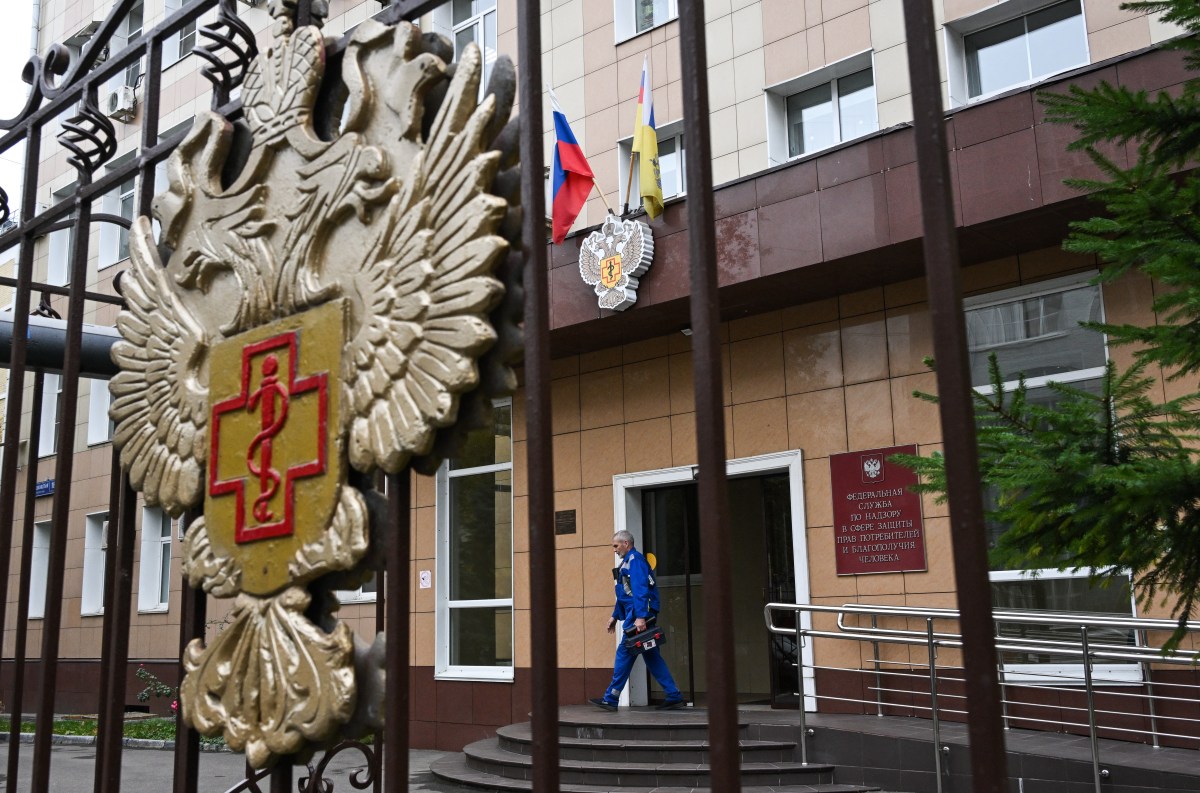
An expectant mother said she was screened for plague symptoms at a maternity hospital in the Russian city where a suspected fatal case of the disease has been reported but is being ignored by state media. Ulyana Gavryunina, who blogs about her pregnancy on Instagram, told the independent Telegram channel "People of Baikal" that she went to the Irkutsk Prenatal Center on Monday with her mother. Upon arrival at the hospital for a fetal scan days before the birth, she said she was screened for plague exposure, given a mask and told to sanitize her hands.
Quarantine measures meant that her mother was stopped at the door. The woman said: “basically it is just like it was during the coronavirus. It really scared me." The U.S.
State Department told Newsweek it is encouraging Russian authorities “to share accurate information quickly and openly” about the death of Darya Shipilova, a 28-year-old employee of the Irkutsk Anti-Plague Institute. Shipilova died on October 2 at a hospital in Shelekhov, a district of Irkutsk in a case that has sparked alarm about an outbreak—and a cover up—in the country where the media is tightly controlled. Gavryunina told the Telegram channel that staff at the maternity hospital gave her a checklist which asked about symptoms and contact with sick people or recent arrivals from abroad.
However, Amos Weiskopf, editor of Plague News, which tracks media reports of the disease, told Newsweek on Tuesday: “Russia's account can't be checked from outside, and several things on the record don't fit it well.” Newsweek has contacted Rospotrebnadzor for comment. Shipilova’s death has got global attention. President Donald Trump said on Monday “we're looking at it very strongly” and the State Department said it was “monitoring the situation closely." U.S.
Secretary of State Marco Rubio said on Tuesday: “I think it's incumbent upon Russia to obviously share more information with the world. That's what they should do." Kremlin spokesman Dmitry Peskov reassured Russians, saying they should ignore rumors of a possible plague outbreak and rely on statements from Rospotrebnadzor whose position is that Irkutsk’s public health situation was “stable.” In its latest update on Tuesday, Rospotrebnadzor revealed that testing “found no microorganisms associated with her (Shipilova’s) professional activities in the patient’s samples.” “No reports of infectious diseases among the institute’s employees were registered over the past 10 days,” it added. The WHO, which has asked Moscow for information, said Monday that no cause of death had been officially confirmed, but speculation continues to mount over whether Russian authorities are being transparent.
Moscow blamed the 1979 Sverdlovsk anthrax leak on bad meat until 1992, so their word alone isn't enough,” Weiskopf added, referring to an accidental release of spores of Bacillus anthracis which started an outbreak that killed at least 68. Weiskopf pointed out that to be fair to the official account, the most testable claim is that none of the roughly 200 contacts had fallen ill or tested positive. Newspapers and news agencies in Russia are controlled by the Kremlin which often uses them as conduits for its own messaging.
Extract — continue reading at the source.