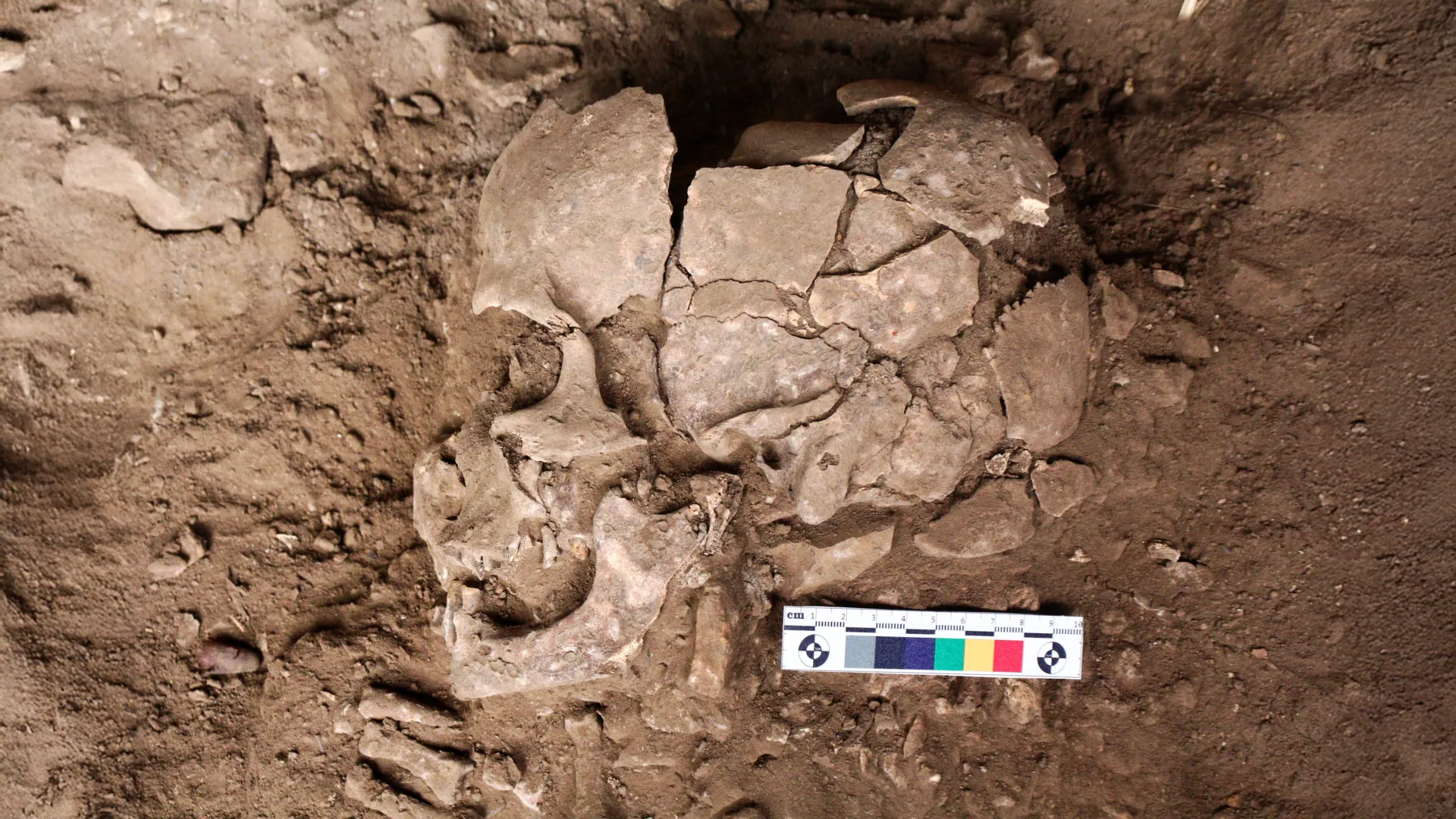
Archaeologists from Griffith University have found evidence suggesting that humans were using mind-altering substances much earlier in time than scientists once thought. The research was led by Professor Adam Brumm of Griffith's Australian Research Centre for Human Evolution (ARCHE), together with ARCHE colleagues Associate Professors Carney Matheson and Michelle Langley. By combining archaeological evidence with biochemical testing, the team traced the deep history of "betel nut," one of the world's most widely used addictive stimulants and a long-established psychoactive substance across much of the Asia Pacific region.
Working with Indonesian archaeologists from Makassar's University of Hasanuddin and the National Research and Innovation Agency (BRIN), the researchers found evidence that some communities in Indonesia were using betel nut as a drug as far back as 25,000 years ago. That pushes the practice far beyond earlier estimates that placed its beginnings in the Neolithic or Bronze Age (~3500 years ago). Rethinking the Origins of Psychoactive Drug Use One common theory holds that widespread traditions of psychoactive drug use emerged only after humans began farming during the Neolithic period.
Among the earliest known examples are fermented alcoholic drinks (barley beer) produced about 13,000 years ago in Israel. "However, this theory fails to account for the possibility that very ancient drug-taking lies at the roots of our most commonly used psychoactive substances," Professor Brumm said. Brumm and his colleagues instead focused on the origins of betel nut use, a practice found among hundreds of millions of people from India to the South Pacific (about one in 10 of the modern global population).
Betel nut can produce mild euphoria, increased alertness, and other psychoactive effects. "Although poorly known in Western societies, it is the world's fourth most widely used psychoactive substance, after alcohol, caffeine and nicotine," Professor Brumm said. Today, users typically prepare betel nut by combining a processed seed from the Areca catechu palm (the betel "nut") with slaked lime - commonly made by grinding burnt shells into a fine powder - and additional ingredients.
The mixture forms a "quid," which is then chewed to produce its psychoactive effects. "Slaked lime is an essential ingredient because it causes a chemical reaction that releases the nut's psychoactive compounds into the bloodstream more rapidly," Professor Brumm said. Exactly when people first began using betel nut in this way has been difficult to establish because areca seeds rarely survive in the archaeological record.
In the new study, published in Science Advances, the Griffith researchers examined exceptionally rare skeletal remains belonging to two early human foragers from Sulawesi, Indonesia. One individual lived about 25,000-16,000 years ago, while the other dates to 7600-6300 years ago. Both hunter-gatherers showed an unusual form of dental wear (deep, rounded tooth grooves).
Extract — continue reading at the source.