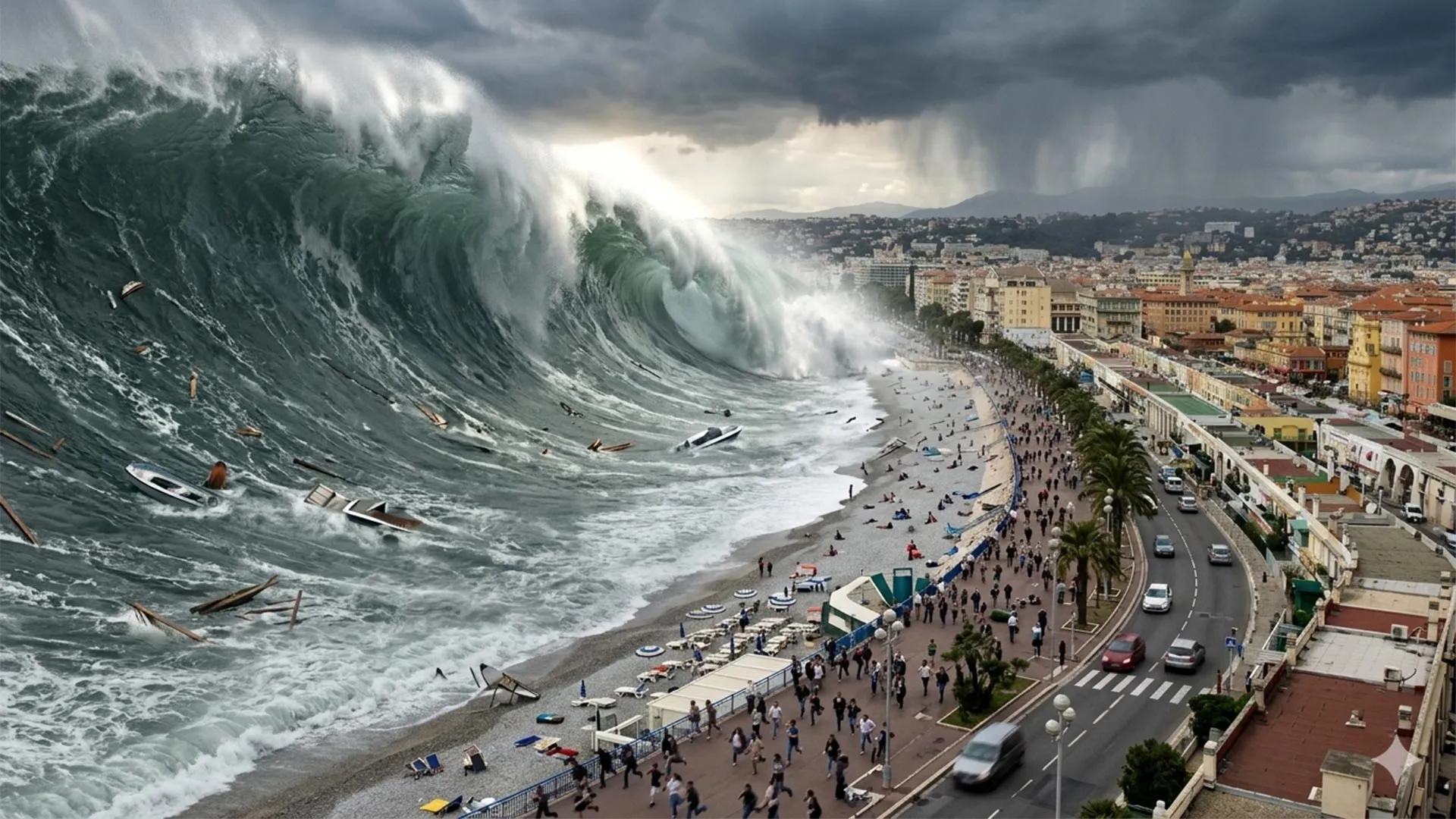
On the French Riviera, a tsunami could arrive before a warning reaches people on the beach. In some local scenarios, the first waves could reach shore in under 10 minutes. France's national warning center, meanwhile, is designed to send its initial alert to authorities within 15 minutes of a potentially dangerous earthquake.
Those two timelines leave no room for delay. That is why researchers and local officials around Nice are doing more than improving alerts. They are mapping walking routes, identifying refuge sites, and helping residents and visitors recognize when they need to leave the coast immediately.
The goal is to make the first decisions before an emergency begins, rather than after the sea starts behaving strangely. What UNESCO's Mediterranean Tsunami Warning Means The Mediterranean is often treated as an unlikely setting for a tsunami. UNESCO has warned against that assumption.
On June 22, 2022, the organization stated that "the probability of a tsunami wave exceeding 1 meter in the Mediterranean in the next 30 years is close to 100%." The details matter. That estimate concerned an event somewhere in the Mediterranean basin over the following three decades, roughly through 2052. It was not a prediction of an imminent disaster, a guarantee that the French Riviera would be struck, or a forecast that every Mediterranean coastline would experience the same waves.
Nevertheless, the region has the ingredients needed to generate dangerous tsunamis. Earthquakes can occur along active faults in the Ligurian Sea, near the French and Italian coasts. Farther south, the movement of the African and Eurasian plates creates another source of potentially powerful earthquakes off North Africa.
Underwater landslides provide an additional, sometimes much more local, trigger. A tsunami begins when a large volume of water is suddenly displaced, often by an earthquake, landslide, or volcanic eruption. The disturbance spreads outward, potentially traveling long distances before reaching the coast.
Extract — continue reading at the source.