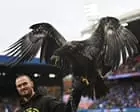
A leading animal rights group has urged Crystal Palace to retire their American bald eagle mascot because, it says, the matchday experience can leave the bird “frightened, disoriented and panicked” and put spectators at risk. In a letter to Palace’s chief executive, Sharon Lacey, People for the Ethical Treatment of Animals (Peta) called on the club to end Phoenix’s appearances at Selhurst Park and commit never to use a live animal mascot again. Palace, known as the Eagles since 1973 after the then manager Malcolm Allison changed their nickname from the Glaziers, introduced a pre-match display from Kayla the Eagle in 2010.
She died in 2020 after a decade’s service but Kayla’s replacement, Phoenix, made her debut before the game against West Ham in August 2024 at four months old, meeting supporters in the fanzone and being introduced at half-time with her handler. Phoenix is based at the Eagle Heights Wildlife Foundation in Kent, and its website said at the time that she “had been carefully prepared for her prestigious role as Crystal Palace’s official live mascot since hatching”. Phoenix has yet to appear again at Selhurst Park.
It is understood plans for her to make a maiden flight across the pitch before kick-off – a ritual Kayla for which was renowned – were abandoned at a match this season. In the letter seen by the Guardian, Peta said bright lights, loud noises and boisterous crowds mean stadiums are “no place for animals” and potentially put animals and spectators at risk. It detailed incidents of eagles that have collided with walls or glass windows and a falcon that landed on a spectator’s head, embedding its talons in the man’s scalp.
Peta also referred to an incident involving Kayla in 2015 when a Charlton fan was found guilty of trying to punch her during a League Cup tie marred by crowd trouble. Dr Carys Bennett, Peta’s senior corporate projects manager, said: “Bald eagles are revered as symbols of freedom, yet Phoenix is being used as little more than a prop to entertain football fans. Crystal Palace already has a human mascot to energise supporters, so there’s no reason to drag a wild animal into a noisy, crowded stadium.
Peta is urging the club to let Phoenix spread [her] wings and retire [her] from matchday duties for good.” Palace did not respond to Peta’s letter or to a follow-up request last week. They have been contacted for comment. The Guardian sent a number of questions to Eagles Heights to ask about Phoenix’s welfare and did not receive a reply.
Peta’s letter argued that eagles’ natural behaviours make the stadium environment unsuitable for them. In the wild, the birds can travel across vast territories and typically avoid close contact with humans. The organisation said even birds raised in captivity retain their natural instincts and may experience frustration and stress when unable to engage in natural behaviours.
Extract — continue reading at the source.