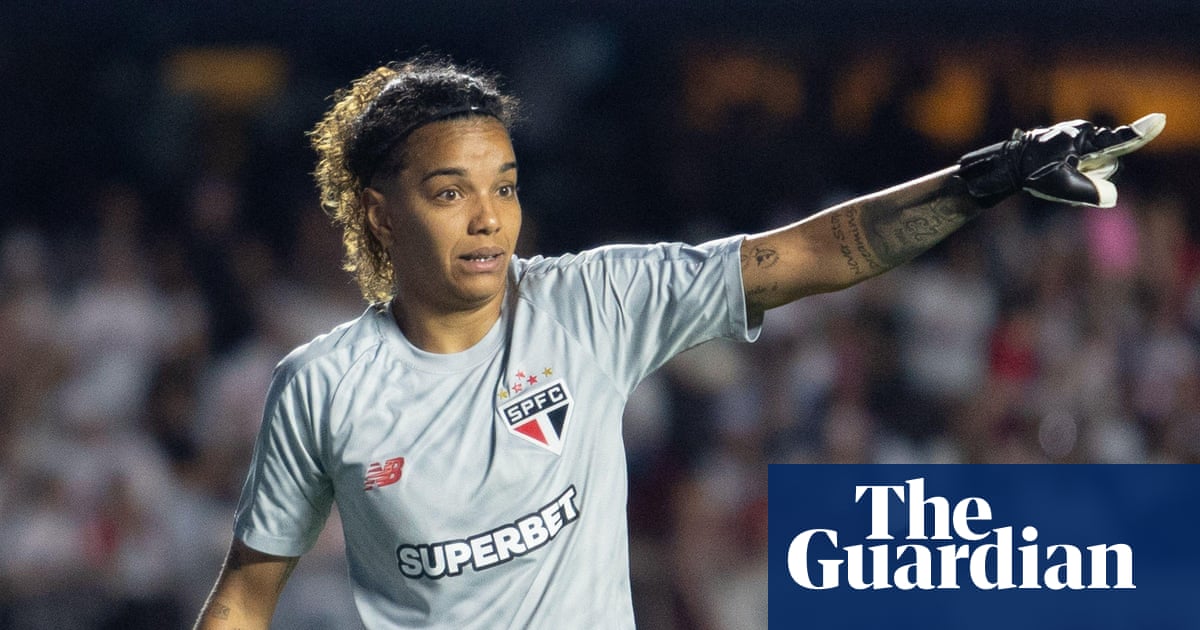
The day before the first round of Brazilian elections, the Estádio do Morumbi hosted the second leg of the Brazilian Women’s Championship final, in which São Paulo drew 1-1 with Corinthians to win 3-2 on aggregate and secure the Brasileirão Women’s title. It had been an incredible final but after the game the goalkeeper Carlinha used an interview to appeal to her fans: “Never again Bolsonaro in power,” she shouted to a record-breaking TV audience of 23 million people. Having lost her grandmother during the Covid-19 pandemic, Carlinha recalls the challenges faced by hundreds of thousands of Brazilian families when the far-right president Jair Bolsonaro spread fake information about the virus while ignoring public appeals for the government to buy and distribute vaccinations.
More than 700,000 Brazilians died during the pandemic. Now his son, Flávio, is standing against the 80-year-old incumbent leftwing president, Luiz Inácio Lula da Silva. I’m a journalism student and I know the impact if the right wins the elections.” Carlinha is one of several female football players who have used social media and their visibility to speak up before and during the presidential election, which will come to an end on Sunday with a second-round vote.
The father of the Bolsonaro dynasty is currently under “humanitarian house arrest”, serving a 27-year sentence for a coup attempt. Carlinha’s club and international teammate, Tayla Carolina, went viral the weekend after discussing her family’s background and how public policies implemented during Lula’s government were important for her mother and grandmother, who have worked as cleaners throughout their lives and have since passed. I’ve studied in public schools and used the national healthcare system … my mum, dona Dora, worked for over a decade for someone who never paid her labour rights … and she worked until she couldn’t walk any more due to the cancer that took her from us.
She never saw me play because she never had the time, she never rested,” she wrote. Her story resonates with many Brazilians who fought for shorter working weeks, approved earlier this week in congress. Tayla elaborates her point: “I’m from a country where most of the people are poor but the country is not seen as poor.
It shows there are huge inequalities, which come from exploitation. Years have passed and there’s still a lot of inequality and I come from it … as a public figure, and someone who has lived similar lives to the majority of Brazilians, I feel the responsibility to speak up.” The player organisation Fifpro has just released a new study showing that nearly half of female football players think of early retirement owing to the psychological and financial pressures of the women’s game (800 professional players took part). With the Women’s World Cup being staged in Brazil next year both Carlinha and Tayla feel the election will have a huge impact on the game going forward.
Tayla also feels the need for policies to support the women’s game at a crucial moment. The legacy plan, divided into four strands, proposes supporting access and permanence of girls and women in football, developing and professionalising the game, fighting gender- and racial-based discrimination, and enhancing the economic and cultural aspects of women’s football in Brazil. The commitment to the tournament is stated in Lula’s government plan.
Extract — continue reading at the source.