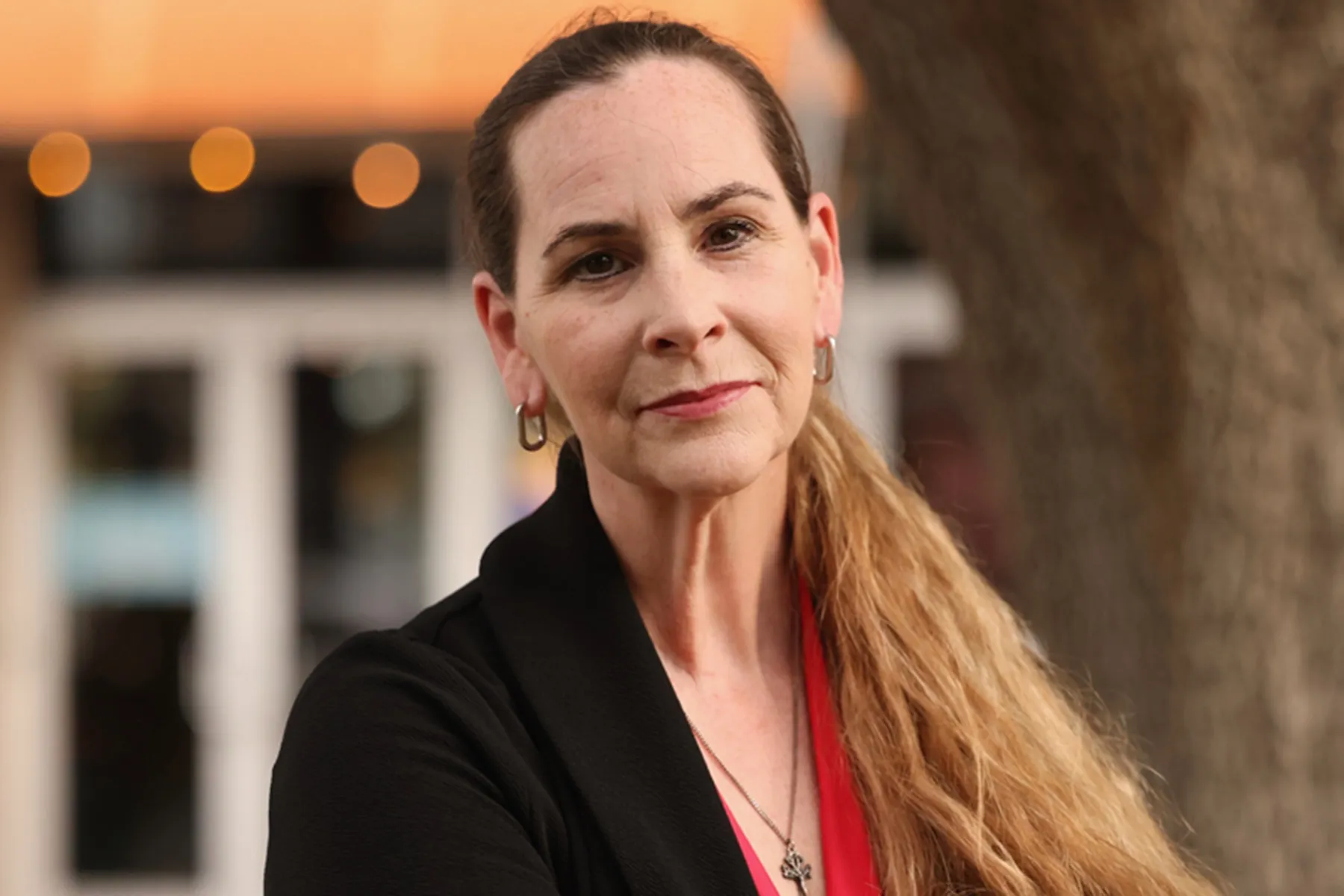
Content warning: This story references incidents of sexual assault. Bernadette Greene-Placentia, a Democratic candidate for Congress in Arizona, shared publicly for the first time that she was raped while fixing campaign signs over the summer. Greene-Placentia told her story to the local outlet Phoenix New Times, which published the account on Wednesday.
She said an attacker knocked her out around 2 a.m. on August 14, a date confirmed by the campaign to ABC News, while she was out fixing her campaign signs to avoid the daytime heat and traffic. When Greene-Placentia came to, she said a man was pulling his penis out of her. She said that another man came over and began touching her, but that he backed off after she fought back.
Somehow, she made it home. Redistricting had impacted the home Greene-Placentia shared with her husband, so she found another place to stay within Arizona’s 8th Congressional District. Her husband and campaign manager told Phoenix New Times that she disappeared for two days after the alleged assault.
The only person who saw her those two days was her landlord. She initially didn’t want to report: “I’d always considered myself a strong person, and so I was embarrassed,” she told a local ABC affiliate in a video interview. But two weeks later she called the Maricopa County Sheriff’s Office and told them what happened.
Rape is chronically underreported. Survivors may not report their assault to law enforcement for any number of reasons, including a fear of retaliation, not believing the police would help and not believing the crime was important enough. Of the rapes that were reported, data from the FBI shows fewer than 1 in 3 rape cases have been cleared since September 2021.
Greene-Placentia is speaking out now, she said, because “I need to let women know that it’s okay to talk about it.” On Wednesday, a campaign spokesperson told The Guardian: “She chose to share her story because she knows many survivors struggle in silence, and she hopes that by speaking about her experience, others will know they are not alone.” “She hopes the focus remains on supporting survivors and making sure people who have experienced sexual violence know they are seen, heard and supported.” The investigation is ongoing. Greene-Placentia said she has struggled to remember details; scientists have shown how severe trauma can impact memory. There isn’t any confirmation of whether Greene-Placentia’s attackers knew who she was or if the violence was tied to the House race.
Extract — continue reading at the source.


/https://tf-cmsv2-smithsonianmag-media.s3.amazonaws.com/filer_public/a1/be/a1bec4ea-0428-4b24-bd7e-a84a00f9fe79/dsc_4882.jpg)

/https://tf-cmsv2-smithsonianmag-media.s3.amazonaws.com/filer_public/07/62/07625028-14a0-4437-a78e-d2d14b703eec/turner.jpeg)