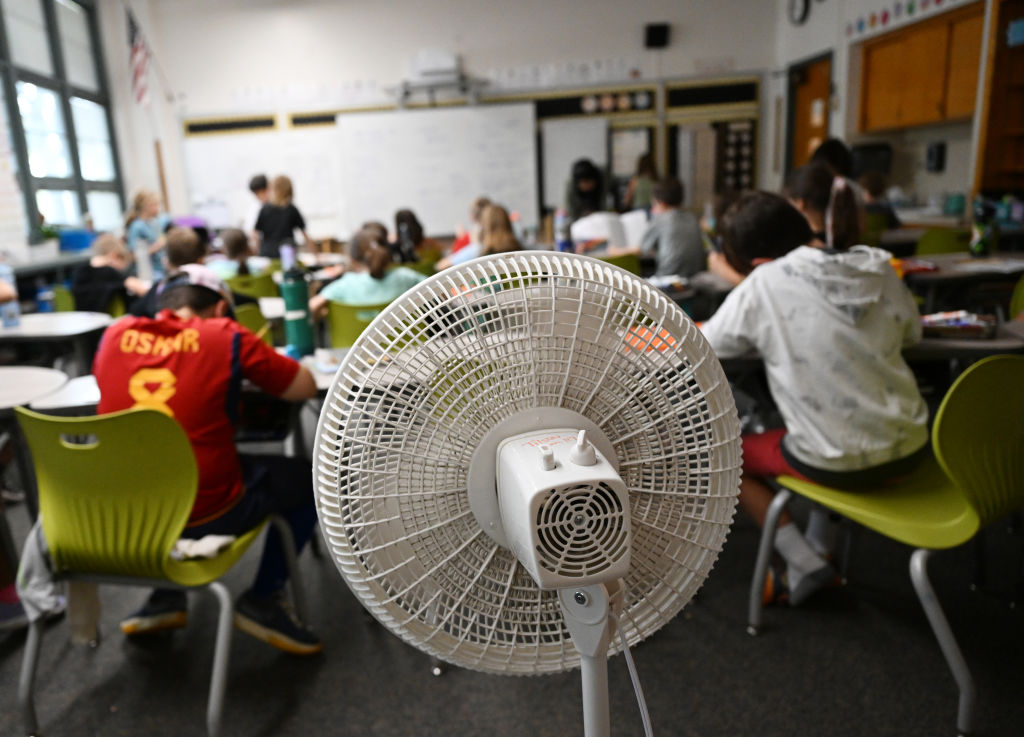
As students go back to school in the midst of record-breaking summer heat, many are returning to overheating classrooms whose aging air conditioning systems can't keep up with extreme heat waves—if they even have air conditioning at all. Extreme heat has already caused school closures and disruptions across the country. In July, Milwaukee Public Schools shut down its Summer Academy and other indoor school programs for two days because of extreme heat.
One day in May, 57 Philadelphia schools went remote and canceled all in-person activities due to soaring temperatures. That same month, a Washington, D.C. high school carried out a "heat evacuation" as classroom temperatures reached the mid-90s. Eight elementary schools in Doylestown, PA also closed for a day because old buildings couldn’t protect students from the heat.
And in recent years, schools in Memphis dismissed students early as temperatures climbed to 110 degrees. During the 2024-25 school year alone, more than 9 million students at 10,000 schools nationwide experienced extreme heat- and weather-driven school closures or disruptions. These are not isolated inconveniences.
They are warning signs that our school buildings and grounds were not designed for today’s new weather patterns. It’s important to understand that students struggle to learn in hot, stuffy classrooms. Air quality, temperature, and ventilation can affect how students think, focus, and perform.
Poor ventilation can impair cognitive function, while excessive heat diverts the body’s energy from learning, slows reaction time, and weakens attention. In fact, research has shown that in schools without cooling, each 1° Fahrenheit increase in school year temperature reduces the amount learned that year by approximately 1%. Extreme temperatures (80 to 90 degrees Fahrenheit and above) are known to exacerbate student absenteeism and disciplinary referrals, while poor indoor environments can also contribute to the spread of illness and exacerbate respiratory conditions like asthma, one of the leading causes of missed school days.
Younger children, whose bodies and brains are still developing, are especially susceptible. In medicine and education alike, we have seen how the environments where people spend their time can directly affect their health, well-being, and ability to thrive. We would never accept these conditions in a hospital.
Extract — continue reading at the source.