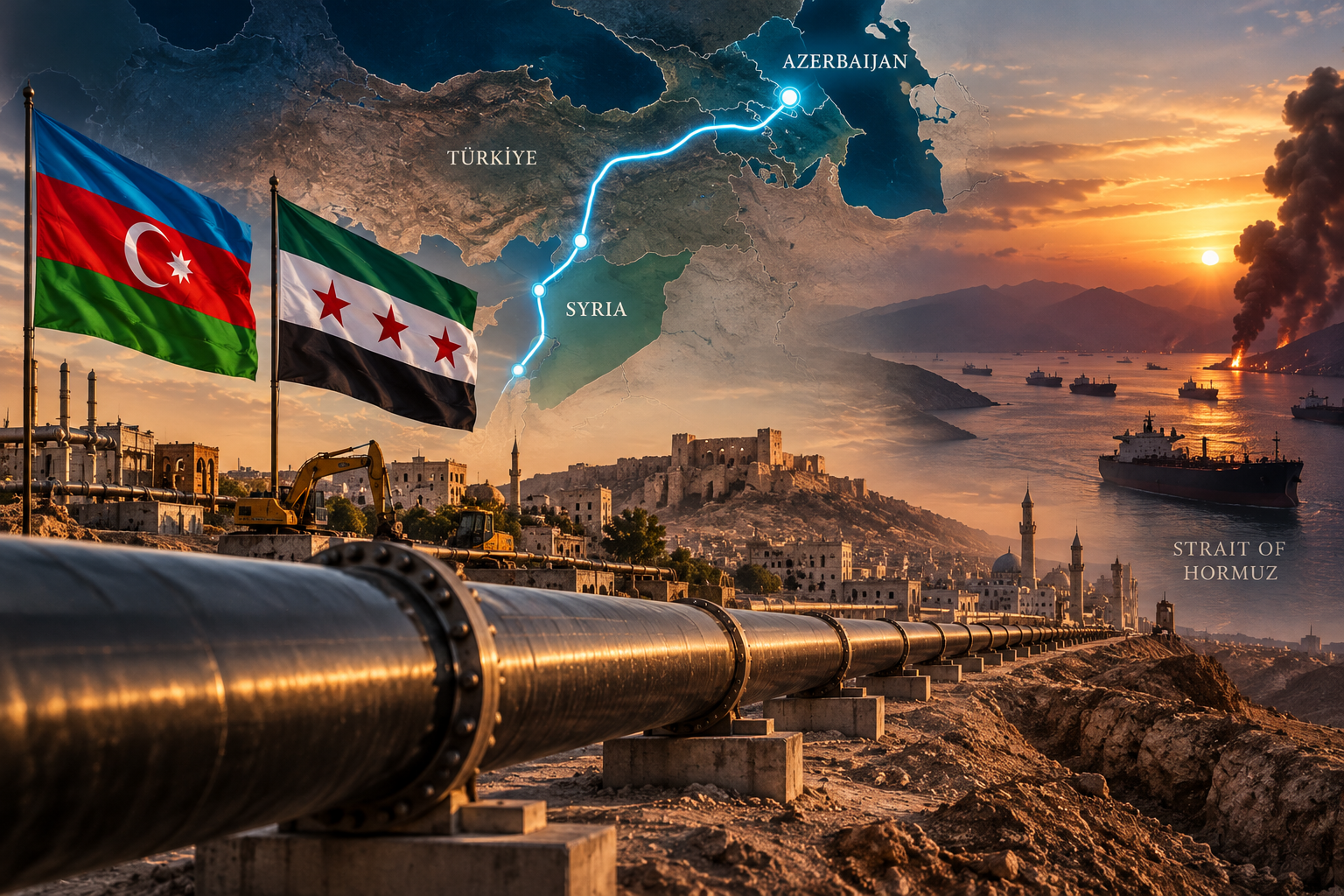
Following the American and Israeli strikes on Iran on February 28th, the Strait of Hormuz, which regularly accommodates over a fifth of all global oil shipments, has been closed or greatly restricted. The effect has been described by the International Energy Agency as the biggest-ever disruption to oil supply since the formation of the oil market. Strikes against energy facilities in the Gulf region have continued, with strikes against Qatar's Ras Laffan facility on March 18th leading to a reduction in the state's LNG production capacity of some 17%.
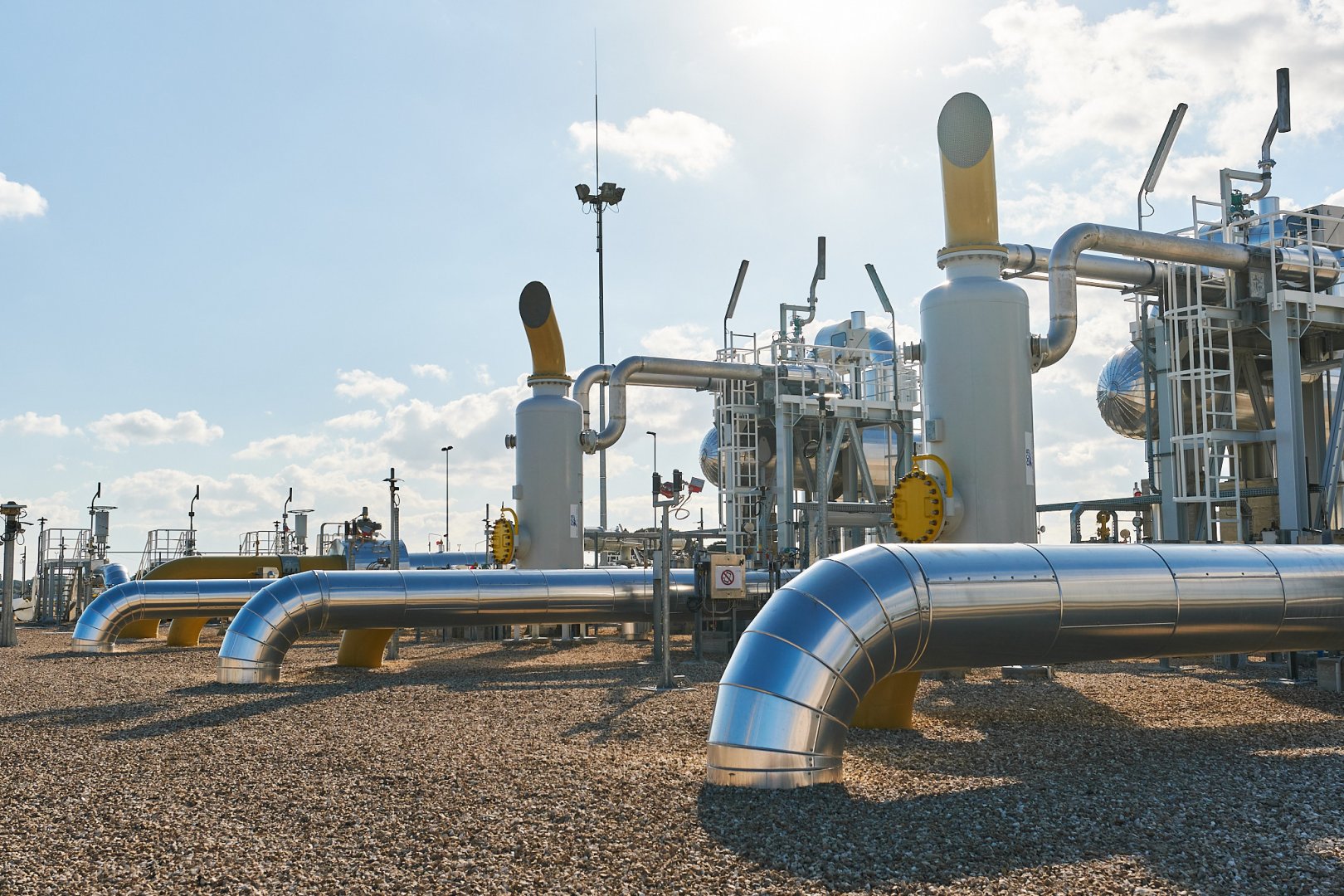
In early September, crude prices touched $109 per barrel on renewed strikes against shipping traffic. In view of these considerations, a 186km-long pipeline through the Syrian countryside should garner more recognition than it has to date. On September 29th, the Syrian state petroleum firm and Qatar’s UCC Holding launched the second section of Phase II of the Arab Gas Pipeline, a 36-inch pipeline stretching from Homs to Aleppo.
It forms a chain of about 566km linking the Jordanian border to the Turkish border and is able to transport gas in both directions. At the northern end, there is a resource that was not available when planning the project: Azerbaijani Caspian gas. Construction of the Arab Gas Pipeline began many years ago to transport gas from Egypt to the Levant countries.
However, the 64 km-long Kilis-Aleppo pipeline, which forms the northern part of this gas pipeline, started operation in 2011 before being shut down following the outbreak of the Syrian civil war. Rehabilitation of the pipeline occurred in 2025, and the pipeline was connected back to the electricity grid of Turkey. On August 2nd of that same year, SOCAR announced that it would be exporting 1.2 billion cubic meters of gas annually via the pipeline.
With the construction of the new line, the pipeline becomes a network. After its completion, within 22 months, Homs-Aleppo will be capable of transporting 11 million cubic meters per day, with provision for doubling the capacity to 22 million, and gas will flow from the Turkish border to Homs, the Jordanian border and even further. Initially, gas will flow between the two cities using the existing domestic pipeline network in Syria.
Egypt, which was an original supplier of gas via this pipeline, stopped supplies to Syria and Lebanon as early as March 1st due to rising local demand in connection with the Hormuz crisis, as a vivid example of how vulnerable traditional suppliers were. Jordan managed to reach an agreement for delivering 4 million cubic metres a day via the southern part of this pipeline. Europe, which gets 12% to 14% of its liquefied gas from Qatar via Hormuz, has faced the same vulnerabilities but as a consumer.
Extract — continue reading at the source.