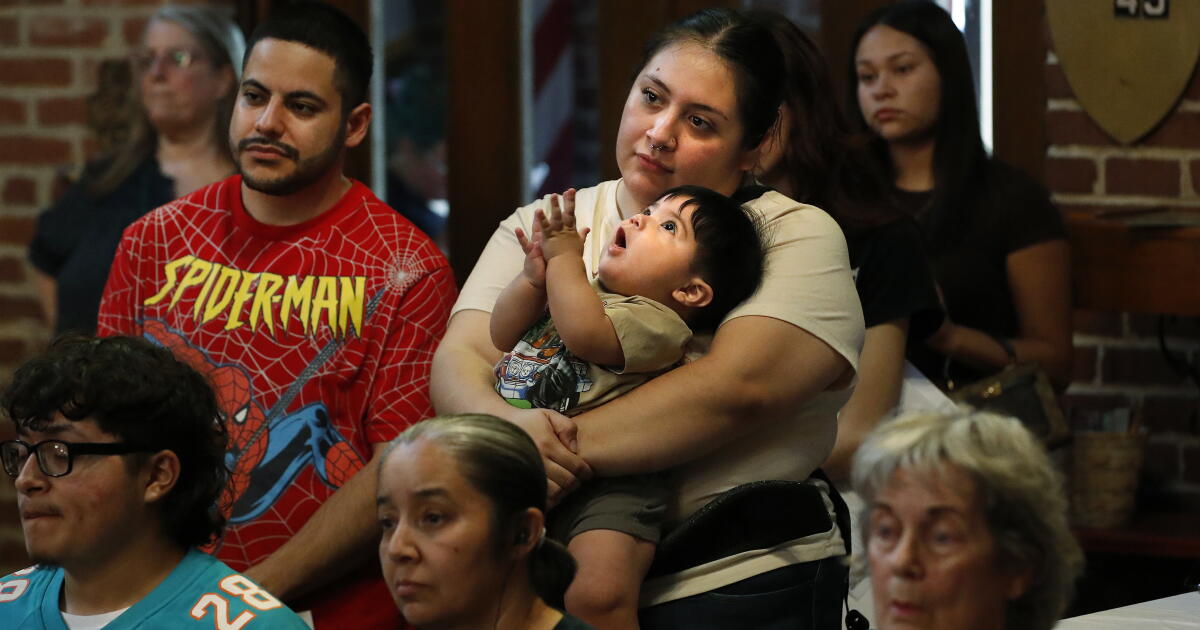
HANFORD, Calif. — Darian Orduno bounced her baby boy on her chest, looking down at his thick black hair and bright eyes. What might pollution from a data center do, she wondered, to his growing lungs? That question had brought Orduno, 25, to a community meeting opposing a possible data center here, and her fears, she said, likely would influence her vote in the midterm election too.
Nationwide, such concerns are fueling a backlash to data centers from both the left and the right as tech companies flood the country with thousands of proposals for the facilities in nearly every state from California to Maine. Data centers have become an unusually bipartisan flash point in the midterm elections, as candidates race to delineate policy platforms and respond to public opinion. The issue stands to influence swing voters and motivate turnout at the polls.
Here in the 22nd District, home to the state’s most competitive congressional race, how significantly the issue will affect voters’ decisions remains to be seen. But one thing is clear: Anxiety about data centers is mounting. As of April, more than 1,500 new data centers were in development across the United States, according to a Pew Research Center analysis, largely in rural areas.
The centers require intense cooling, which often demands high water and power use and creates the potential to affect the environment and to pass on utility costs to consumers. But they power technology that is becoming increasingly integrated into American business. They also create jobs, though with limitations.
Democrats see the data center uproar as fitting into their affordability messaging, and candidates generally agree data centers should be regulated, though their positions vary on how aggressively. For Republicans, whose party has backed AI innovation, responding to worsening public opinion has been trickier — particularly given President Trump’s championing of AI and data centers. Vice President JD Vance on Thursday acknowledged negative polling on data centers but framed the issue as a question of American industrial dominance, saying the country can’t shy away from development.
Earlier in the week, Trump asserted that the only reason communities should reject data centers is if they want to be “backwards and poor.” The public may see data centers as a physical manifestation of AI advancement in general, said Camille Crittenden, executive director of the Center for Information Technology Research in the Interest of Society, a University of California research center. Opposing data centers offers people a way to vent their broader concerns about the technology’s increasing dominance. California is home to the third-most data centers of any state, though it has experienced a relatively smaller new boom because of its high electrical prices and other factors.
Extract — continue reading at the source.