When you’re young, or not so young, and strongly drawn to a genre of music, a certain composer, a particular piece, it’s often hard to explain why, even to yourself. This may be especially true of music unfamiliar to you. Music works powerfully on a subliminal level.
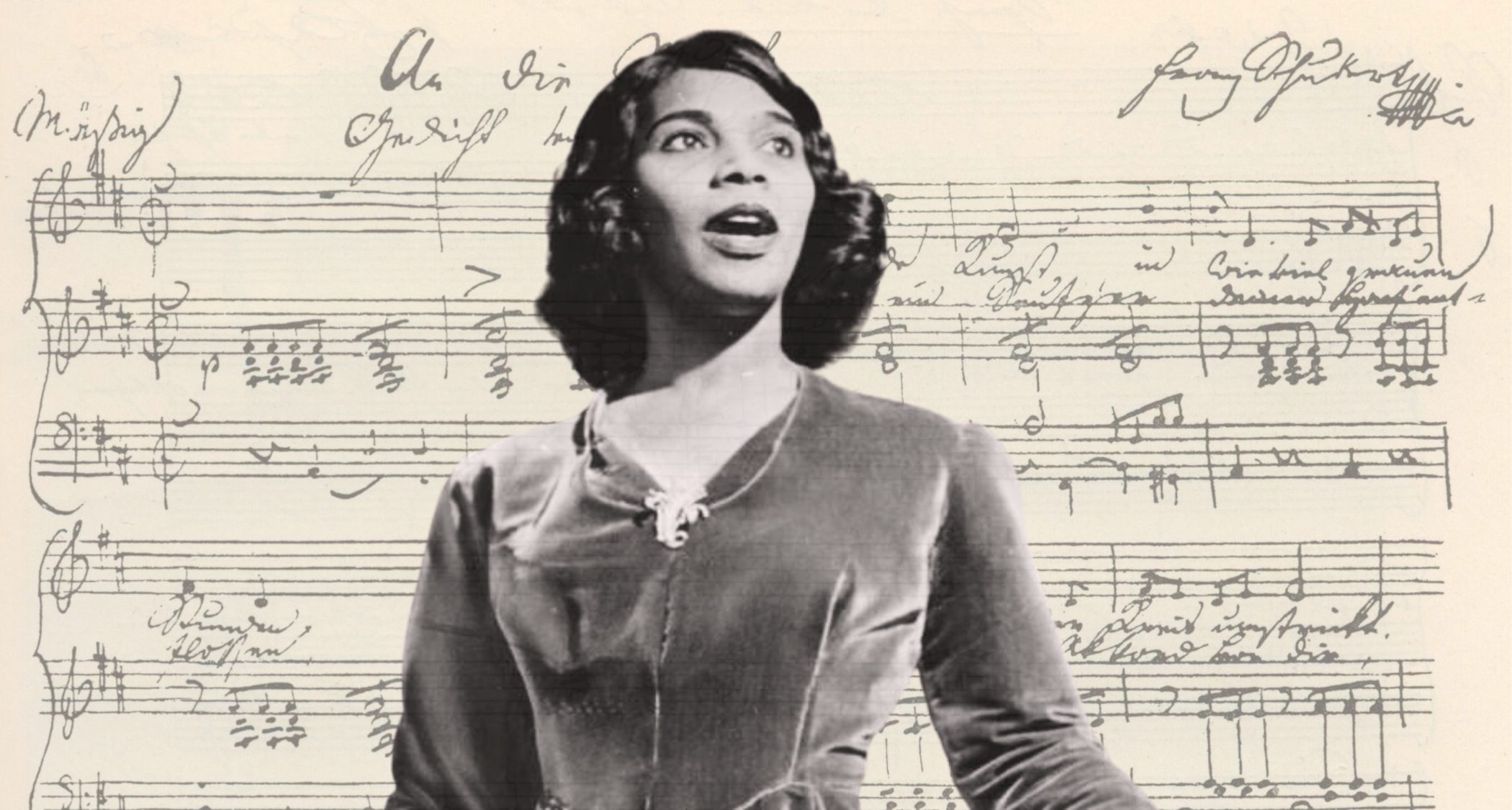
Sometimes we prefer to keep it that way and not try to account for how it speaks to us. So it was with Marian Anderson’s lifelong love of Schubert’s songs. She was never very clear about what gripped her, starting from the epiphany she had as a young teenager when she heard Roland Hayes sing Schubert songs in a recital at her church; though she understood not a word of the German texts, she was transfixed.
Some fifteen years later, her determination to study Schubert lieder with expert teachers was in large part what impelled her to go to Europe. During the prime years of her career, while widely acknowledged as an exceptional Schubert singer with impeccable German diction, Anderson still avoided expounding on the music. When selecting songs for a recital program, she later explained, she always looked first to Schubert, “the composer I love best,” who wrote “hundreds of them,” each “more beautiful than the last.” But she left it at that and seldom said more.
Schubert’s songs, she noted, “were rewarding for pianist and singer.” How so? Beyond Schubert, Marian Anderson from early on was captivated by classical music altogether, which set her apart from family members with limited exposure to it. This was also true for me.
Though I grew up in a comfortable Long Island suburb, nobody in my family had any real appreciation of classical music until I came along and discovered it on my own, especially after I started taking piano lessons at eight years old, not through my parents’ suggestion, but at my own insistence. I had no idea what drew me. But it was immediate and powerful.
Anderson affirms something she demonstrated in practice throughout her career—that no songs by Schubert or Brahms are more sublime and profound than Negro spirituals. During childhood days as a member of her church choir, Anderson was deeply affected by the music they sang, mostly familiar hymns and spirituals, but also, on occasion, classical choral works, including selections from Handel’s Messiah, and a showpiece movement from Rossini’s Stabat Mater for which Marian was sometimes tapped to sing the solo. Her response, like mine, seems to have been immediate and powerful.
Extract — continue reading at the source.