In time he will say that The Waves by Virginia Woolf has been the most important novel in his life; but at twenty he does not use the word of this or any book, and would think it pompous, embarrassing, imprecise, conventional. The novel invites and shrouds and protects, then presses on him for years in recollection, worrying the edges of imagination. On November 28, 1928, Woolf wrote in her diary about The Waves.
The novel, she said, had surfaced or materialized while she was finishing To the Lighthouse at Rodmell in Sussex: she looked from her window towards the marshes and was struck by the image of “a fin in a waste of water.” Or perhaps The Waves arrived two years earlier, when she wondered what it would be to conceive and write a certain life: “Yet I am now and then haunted by the semi-mystic very profound life of a woman, which shall all be told on one occasion; and time shall be utterly obliterated; future shall somehow blossom out of the past. One incident—say the fall of a flower—might contain it. My theory being that the actual event practically does not exist—nor time either.” Or was the origin of The Waves, which Woolf published in 1931, to be found much further back, in the pages of The Voyage Out, where Terence Hewet wishes to write a novel about silence, “the things people don’t say.
But the difficulty is immense.” Difficult also to say where a book begins, or if it begins, and has not been washing or breaking over you from the start. It is tempting to say of this novel that it is Woolf ’s most abstract—on first reading, he recalls the little he knows about Cubism—or, as at least three of the half-dozen copies he will eventually own declares on its cover, the most poetic. In her earliest draft, which Woolf completed on April 20, 1930, poetry and abstraction have not yet lit everything up, clarifying and confounding in the same moment.
In this first iteration of the novel Woolf had been calling The Moths, she is herself still too present, too obviously working out, and even theorizing, how this book should be. The breakthrough: realizing she had to give the novel over to her characters, who are at times hardly characters, barely distinguishable, and give it up also to an interrupting—or is it invigilating, knowing and directing?—voice, a narrator who speaks from nowhere and says nothing about the six speakers (and one non-speaker) who make up the cast of The Waves. We start with this voice, its plain past tense which he will always misremember as an insistent present: “The sun had not yet risen.
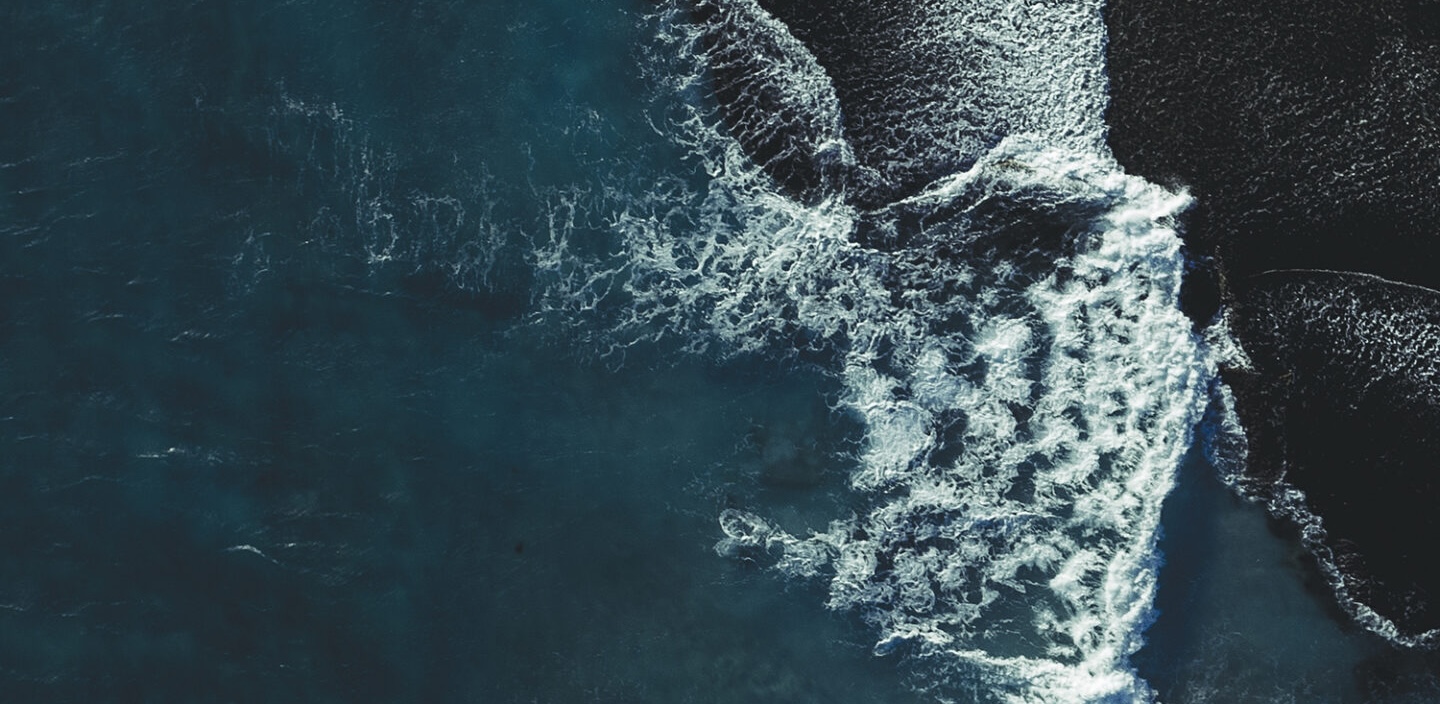
The sea was indistinguishable from the sky, except that the sea was slightly creased as if a cloth had wrinkles in it. Gradually as the sky whitened a dark line lay on the horizon dividing the sea from the sky and the grey cloth became barred with thick strokes moving, one after another, beneath the surface, following each other, pursuing each other, perpetually.” The Waves does not teach but confirms that everything is also something else. Perpetually, but only nine times in the course of the novel, the waves return, with them the light and the land, this voice attending, watching, listening, coining further images to describe the images it finds, turning every element in the scene into its luminous stand-in: “the sky cleared as if the white sediment there had sunk, or as if the arm of a woman couched beneath the horizon had raised a lamp and flat bars of white, green and yellow spread across the sky like the blades of a fan.
Then she raised her lamp higher and the air seemed to become fibrous and to tear away from the green surface flickering and flaming in red and yellow fibres like the smoky fire that roars from a bonfire.” Depths are obfuscating, Sontag says in her essay on RB. Turning one thing into another, reasoning and revealing that this is in fact that, is what he considers his task as a reader, student, critic, theorist. A difference between RB and VW, between thought and poetry: in The Waves, metaphoric becoming, mundane and secular transubstantiation, happens anew in almost every sentence, whereas RB seems to pursue a figure more thoroughly but it remains an event in his prose, not the pure texture of the writing.
Extract — continue reading at the source.