In my high school Narrative Medicine course, many students are interested in careers in medicine, while others plan to enter fields such as coaching, physical or occupational therapy, teaching, or other professions centered on human relationships. One of the first things they learn is that paying close, critical attention is not simply a desirable quality. It is fundamental to understanding and responding to the experiences of others.
Attention can also help build trust. A patient who senses that a healthcare provider is distracted or rushing through an encounter may be less inclined to share information openly. Active listening and focused attention, on the other hand, communicate that a patient’s experience matters.
But these habits are not limited to medicine. The ability to notice carefully, listen without immediately reaching conclusions, and remain alert to what another person may be communicating is valuable in any profession built around human relationships. Narrative medicine provides students with opportunities to develop these habits by attending closely to the stories and experiences of others.
Those stories are not communicated only through words. Facial expressions, gestures, silence, physical surroundings, images, music, and other forms of expression can also convey meaning. Learning to attend to them requires students to slow down, notice details, and become aware of the difference between what they actually observe and what they assume or interpret.
Visual art offers an especially useful space in which to practice this kind of attention. A painting allows students to linger. They can look, reconsider, question an initial impression, and look again.
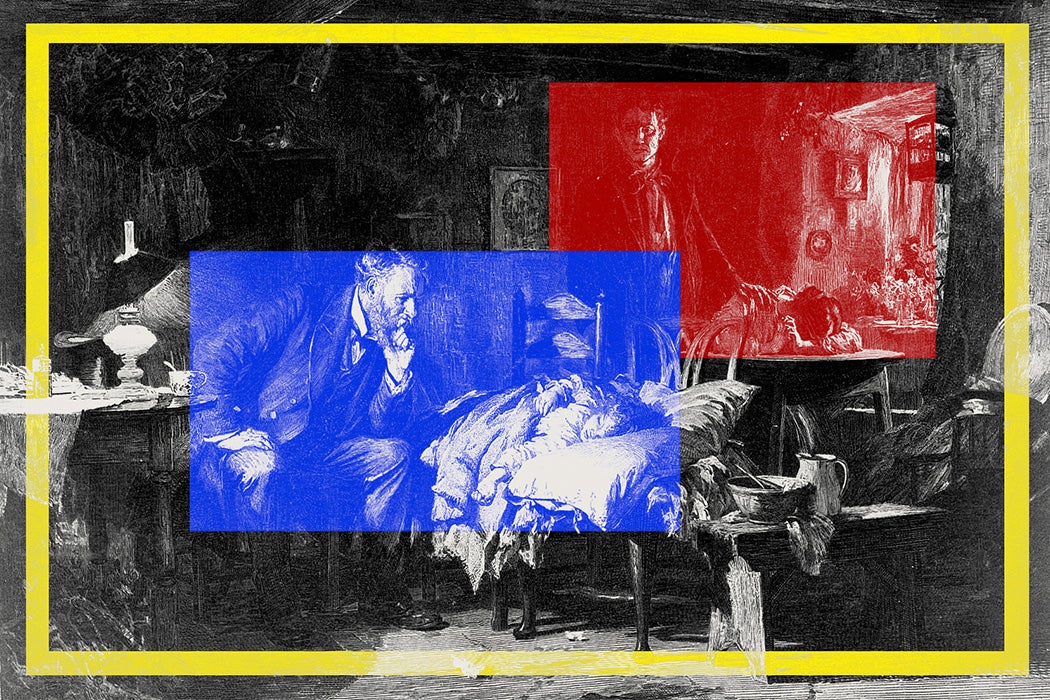
In this lesson, Sir Luke Fildes’s The Doctor becomes a laboratory for practicing attention before students consider how those same habits of careful observation might apply to listening to and understanding another human being. The Doctor, by British artist Sir Luke Fildes, was commissioned in 1890 by the sugar merchant and philanthropist Henry Tate and first exhibited in 1891. Fildes drew upon a profound personal tragedy in choosing his subject: the death of his one-year-old son, Philip, from typhoid fever on Christmas morning in 1877.
Extract — continue reading at the source.