When Britain abolished slavery, plantation owners from powerful families notoriously received huge sums in compensation, while those who were enslaved got nothing. Now evidence has come to light that Sandbach, Tinne and Company – a corporation closely linked to the merchants who got the biggest taxpayer-funded compensation payouts – continued to traffic enslaved Africans illegally after abolition to Guyana, in South America. The discovery is detailed in a book, Searching for My Slave Roots, by author Malik Al Nasir, who has been researching his family history.
Its findings have inspired a new research project, Overwriting-Underwriting, which aims to uncover the financial networks behind enslavement and launches this month. The Slave Trade Act of 1807 abolished the trade in human beings in British territories. Then, in 1833, the Slavery Abolition Act banned slavery itself in most of the British empire.
But an 1847 letter, written to Sandbach Tinne’s Liverpool office by Peter Miller Watson, who managed the company’s interests in Demerara, Guyana, refers to a ship from the company’s own fleet arriving with a “cargo of negroes”, including dozens of young children. The letter details how the ship, called “the Parker”, was carrying “115 adult males, 86 adult females, 82 under 14 years, and 41 under 4 years,” adding: “There have been only three casualties during the passage – 1 man and 2 children – which Captain R. says may be attributed to the wretched state in which they had lived ashore.” Malik said: “Slavery had been abolished, so how do we know the people on the Parker weren’t indentured, or Africans liberated by the Royal Navy? Firstly, Watson specifically refers to them as cargo, and not passengers, when liberated Africans were not regarded as cargo, enslaved people were called cargo.
When [Watson] talks about casualties, he’s attributing the deaths as a loss of property. By process of deduction, we can see these are people illegally trafficked from Africa.” Peter Miller Watson was a distant cousin of the British prime minister William Gladstone and the father of Andrew Watson, who became the first Black international footballer when he captained Scotland in the 1880s. Meanwhile, Sandbach Tinne, which was wound up in 1975, was the family business of the Sandbach and Tinne families, who, along with their collaborators and relatives in the Gladstone family, dominated the Demerara sugar trade.
By the time of the 1847 letter, Sandbach Tinne and their subsidiaries had already received compensation equivalent to millions of pounds today for the “loss” of the people they enslaved before abolition. While family patriarch Samuel Sandbach had left the partnership in 1833, his son William Robertson Sandbach and son-in-law Charles Stuart Parker Jr were principal shareholders in 1847. British taxpayers’ debt for compensation payments to enslavers was only paid off in 2015.
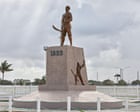
An 1823 uprising in Demerara, staged by enslaved abolitionists, was a pivotal event in the fight to abolish slavery, and began on a plantation owned by John Gladstone. But Al Nasir said an 1847 missionary account detailed how unregulated trading in enslaved people existed “south of the line” – meaning enslavers evading the Royal Navy’s blockade continued to traffic people from countries below the equator, such as Angola. The Royal Navy’s West Africa Squadron – was tasked with intercepting slavers’ ships from 1808, with 1,600 sailors losing their lives.
Extract — continue reading at the source.