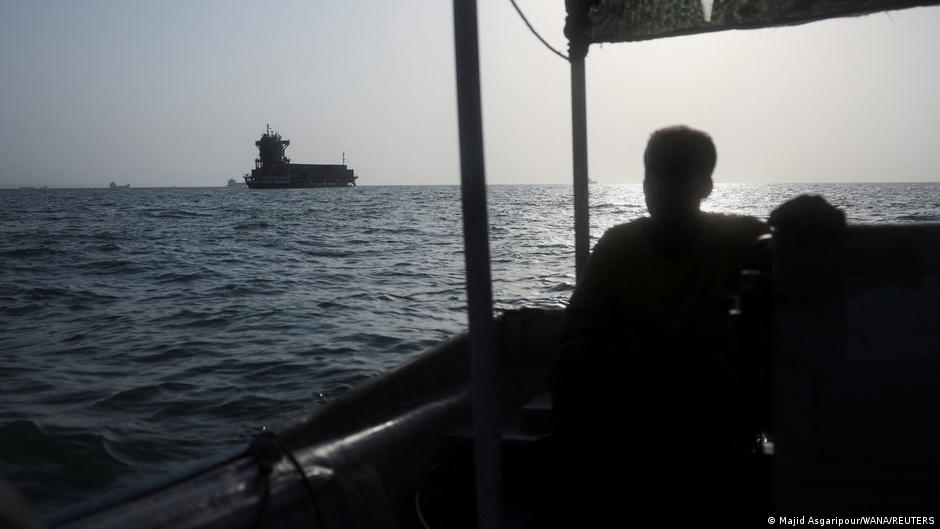
Can land corridors offset the impact of the maritime blockade on Iran? The US-led maritime blockade targeting Iranian ports has severely disrupted trade through its southern ports, but it is also accelerating a strategy Tehran had discussed for years: moving more commerce through northern ports, railways and land corridors. Economy Minister Ali Madanizadeh, visiting Moscow for talks with Russian officials, said Iran should activate its northern borders and shift a significant share of imports and exports away from the country's southern maritime routes.
The idea is straightforward. Iran has seven land neighbors, access to the Caspian Sea and several routes linking it to Russia, Central Asia, Turkey, Iraq, Pakistan and the Caucasus. In theory, that gives Tehran more options than a country dependent on a single maritime gateway.
The question is whether those routes have enough capacity to replace what is being lost at sea. Alireza Salavati, a London-based political economy commentator, told DW that Iran does have unused capacity. "Iran has more room to maneuver than its dependence on southern ports might suggest,” he said.
Iranian authorities said in late 2025 that the country's northern ports had more than 30 million tons of nominal annual capacity, with less than one-third in use. That suggests room for more grain, food and general cargo through the Caspian Sea. Turkey provides another route toward Europe.
Rail freight between Iran and Turkey depends partly on train ferries across Lake Van, which carried about 477,000 tons in 2024. To the northeast, Sarakhs and Incheh Borun connect Iran through Turkmenistan toward Central Asia, Russia and potentially China. To the northwest, Astara is part of the International North-South Transport Corridor linking Iran to Azerbaijan and Russia, he said.
The Astara freight terminal is designed for 3.5 to 4 million tons a year, but handled only about 345,000 tons in the first five months of 2026. The unfinished Rasht-Astara rail link remains an important bottleneck. For specific goods, these routes matter.
Extract — continue reading at the source.