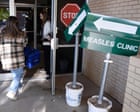
Dhaka, Bangladesh – One-year-old Saif Hasan died within minutes of being taken into intensive care at Dhaka’s Infectious Diseases Hospital (IDH) on August 27. The child from the southern Bangladesh district of Shariatpur had developed a fever and rashes days after receiving his first measles-rubella vaccine. His family wondered whether the vaccine had made him ill.
But Saif, who had been receiving treatment for a pre-existing respiratory illness, was likely infected with measles before the vaccine had time to protect him, Shrebash Paul, a junior consultant at the hospital, said. Last year, Bangladesh recorded 132 measles cases in total, with zero deaths. The deaths come despite an emergency campaign that has administered nearly 20 million vaccine doses over this period.
By September 9, health authorities had recorded 1,009 deaths – 100 among laboratory-confirmed measles patients and 909 classified as suspected measles deaths. Yet the same official data shows 19.75 million children vaccinated since the emergency campaign began in April against the target of 18 million. But public health experts say that apparently extraordinary figure helps expose one of the problems Bangladesh has faced in controlling the epidemic: On the one hand, the original estimate of the children needing vaccines was too low, while on the other, national coverage figures can obscure pockets where large numbers of susceptible children remain.
Bangladesh’s vulnerability to measles did not emerge overnight. The South Asian nation of about 178 million people had been moving towards eliminating the disease before years of declining immunisation coverage left a growing number of children susceptible. Bangladesh’s 2023 Coverage Evaluation Survey found that first-dose measles-rubella coverage had declined from 88.6 percent in 2019 to 86 percent in 2023, while second-dose coverage fell from 89 percent to 80.7 percent.
Routine immunisation was disrupted during the COVID-19 pandemic, while UNICEF has also cited misinformation and vaccine hesitancy among factors contributing to children missing vaccinations. Besides, before this year’s effort, Bangladesh had not conducted a nationwide supplementary measles-rubella campaign since the last one ran from December 2020 to January 2021. Coverage therefore remained below the approximately 95 percent level needed to interrupt measles transmission, allowing the number of susceptible children to grow over successive years.
The problem worsened amid political upheaval following the July 2024 uprising, when then-Prime Minister Sheikh Hasina was ousted, and disruptions to the country’s immunisation programme. The change in government led to delays in vaccine procurement, said Mushtuq Hussain, a former principal scientific officer at Bangladesh’s Institute of Epidemiology, Disease Control and Research (IEDCR). That, in turn, led to vaccine shortages in 2024 and 2025.
Extract — continue reading at the source.