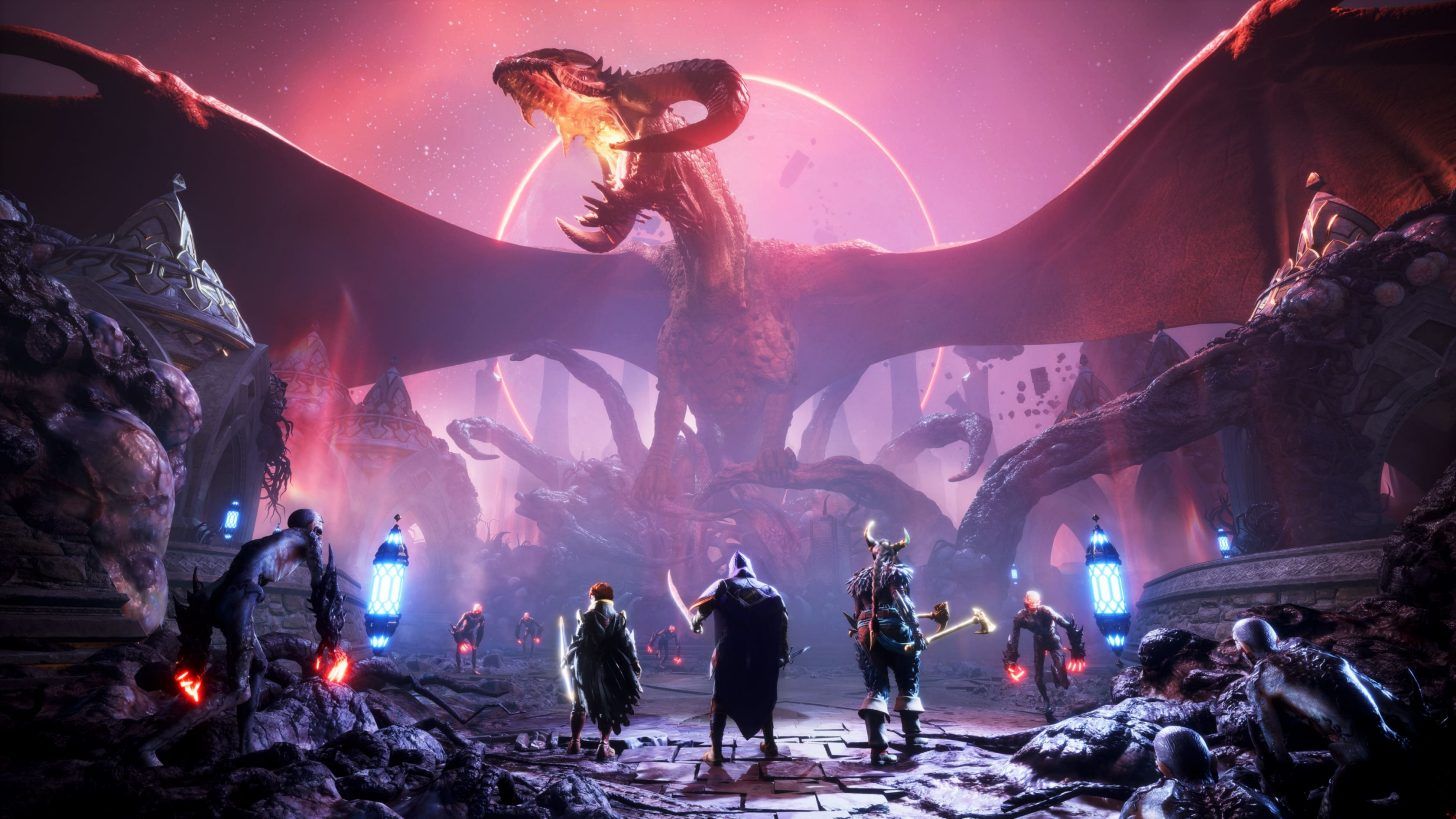
BioWare is officially closing down after three decades, EA announced Wednesday. By virtue of this fact, Dragon Age: The Veilguard, the 2024 action-RPG that was the center of much online discussion, is now the studio’s swansong. By all rights, BioWare should’ve had the opportunity to see through its existing projects, including the Mass Effect game that was in development.
But we so rarely have a hand in our own finality, so for BioWare, The Veilguard it is. At least it leaves behind one hell of a legacy. That legacy is perhaps most succinctly memorialized by a former Veilguard writer, who shared in a post on Bluesky a quote from Rook, the game’s main character: “We will always be grateful for those whose stories brought us where we are today.
And those whose stories will live on with us forever.” At almost every stage, Dragon Age: The Veilguard found itself the victim of a chimera comprising some of the gaming industry’s biggest woes. It was a victim of corporate interference — a classic case of business-minded executives thinking they know better than the creatives who actually make the thing. It was a victim of the warped online outrage cottage industry — another now-sadly classic case of incendiaries peddling bad-faith arguments for profit.
And it was a victim of the current gaming landscape — an oversaturated market that’s harder to break into with every passing year, even off the back of a three-decade portfolio of landmark games. Most damningly, Dragon Age: The Veilguard was subject to an extraordinarily tumultuous development cycle. As reported by Kotaku, BioWare internally cancelled an early prototype for the fourth Dragon Age game in 2017, before restarting development again in the following year.
The studio infamously implemented live-service elements at EA’s behest, in an effort to generate recurring revenue a la sports games. (Every prior Dragon Age was a narrative-driven single-player game.) In 2021, Bloomberg reported that EA and BioWare pivoted hard, rebooting the project to remove all of those live-service elements. (This decision was reportedly inspired by the success of the EA-published Star Wars Jedi: Fallen Order, a narrative-driven single-player game.) Pretty much dating back to its public reveal in 2022, The Veilguard (then known as Dragon Age: Dreadwolf) fielded one criticism or another. Some fans skewered the updated art style, which traded muddy photorealism for a cartoonish look reminiscent of Fortnite. Others were skeptical that an entire game could hinge on the so-called Dreadwolf — Solas, an elven mage from 2014’s Dragon Age: Inquisition whose complex worldview and arrogant demeanor divided fans.
But the most vile criticism ahead of release came at the introduction of Taash, a nonbinary Qunari (a Dragon Age race of jacked humanoids with devil horns), as one of The Veilguard’s recruitable party characters. I’m paraphrasing, sure, but the collective outcry from a subset of influencers could be summarized as: “This character is nonbinary, I’m mad and that should make you mad.” (Twitter introduced revenue sharing for viral posts in 2023.) Some such critiques were disguised as claims that BioWare had strayed from its own lore bible; in the Dragon Age universe, Qunari culture strictly hews to conservative doctrine, and thus would not support a person coming out as nonbinary. But if those people actually played the game when it finally came out, they’d have discovered that Taash’s storyline explicitly grapples with that. (Fair play to Kotaku, which pointed out in a searing retrospective of EA’s mishandling of BioWare that those people were almost certainly never going to play The Veilguard in the first place.) Upon release, Dragon Age: The Veilguard received lukewarm reception.
Extract — continue reading at the source.