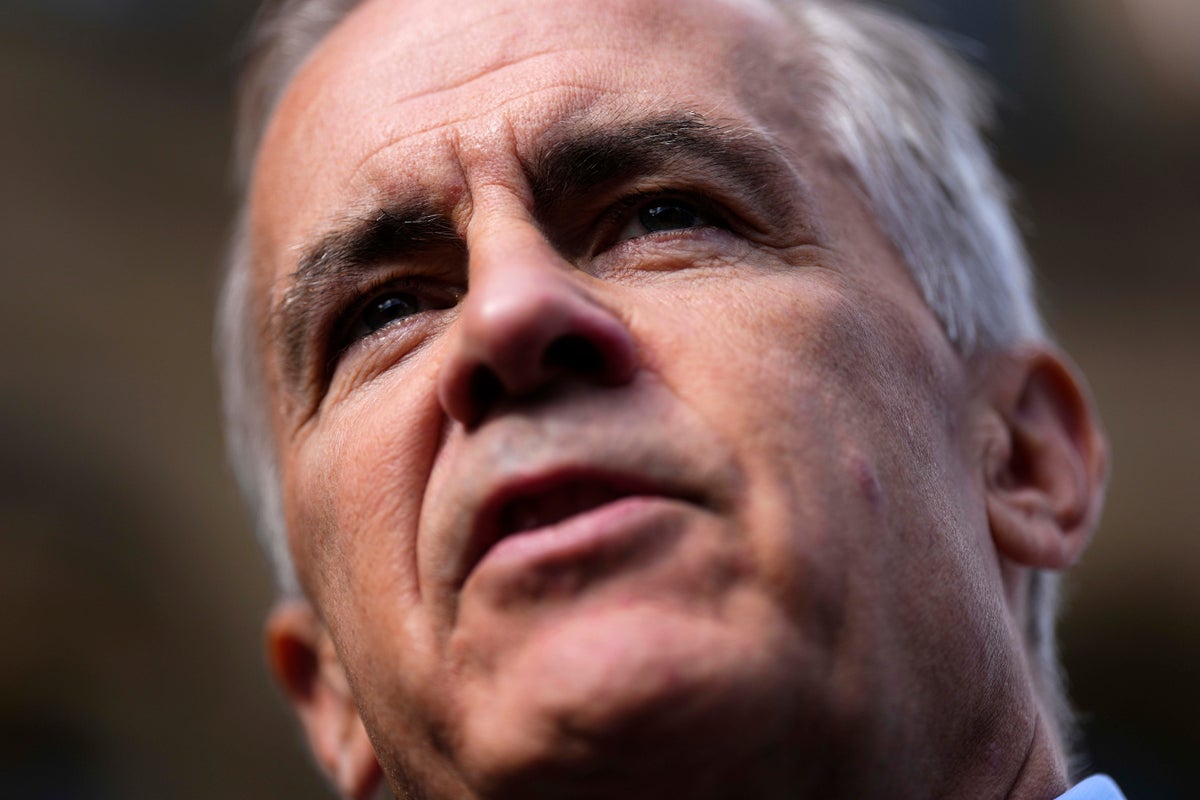
Canadian Prime Minister Mark Carney said Tuesday that Canada would move faster to reduce its economic reliance on the United States as retaliatory tariffs took effect on about $20 billion worth of U.S. goods and the country braced for President Donald Trump’s response. The prime minister said four decades of deeper economic integration had left Canada too reliant on the U.S. The trade war began after Trump returned to office and imposed a series of tariffs on Canadian goods despite having negotiated and repeatedly praised the North American trade agreement during his first term.
Many of those tariffs violate the pact. The rupture is especially striking because the countries have long shared one of the world’s closest relationships, with deeply integrated economies, close defense and security cooperation, vast cultural ties and, before relations deteriorated, about 400,000 people crossing the border each day. The latest U.S. trade actions will cause short-term pain, Carney acknowledged, but he said it pushes Canada to move faster on investment, infrastructure and trade diversification.
He acknowledged the shift would be costly but said standing still would cost more. Carney contrasted Canada’s deteriorating relationship with Washington with its growing ties to countries he described as more reliable. Canada was not seeking to escalate the confrontation, he said, but the tariffs were necessary to protect Canadian workers.
The prime minister also defended Canada’s decision to walk away from the talks, saying Washington sought limits on French-language and cultural protections, influence over future trade deals, and terms that would weaken the auto, steel and forestry sectors. How the trade war ends could carry consequences far beyond Canada, testing whether a smaller U.S. ally can resist Trump’s economic pressure without being forced to yield. Trade Representative Jamieson Greer has suggested Washington could retaliate by blocking some Canadian products from the U.S. market.
The tariffs hit hundreds of American products, including steel, aluminum, cheese, appliances, clothing, cosmetics and farm equipment, at rates of 15%, 25% or 50%. They cover about $20 billion in American goods, roughly 6% of the $333.6 billion the United States exported to Canada last year. Since Canada-U.S. trade talks collapsed Aug. 21, Trump and his administration have imposed additional tariffs and issued a series of threats and attacks portraying Canada as weak and dependent.
Trump’s trade war and repeated talk of making Canada the 51st state have fueled anger and rallied support for Carney. Canadians have sharply cut travel to the United States and boycotted U.S. goods. Carney praised those efforts, saying “every time we choose to buy Canadian and travel in Canada, we are sending a message that nobody is in the stands, 40 million of us are on the ice.” Neither side is rushing back to the table Gabriel Brunet, a spokesman for Canada-U.S.
Extract — continue reading at the source.