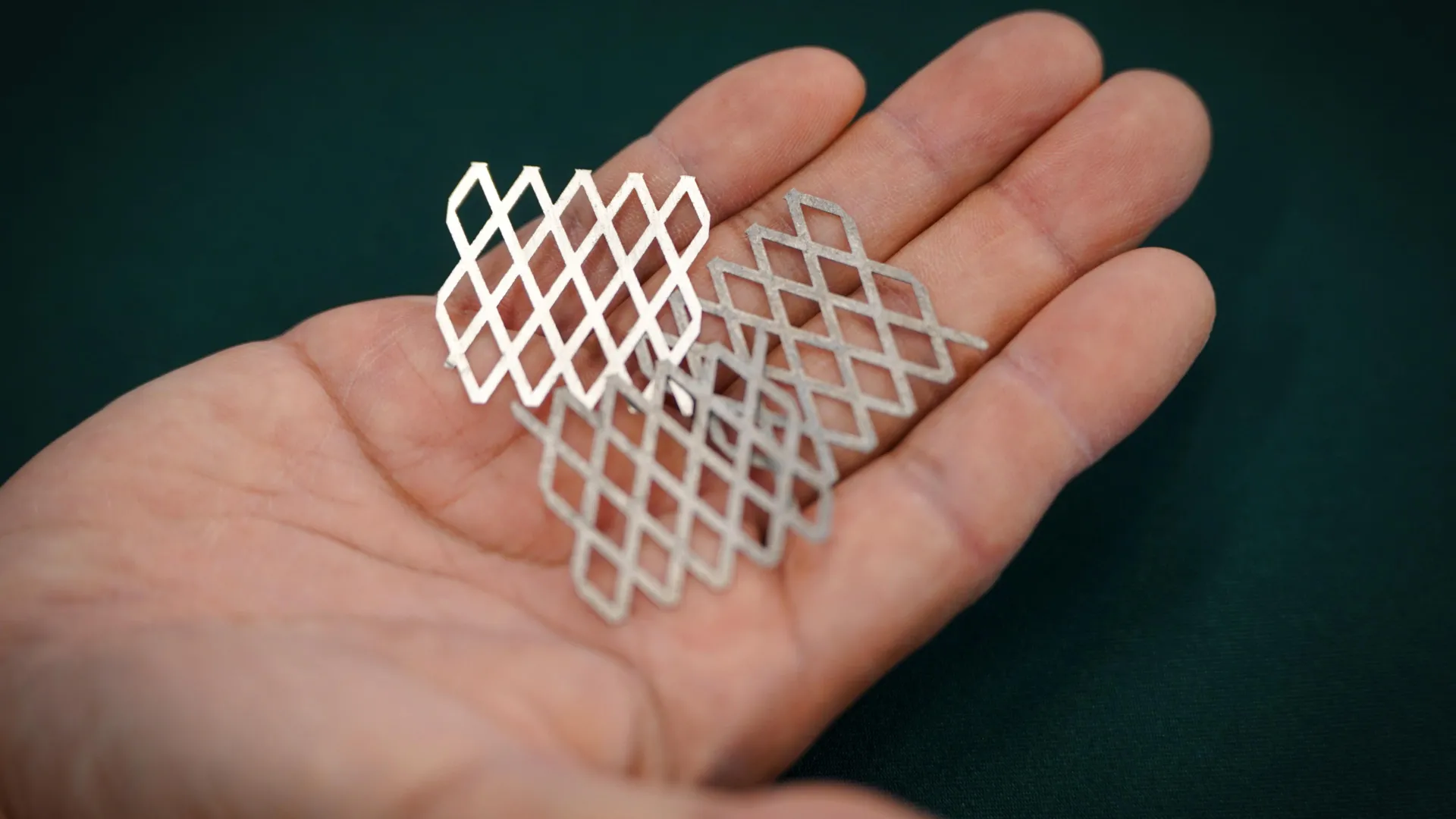
A team at the University of Hong Kong (HKU) has developed a new type of stainless steel that could overcome a major limitation of conventional stainless steel and potentially lower the cost of producing green hydrogen. Led by Professor Mingxin Huang of HKU's Department of Mechanical Engineering, the researchers created stainless steel for hydrogen (SS-H2), a material designed to resist severe corrosion under conditions that ordinary stainless steel cannot withstand. The advance is the latest result from Huang's "Super Steel" Project.
His team previously developed stainless steel with anti COVID properties in 2021, along with exceptionally strong and tough forms of Super Steel in 2017 and 2020. SS-H2 is particularly promising because of its resistance to corrosion. That property could make it useful in systems that produce green hydrogen using seawater, an area where researchers are still searching for practical and sustainable technologies.
Hydrogen can be produced through electrolysis, a process that uses electricity to split water into hydrogen and oxygen. When that electricity comes from renewable energy, the resulting fuel is often described as green hydrogen. However, the equipment used for electrolysis must withstand demanding chemical and electrical conditions, especially when salt is involved.
In a salt water electrolyzer, the new steel delivered performance comparable to titanium structural components currently used to produce hydrogen from desalinated seawater or acidic solutions. The key difference is cost. SS-H2 is considerably less expensive.
The findings were published in Materials Today in a study titled "A sequential dual-passivation strategy for designing stainless steel used above water oxidation." The researchers have applied for patents covering the technology in several countries, and two patents have already been authorized. Why Conventional Stainless Steel Has a Limit Stainless steel has been used for roughly a century and has become one of the most important materials for applications where corrosion is a concern. Much of its durability comes from chromium.
When chromium (Cr) in the steel reacts with its environment, it forms a thin protective film on the surface. This passive layer helps prevent the underlying metal from continuing to corrode. For conventional stainless steels, however, this protection has an important limit.
Extract — continue reading at the source.


