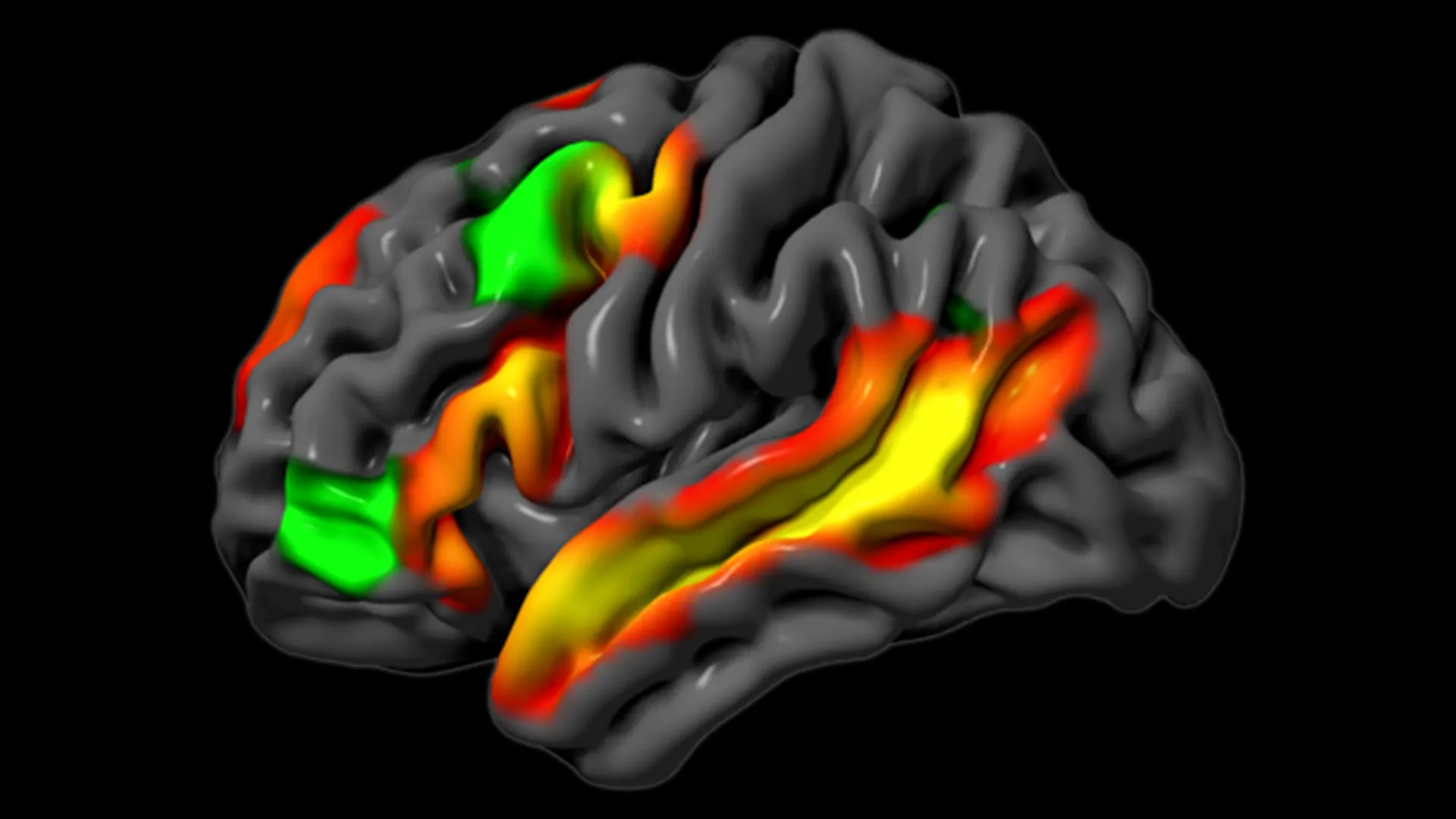
Talking through a difficult problem can help some people organize their thoughts. But according to cognitive neuroscientists at MIT's McGovern Institute for Brain Research, language itself is not required for logical reasoning. In research published recently in the journal PNAS, a team led by MIT associate professor of brain and cognitive sciences Evelina Fedorenko found that people can successfully solve problems requiring logical reasoning even when their language abilities are severely impaired.
Brain imaging also indicated that regions responsible for processing language are not recruited for logical reasoning. Are Language and Thought Really Connected? For thousands of years, philosophers, linguists, and cognitive scientists have debated whether language is essential for thought.
Many have argued that people rely on language as a tool for thinking. Hope Kean, a postdoc and former K. Lisa Yang Integrative Computational Neuroscience (ICoN) Center graduate fellow in Fedorenko's lab, says there are understandable reasons to think language and logic might be closely connected.
"Abstract thinking has properties that look a lot like language," Kean says, pointing to structural similarities. "You can decompose a thought into subcomponents, like little atoms of logical propositions, and you can combine them in a hierarchical manner to make more complex structured rules, very akin to language." Still, Kean and Fedorenko, who is also a McGovern Institute investigator, suspected that the brain might separate the communication of reasoning from reasoning itself. People rely heavily on language when presenting a problem, discussing possible solutions, or explaining how they reached a conclusion.
The underlying process of logical thought, however, might depend on a different brain system. "There are aspects of thinking that seem to go beyond some of the limitations of language," Kean explains. Logical reasoning often requires a level of precision that ordinary language does not provide.
Language also unfolds in a linear sequence, one word after another, while reaching a logical conclusion may require considering several pieces of information in ways that are less linear. Testing Logical Reasoning Without Language These questions led Kean to investigate how the brain actually performs logical reasoning. Studying the issue is challenging because researchers working with human participants normally rely on language to explain tasks and receive answers.
Extract — continue reading at the source.