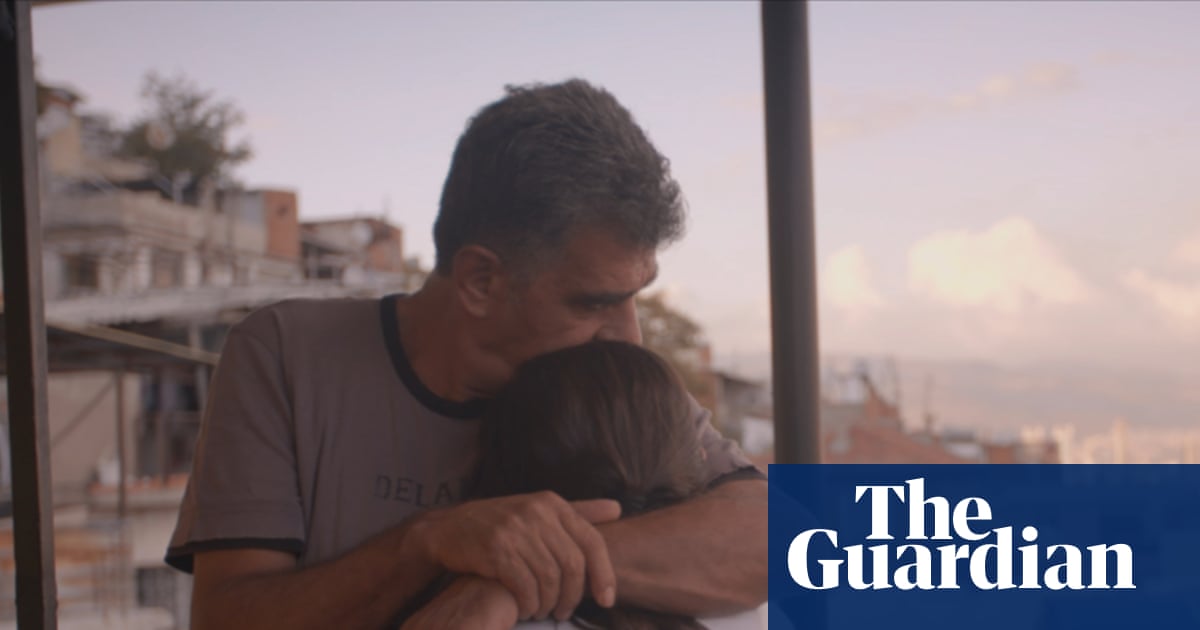
In 2015, an 11-year-old Syrian girl called Israa matter-of-factly explained how her family would survive if their dinghy sank crossing the sea from Turkey to Greece. Her father would grab her disabled sister; her mother would look after the baby. Their plan was to follow Israa and her family on their hazardous journey to Germany.
But after Israa reached safety, the pair kept filming. Ten years in the making, their documentary, One in a Million, is extraordinary - with echoes of Richard Linklater’s Boyhood and the Up! series. We watch Israa grow up in front of our eyes, from a sunny-natured 11-year-old to a woman, married with a baby of her own.
Azzam and MacInnes first spotted Israa in İzmir, on the Turkish coast, selling cigarettes with her father to raise money to pay the people-smugglers. It was love at first sight. She was so bubbly, enthusiastic and positive.
We were talking to her, then her father. They invited us back to their flat.” The family had fled Aleppo after their home was destroyed by a missile. Eleven-year-old Israa joked about the dinghy sinking, too young to understand the risks.
But her father Tarek agonised: “I’m gambling with the lives of my children,” he says in the documentary. Just a few months earlier, the body of the three-year-old Syrian boy Alan Kurdi washed ashore in Turkey. The image was in Tarek’s mind as he parted from the film-makers on the night of the crossing: “If anything bad happens to us, you have to tell our story.” McInnes still finds the scene emotional to “At the time we knew there was a chance that we would say goodbye to them, and that would be it.” Sitting next to him in the restaurant of a London hotel, Azzam brushes aways tears as she remembers filming in İzmir, a hub for the people-smuggling trade.
You saw lots of families putting life jackets on their children.” McInnes adds: “People were selling fake life jackets as well. Life jackets that didn’t actually work. I’m not sure we could have filmed it if we’d had children at that point.” The couple met in 2010 while working together.
Extract — continue reading at the source.