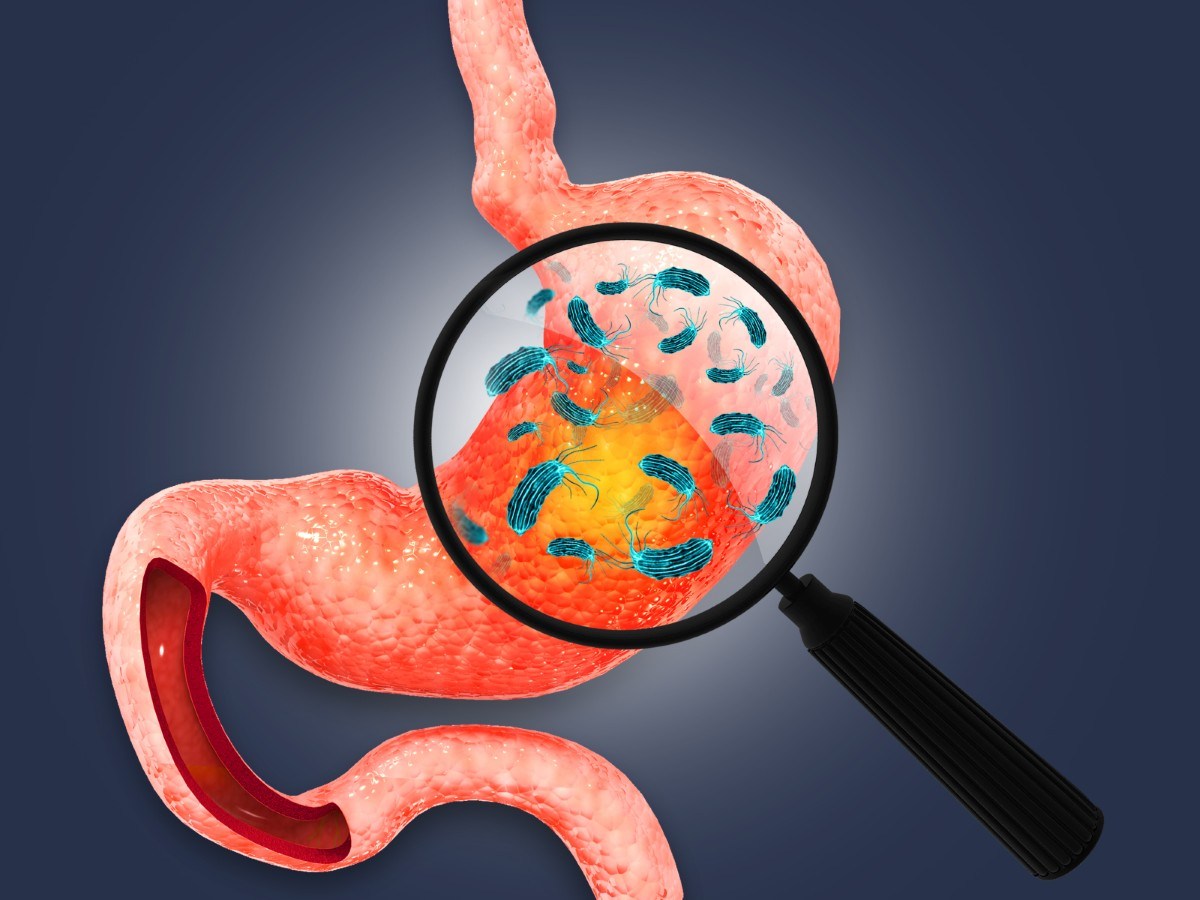
Exposure to a common stomach bug, which more than half the global population will have at some point in their lives, has been linked with colorectal cancer in a new study. Researchers at the University of California San Diego and the University of Hong Kong found that exposure to the bacteria Helicobacter pylori (H. pylori) was associated with a higher risk of colorectal cancer. The study was published in the journal eGastroenterology on September 8.
The bacteria has been associated with other cancers and diseases in the past, including stomach cancer, and in 1994, it was classified as a human carcinogen by the World Health Organization’s International Agency for Research on Cancer (IARC). "Colorectal cancer is a multifactorial disease influenced by age, genetics, lifestyle, diet, and many other factors," Dr. Shailja Shah, one of the study leads and professor of medicine at the University of California, San Diego, told Newsweek.
"Our study cannot establish causation—that is, we cannot say for certain that H. pylori directly causes colorectal cancer, though we know this is true for stomach cancer. Instead, our study shows an epidemiological association." Dr. Wael El-Rifai, associate director of basic science with Sylvester Comprehensive Cancer Center, who was not involved in the study, told Newsweek the findings represent "a significant step forward, given the global burden of both H. pylori infection and colorectal cancer." "While earlier studies offered limited preliminary insights, this is arguably the most comprehensive and compelling evidence to date," he said.
Excluding skin cancers, colorectal cancer is the third most common cancer diagnosed in both men and women in America, according to the American Cancer Society. The cancer is expected to cause over 55,000 deaths in the U.S. during 2026. H. pylori is a bacteria that causes a stomach infection, and it is believed more than 50 percent of the global population will be exposed to it at some point in their lives.
These infections often happen during childhood, and tend to spread through contact with an infected person's bodily fluids, including vomit, stool or saliva, or through contaminated food and water. The infections can cause stomach pain, bloating, gas and other symptoms, but most people who have the infection don't have symptoms. In some cases, the infection can result in sores called peptic ulcers in the lining of the stomach or small intestine.
The bacteria is becoming less common across the globe, Dr. Martin Blaser, a professor of medicine and pathology and laboratory medicine at Rutgers University, who was not involved in the study, told Newsweek. As it declines, he added, "so is stomach cancer," which he said was "consistent with [H. pylori's] known major role in stomach cancer." The researchers found that H. pylori exposure was associated with a 1.59-fold increase in the risk of colorectal cancer and they estimated that it could be related to around 22 percent of global cases of the cancer.
Extract — continue reading at the source.