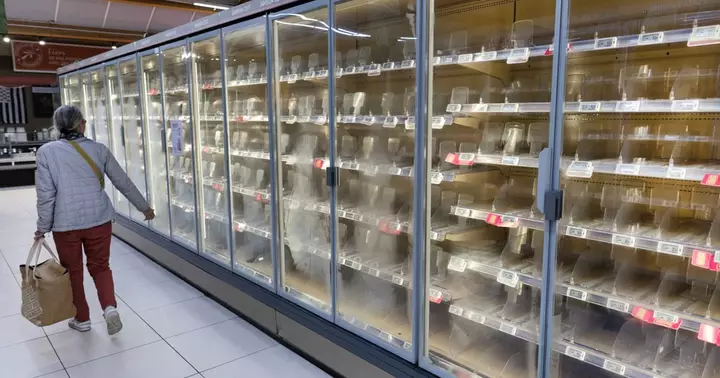
The cyberattack last week that hit hundreds of French supermarket refrigerators had Europeans wondering if the nonstop warnings about AI risks had finally landed in the real world. Experts say the attack, which forced hundreds of retailers to throw away defrosted food and spoiled milk, was mostly a reminder of the importance of old-school cybersecurity in safeguarding essential goods and services. The attack is a “typical example” of how “low-key cyber-enabled sabotage can affect very crucial supply for society,” said Ferdinand Gehringer, hybrid threats lead at FTI Consulting.
It’s arguably the most consequential hack in the European Union this year, with tangible, disruptive real-world repercussions. France’s Prime Minister Sébastien Lecornu personally managed the fallout, which prompted coordination and information-sharing at the EU level. The perpetrators, whose identity and motives are currently unknown, hacked into digital systems to remotely raise the temperature of refrigerators in supermarkets including Intermarché and Carrefour.
One cybersecurity expert working with Lecornu's office said the French government held meetings after the attack to try to map all the potentially affected sectors, beyond supermarkets. "We're in the middle of the flu vaccination campaign," he said, referring to vaccine storage, which also relies on temperature control solutions, though no such attacks have been registered. To add to the fear and confusion, supermarkets in the Netherlands and Belgium experienced unrelated cyber incidents that same week.
Though there was limited impact in those cases, they were a good example of “how big our reliance is in the food supply chain on IT and network systems,” Dutch food security minister Silvio Erkens told POLITICO. The attacks come after citizens and policymakers have spent months being bombarded with warnings about scenarios in which unpredictable advanced artificial intelligence models escape human control. While most good and bad actors on the internet are increasingly using AI models to increase speed and capacity, cyber experts say the hackers in question in the French case most likely used traditional methods to take advantage of devices needlessly exposed to the internet.
Connecting devices to the internet in this way is “an old-fashioned bad practice,” said Amir Preminger, chief technology officer at Claroty, a cybersecurity company that identified a software flaw in a product made by Danfoss, one of the refrigeration companies targeted by the French hacks. Danfoss fixed that flaw in 2025. The attacks come at a time when Europe’s food security is already under considerable pressure due to geopolitical insecurity and climate change.
The continuing disruptions in the Strait of Hormuz are pushing up fuel and fertilizer prices at a time where farmers struggle with the fallout of extreme drought that caused lower yields in many parts of Europe. These problems are compounded by the blockade of the Black Sea which is fueling the rise of global food prices. She nonetheless stressed that food supply chains are resilient, which reduces the chances that consumer food supply would be endangered — even if such attacks are already a “major blow” for retailers operating on razor-thin margins.
Extract — continue reading at the source.