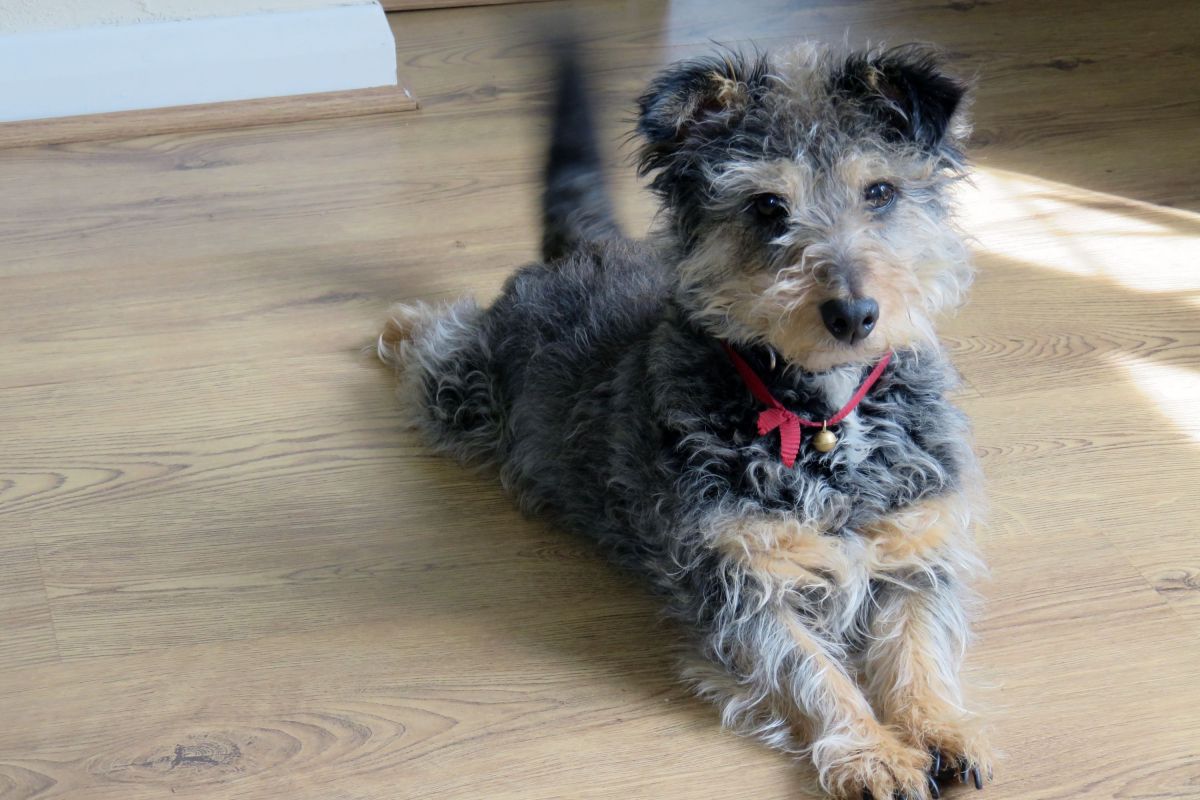
A dog approaches, tail wagging, and it seems like an obvious invitation to say hello. But before reaching out to pet them, it may be worth taking a closer look. While a wagging tail can signal happiness, it doesn't always mean a dog feels friendly or comfortable.
In some situations, tail movement can signal fear, anxiety or agitation—and misunderstanding those signals could put both people and dogs in an uncomfortable situation. "A wagging tail can mean a dog is happy, but it can also mean quite the opposite," Mike Gould, a canine expert and co-founder of Hounds Town USA, told Newsweek. Dogs don't communicate their emotions through one behavior alone.
Instead, consider their body language as a whole, including their posture, ears, facial expression, and what is happening around them. "I always tell people to 'read your dog,'" Gould said, comparing it to looking at a close-up photograph. "You may not know what you’re seeing until you zoom out." A dog may wag its tail because it is happy to see someone, but tail movement can also happen when a dog is fearful, anxious, overstimulated or feeling defensive.
In these situations, the wag may simply signal that the dog has become "activated" by something in its environment, such as another animal entering its space, an unfamiliar person approaching or even a sudden sound. A dog preparing to defend itself may still wag its tail, so you shouldn't automatically interpret the movement as an invitation to approach. Not all tail wags look the same, and the position and movement can provide additional clues.
A broad, loose wag generally suggests that a dog is comfortable and socially at ease. But a low or tucked tail can signal fear. A high, tight and fast-moving tail, meanwhile, may indicate excitement or agitation, while a raised, stiff tail can mean that a dog has become alert to something in its surroundings.
Dogs can hear and smell things long before humans notice them, so a change in tail position may sometimes be one of the first signs that a dog has detected something nearby. Owners should pay attention to whether the dog's entire body appears loose or tense, as well as changes to the face, ears, mouth and hackles. For example, a dog might appear relaxed and then suddenly close its mouth after hearing a car outside or detecting something that has caught its attention.
Extract — continue reading at the source.