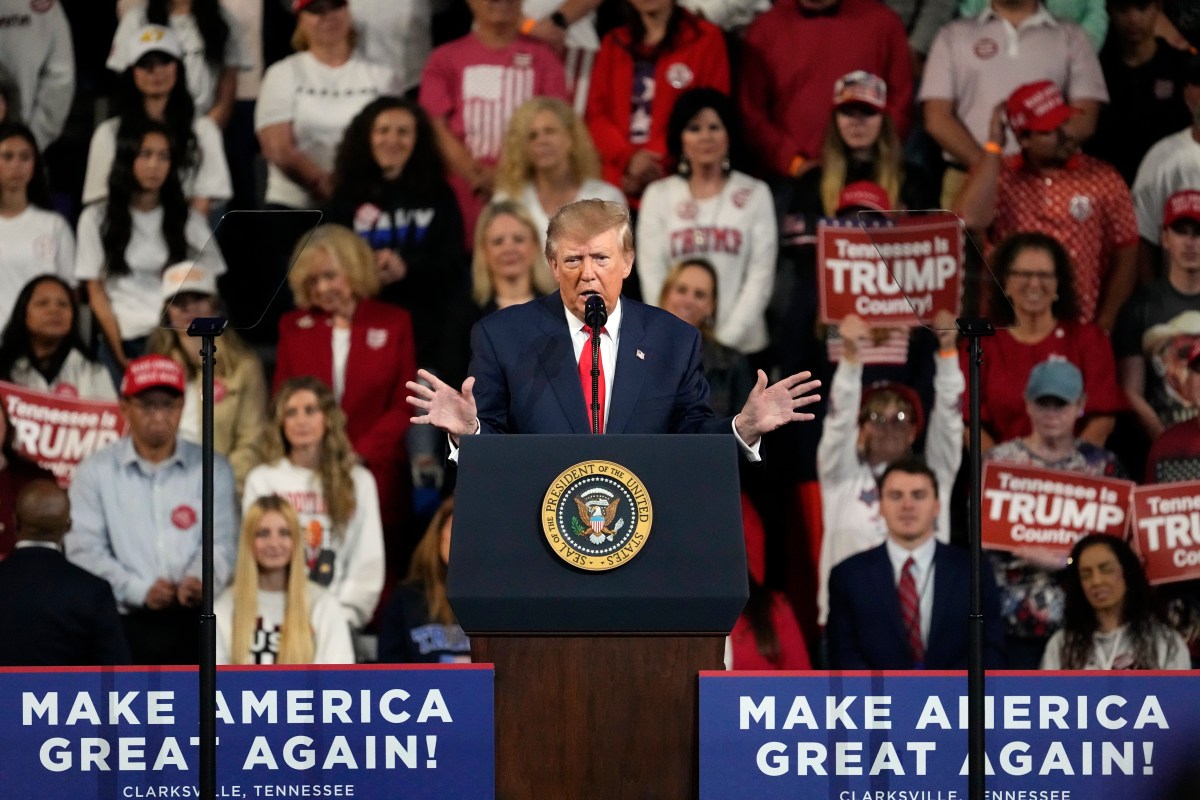
President Donald Trump's warning to hit Iran with "the most crushing economic operation ever taken against any country" marks the latest grandiose White House threat designed to punish the Islamic Republic into capitulation. Last month, the U.S. leader said he had planned to hit Iran with "the biggest attack since World War II"—a conflict that notably ended with the first and only-ever uses of the atomic bomb. Before that, in April, as the U.S.-Israeli war launched on Iran just weeks earlier first began to settle into a stalemate, Trump had warned, "a whole civilization will die tonight." As with much of Trump's more hyperbolic messaging, neither of those threats were carried out.
Instead, they were called off to make way for diplomatic maneuvers. More recently, Trump said Tuesday that negotiations were no longer taking place, even if his son-in-law and adviser Jared Kushner had earlier indicated otherwise. Newsweek also learned from a source with knowledge that discussions described as positive have taken place, but Trump decided to wait and asked his team to not engage until Iran is ready to make a deal.
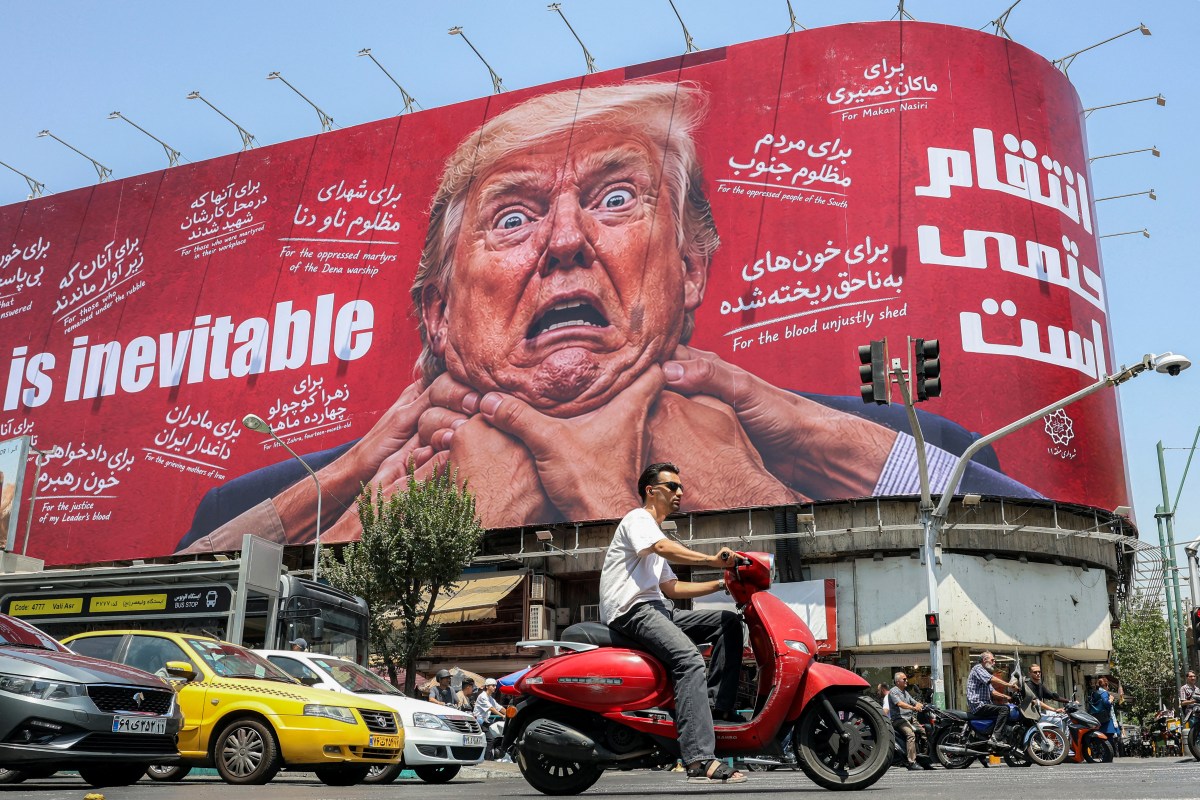
But talks or no talks, Trump's intimidation tactics simply do not seem to hold much weight today in Tehran, where calls for escalation rather than compromise are gaining traction. "By now, the Iranian leadership does not take such threats literally and is largely dismissive of them," Mehran Kamrava, a professor at Georgetown University in Qatar and expert on Iranian politics, told Newsweek. "The danger, however, is that many in Iran, especially within leadership circles, see the current situation of 'neither peace, nor war' as untenable in the long run and see military escalation as the only way out of the current stalemate," Kamrava said.
"The more that President Trump pulls away from negotiations and promises the death of the Islamic Republic by a thousand sanctions, the stronger voices inside the Iranian leadership calling for military escalation become." As bombastic threats and abrupt shifts in positions come to define Trump's rhetoric in the six-month war with Iran, some analysts have likened his approach to the so-called "madman theory" often associated with former President Richard Nixon. The idea is that the targets of the president's tough talk—not just Iran, but also China, Russia and even European allies—may be more willing to submit if they remain uncertain over what he's truly capable of. Moreover, Trump's intervention in Venezuela, strikes against Iranian nuclear facilities in June of last year and the earlier 2020 killing of Iranian Major General Qassem Soleimani have demonstrated Trump has the capacity to prove his "TACO" ("Trump Always Chickens Out") detractors wrong.
Tehran once again found this out the hard way when the U.S. and Israel launched their joint war in February, killing Supreme Leader Ayatollah Ali Khamenei on the first day of the conflict. Nearly six months later, however, Iran has proved it too can make good on its promises. Iranian officials had long asserted they could squeeze the global economy through dominance over the Strait of Hormuz and inflict pain on regional countries hosting U.S. military bases in the event of a conflict, and they have executed both plans with even greater success than most had predicted.
And as Iran now rebuilds military capabilities and stockpiles at a pace that has also reportedly surprised U.S. and Israeli officials, Iranian leadership has only doubled down on its vows to raise the costs of the conflict with help from Axis of Resistance allies such as the Lebanese Hezbollah, the Islamic Resistance in Iraq and Yemen's Ansar Allah, also known as the Houthi movement. Some Iranian officials and analysts have described a desired shift on Tehran's part from an "eye for an eye" strategy to one of an "eye for a head." As Iranian Foreign Minister Abbas Araghchi dismissed Trump's "economic D-day" threat as "a diversion from America's own crisis: unprecedented debt & surging interest costs," Islamic Revolutionary Guard Corps spokesperson Brigadier General Hossein Mohebi warned Thursday that "if another war begins, our weaponry will certainly be different from those of the past," with greater range, power and precision. Whether or not it's true, Iran appears to banking on the same psychological deterrent as its adversary.
Extract — continue reading at the source.