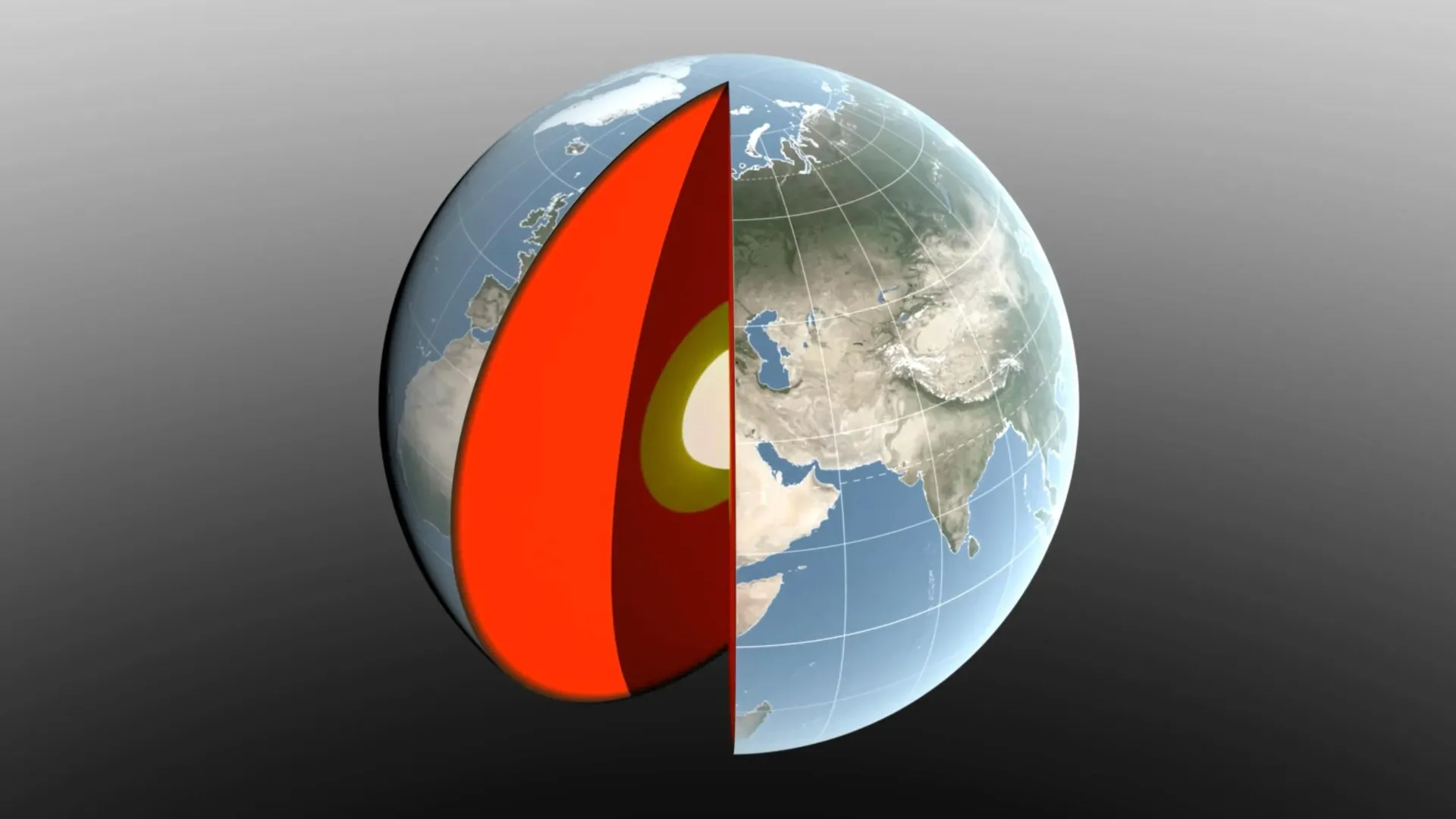
As water, ice, and air move around the planet with the seasons, they redistribute enough weight to push the center of mass back and forth by fractions of an inch relative to Earth's geometric center. NASA scientists carefully track this subtle motion because Earth's center of mass serves as an essential reference point for satellite navigation and measurements of surface elevation. Researchers led by NASA's Jet Propulsion Laboratory in Southern California have now developed a method designed to measure these seasonal shifts with exceptional precision.
Their technique and results are described in a new study published in Geophysical Journal International. The research shows how major seasonal changes, including melting snow, moving ocean water, and dense winter air, redistribute enormous amounts of mass across Earth's surface. Scientists have spent decades developing methods to define and locate Earth's center of mass using observations from space.
The challenge is that the center does not remain in one fixed location. If Earth behaved like a completely solid blue marble, its center of mass would line up with its geometric center. Instead, the planet responds to the shifting weight of water, ice, and the atmosphere.
As those materials move, Earth's center of mass circles around its geometric center by as much as several millimeters. Determining the exact size of that movement has proven difficult. The two most recent international estimates, produced in 2017 and 2023, differ by 0.27 inches (7 millimeters), roughly equivalent to the height of three nickels stacked together.
That disagreement is nearly as large as the movement scientists are attempting to measure. To narrow that uncertainty, JPL geoscientist Donald Argus led the development of a new approach that relies on extremely precise satellite tracking. Gravity causes satellites to orbit around Earth's center of mass.
As that center shifts, scientists can detect minute changes in the distances between orbiting satellites and tracking stations on the ground. Scientists have long used satellites to determine the location of Earth's center of mass. Two dense metal satellites launched in 1976 and 1992 were built specifically for that purpose.
Extract — continue reading at the source.


