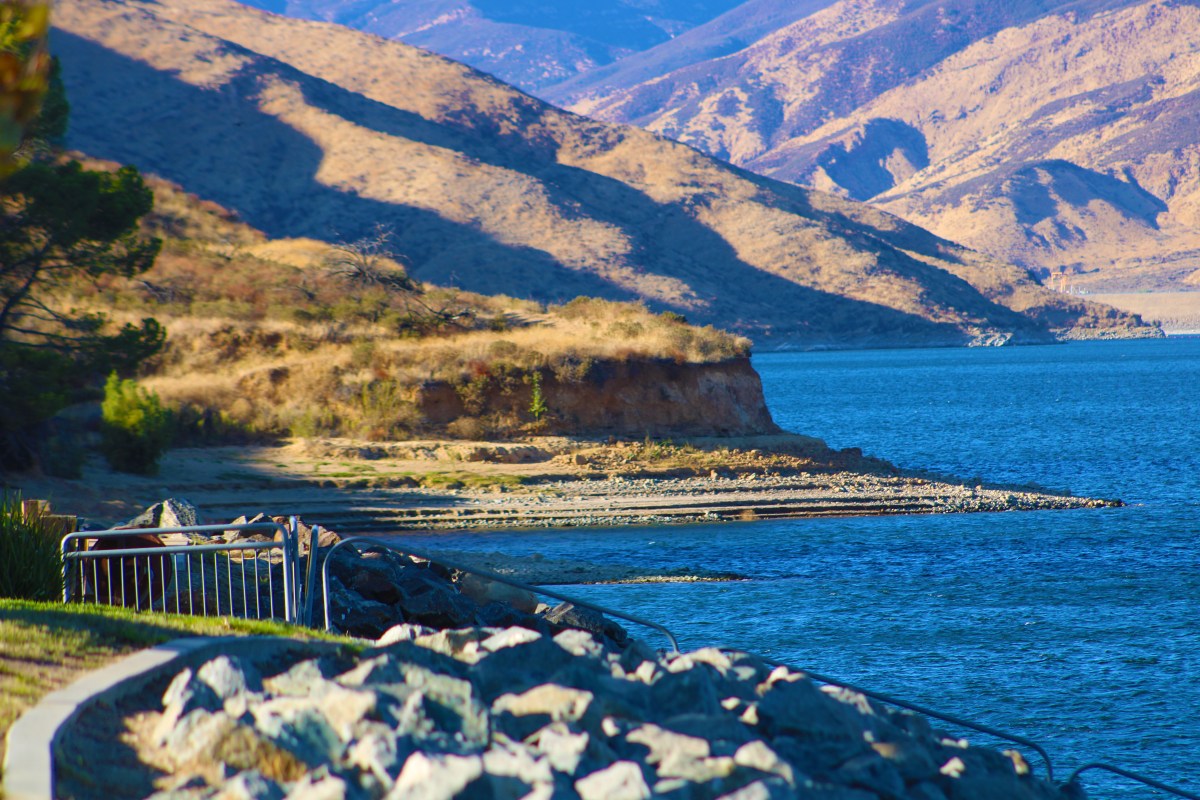
New precipitation outlooks published by the National Oceanic and Atmospheric Administration (NOAA) Climate Prediction Center (CPC) on Thursday imply that a strengthening El Niño will likely bring above-average precipitation across Southern California this winter. Although the forecast is widely considered good news for a region that often struggles with a fluctuating water supply, some of the reservoirs in this part of the state are already close to capacity, meaning more rain might not have a place to go. On Thursday, the CPC issued its seasonal precipitation outlooks through December 2027.
The predictions come as forecasters track a strengthening El Niño in the Pacific Ocean. The developing El Niño, which is the warm phase of the El Niño-Southern Oscillation (ENSO) cycle, has already broken numerous records and is on track to become a "super" El Niño by this winter. The strength of the climate pattern could influence weather across the globe, including in the U.S., where a wet winter is expected in the Southwest.
Several meteorological agencies have been referring to the ongoing El Niño as a “super” event. Although NOAA refers to the climate pattern as “very strong,” both labels refer to an event in which waters are warmer than average, usually by around 2 degrees Celsius. The warmer the waters, the greater the influence on weather.
El Niño can influence weather around the globe. In the U.S., it causes the most widespread impacts during the fall and winter months, when cooler, wetter conditions are experienced across the South, with warmer, drier conditions in the North. It also can influence storm track, whether precipitation falls as snow or rain, and extreme cold spells.
Most of El Niño's impacts are felt in the U.S. during the colder months, especially in winter. During typical El Niño years, the U.S. Southwest is wetter and colder than average.
These conditions can benefit the desert region, which often sees fluctuating water supplies. When looking at NOAA's new forecasts, a wet winter certainly seems likely in Southern California. The seasonal precipitation outlooks show increasing chances of above-average precipitation across the region beginning in November and persisting through next June.
Extract — continue reading at the source.