Parenting processes are thought to shape children’s emotional development and may be particularly relevant once childhood social anxiety disorder (SAD) is clinically established. This study examined two distinct parenting processes—family accommodation (FA), a symptom-linked response to child anxiety, and challenging parenting behavior (CPB), a broader autonomy-promoting parenting dimension. Cross-sectional questionnaire and diagnostic interview data were drawn from three clinically characterized samples comprising youth with SAD (n = 121), specific phobia (n = 65), and healthy controls (n = 147; total N = 333).
Parents reported on FA and CPB using validated measures. Parents of youth with SAD reported greater FA than parents of healthy children, whereas CPB did not differ between groups. Higher FA was consistently associated with greater child SAD/anxiety severity, whereas CPB was unrelated to symptom severity.
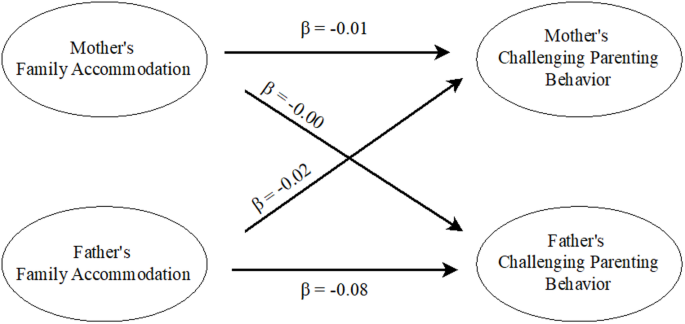
In two-parent families, FA and CPB showed little evidence of cross-parent coupling. Exploratory comparisons did not indicate that either parenting process differentiated SAD from other anxiety disorders. Overall, among the two parenting processes examined, symptom-linked accommodation showed the more consistent pattern of association with clinically established childhood SAD and anxiety severity, supporting its relevance for parent-focused assessment while leaving causal direction and broader diagnostic specificity beyond anxiety disorders unresolved.
Social anxiety disorder (SAD) is among the most common anxiety disorders in childhood and adolescence1 and is associated with marked impairment in peer relationships, school functioning, and emotional development2,3. Children with SAD show persistent fear of negative evaluation, heightened self-focused attention, and marked avoidance of social situations, disrupting developmental tasks that are particularly salient during this period, including building peer relationships and acquiring age-appropriate autonomy3,4. Contemporary models therefore increasingly emphasize that the disorder is maintained not only by child-level vulnerabilities, but also by ongoing interpersonal processes, particularly the family environment4,5,6.
Parenting has long been implicated in child anxiety, but the literature has focused on broad, cross-situational parenting dimensions whose definitions and operationalizations vary across studies (e.g., control, overprotection)7,8. Although this work has yielded important insights, associations between broad parenting dimensions and child anxiety are typically modest and heterogeneous7,9,10. This raises a more specific question that is especially relevant for clinically established SAD: which parental responses are most informative once the disorder is already present?
Broad parenting dimensions may be too distal to capture the moment-to-moment family processes through which social avoidance is maintained. For childhood SAD, parent–child interaction models further suggest that parenting may be relevant insofar as it shapes children’s avoidance, autonomy, and responses to socially evaluative situations4,5. Empirical findings are broadly consistent with this view.
Extract — continue reading at the source.