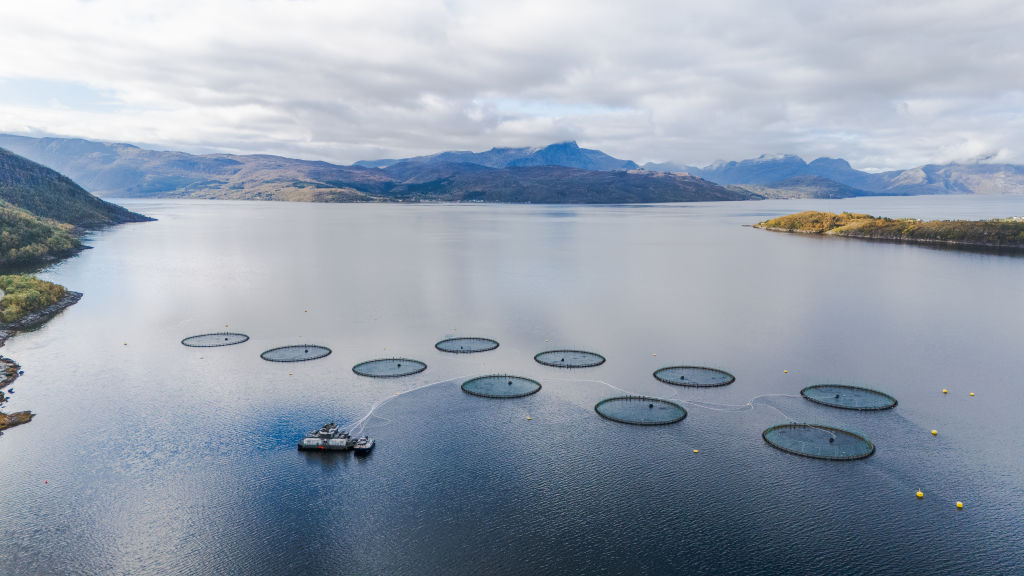
That dietary advice has changed the way the world consumes salmon, pushing consumer demand ever upward and production to higher and higher levels. Most of that demand is being met with farmed salmon: Today, nearly 70 percent of the salmon consumed on the planet are raised in pens and cages. The US Department of Agriculture’s Dietary Guidelines for Americans recommend eating at least 8 ounces of fish a week and urges people to choose salmon or other species that are similarly high in “heart-healthy” Omega-3 fatty acids.
But new research led by USDA scientists finds that levels of these fatty acids in farmed salmon have dropped considerably, potentially making the agency’s own advice, and similar recommendations, including from the American Heart Association, outdated and insufficient. The reason for the decline of the Omega-3s, the new study says, is a major shift in the diets of the naturally carnivorous salmon, from smaller fish species—which were over-exploited to feed farmed fish—to a mix that includes land-based oils and crops, including soy and canola. A 2016 study noted similar declines, also attributable to the shift toward a crop-intensive diet.
Extract — continue reading at the source.