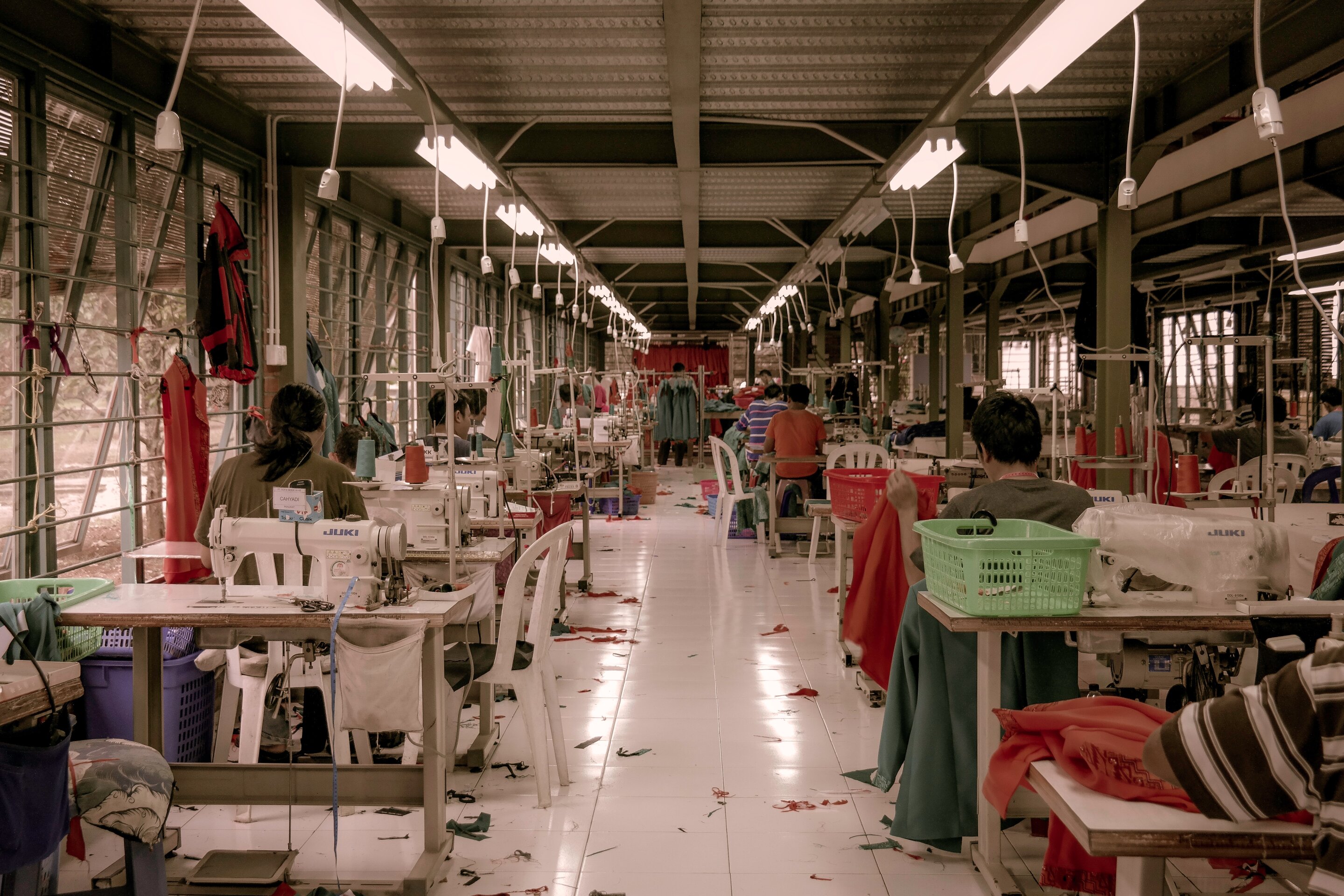
This article has been reviewed according to Science X's editorial process and policies. Editors have highlighted the following attributes while ensuring the content's credibility: Fast fashion is built on cheap, short-lived garments, especially cotton and polyester T-shirts. To sustain its profits, the industry relies on high production frequency, short product lifespan and a globalized supply chain.
All these elements contribute to making the industry a major source of global pollution. A new Concordia-led study examined the full life cycle of polyester and cotton T-shirts to determine which stages—from manufacturing and shipping to consumer use and disposal—had the greatest environmental impacts. It also considered where the biggest reductions could be made.
The researchers analyzed the fast fashion production cycle, from materials used and garment manufacturing in China to transportation, consumer use in Montreal and final disposal. The team also considered different scenarios, including alternative shipping methods, disposal options and longer garment lifespans, to see which changes would have the greatest effect. Under the baseline scenario, polyester T-shirts generated substantially more greenhouse gas emissions than cotton ones because producing synthetic fibers requires more energy and fossil fuels.
Cotton, however, placed much greater demands on land and water, reflecting the resources needed to grow the crop. The study also found that transportation and product lifespan outweigh many material differences. Air freight proved to be one of the largest contributors to emissions; replacing it with sea freight cut a shirt's carbon footprint by roughly 30% to 60%, depending on the material.
Doubling a garment's lifespan could reduce emissions by about half, as fewer new garments would need to be manufactured to deliver the same amount of clothing use. The findings suggest that the fashion industry could achieve the greatest environmental benefits by producing fewer garments, designing them with longevity in mind and cutting back on air freight. For consumers, the researchers say simply wearing clothes for longer may have a greater climate benefit than focusing solely on whether a T-shirt is made from cotton or polyester.
The paper is published in the journal Cleaner Waste Systems. Xinyu Xu et al, From production to waste disposal: A life cycle assessment of fast fashion polyester and cotton T-shirts, Cleaner Waste Systems (2026). DOI: 10.1016/j.clwas.2026.100541 Bachelor's in mathematical biology, Master's in creative writing.
Extract — continue reading at the source.